A $5.4 billion budget gap puts working families and millionaires on a collision course
Mayor Mamdani Faces a Defining Fiscal Crossroads
New York City Mayor Zohran Mamdani entered office promising a bold democratic socialist agenda — free buses, universal childcare, a rent freeze, and a city that works for everyone, not just the wealthy. But less than 100 days into his term, the mayor faces a stark fiscal reality: a projected $5.4 billion budget gap in the FY2027 preliminary budget, and two very different paths to close it. One road leads through Albany, where Mamdani wants Governor Kathy Hochul to back a 2% tax on New Yorkers earning more than $1 million annually, paired with a corporate tax increase. The other is a 9.5% property tax hike — a measure that critics argue would fall hardest on working- and middle-class homeowners, not the wealthy elite Mamdani campaigned against. The budget debate has emerged as the first true test of whether Mamdani can turn campaign promises into governing reality, and whether his progressive coalition can hold together under pressure from both Albany and Wall Street.
The Numbers Behind the Crisis
The city began FY2027 planning with a gap estimated at $12 billion. Through a combination of agency savings, revised revenue projections, reserve draws, and a $1.5 billion infusion from the state, the gap was reduced to approximately $5.4 billion. The preliminary budget totals $127 billion — a figure that includes major commitments: $2.2 billion for Universal Pre-K, $582.6 million for early childhood programs, $11.6 million for the Mayor’s Office of Immigrant Affairs legal support, and $21.2 million for deportation defense. These represent not just budget lines but explicit policy choices — a signal that Mamdani intends to use the city budget as a values document. But closing the remaining gap requires a revenue solution, and that is where the tension with Albany becomes acute.
The Wealth Tax Push and Hochul’s Resistance
Mamdani’s preferred path is a progressive revenue solution targeting those at the top of the income ladder. His office has proposed a 2% surcharge on income above $1 million, affecting roughly 33,000 New Yorkers, alongside increases in corporate taxation. The math is compelling to progressives: New York City is home to more billionaires than any city on earth, and income inequality here ranks among the most extreme of any major metropolitan area in the United States. The NYC Independent Budget Office has documented persistent structural gaps in city finances that recurring budget gimmicks cannot solve, making a serious revenue debate unavoidable. But Governor Hochul, who faces her own re-election calculus, has declined to back a wealth tax. Her budget director, Blake Washington, told lawmakers the state’s fiscal position is strong and that tax hikes are not warranted under current economic conditions. Hochul’s reluctance places Mamdani in a difficult position: without state authorization, the city cannot unilaterally impose a new income tax on high earners.
The Property Tax Option and Its Discontents
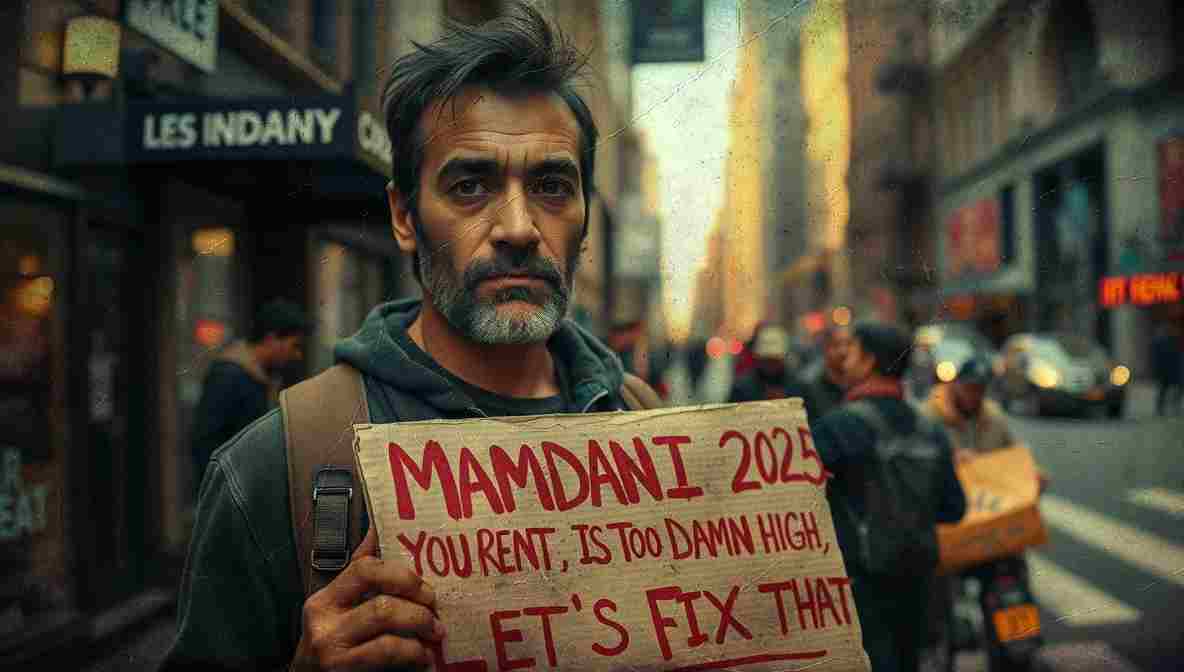
If Albany refuses a wealth tax, Mamdani has floated the alternative: a roughly 9.5% property tax increase. The proposal has drawn fierce criticism from across the political spectrum. Council Member Selvena N. Brooks-Powers wrote in an op-ed that the measure would squeeze households earning around $122,000 per year — people who are nowhere near rich in New York City terms. She argued that property taxes already fall inequitably, burdening communities of color and outer-borough neighborhoods disproportionately. The Lincoln Institute of Land Policy has documented how property tax systems across American cities can be regressive when not carefully structured. Brooks-Powers called for a different approach: tighter procurement controls, reduced administrative redundancies, and progressive revenue alternatives targeting the truly wealthy rather than asset-rich but income-modest homeowners. Conservative economists have amplified those concerns. Edward Pinto of the American Enterprise Institute warned that a property tax hike, combined with a rent freeze, would constitute what he described as a one-two punch against property values, discouraging new construction and deferring necessary repairs. Emily Hamilton of the Mercatus Center echoed similar warnings about housing quality degradation in a rent-regulated market squeezed from two directions simultaneously.
The Albany Rally and a Notable Absence
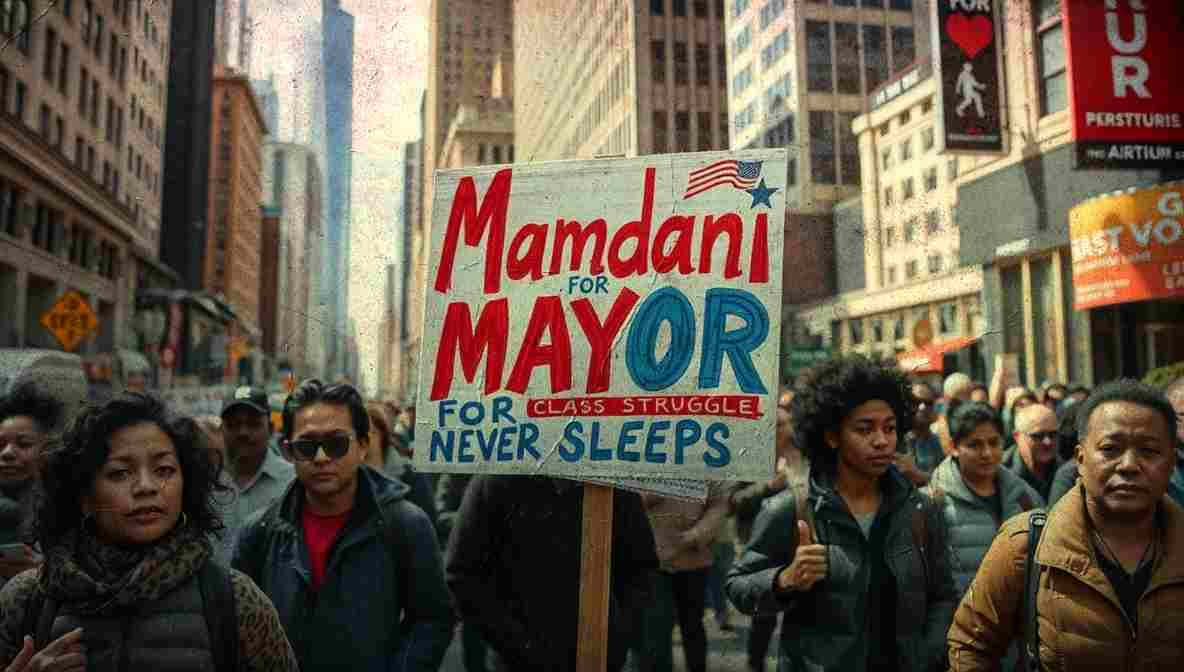
On Wednesday, roughly 1,500 activists and progressive allies descended on Albany for what organizers billed as a mass mobilization to pressure Hochul and state legislators to back the wealth tax. The rally, organized by the Our Time coalition, drew elected officials including State Senator Jabari Brisport, Assembly Member Marcela Mitaynes, and Council Member Chi Osse. What it did not draw was Mayor Mamdani himself. Reports suggest the absence was deliberate — a strategic calculation that Mamdani cannot afford to damage his working relationship with Hochul while the city still needs billions in state support. Queens Borough President Donovan Richards, an ally of the mayor, put it plainly when discussing the administration’s approach to federal officials: “Do you really want to stick your thumb in a president’s eye who is very vindictive?” The same logic, applied to Albany, may explain the empty podium. Progressive allies gave the mayor a pass publicly, though the symbolism of his absence from a rally nominally aligned with his own budget priorities was not lost on close observers. Senate Majority Leader Andrea Stewart-Cousins signaled she will push for progressive taxation, and Assembly Speaker Carl Heastie declared that a property tax hike is a nonstarter, suggesting legislative sympathy for Mamdani’s preferred path — if he can build sufficient pressure.
What Comes Next
The city’s budget process runs through the spring, with a final budget due June 30. Mamdani has time to build public pressure, negotiate with Albany, and present alternatives. But the clock is ticking, and the choices ahead carry real consequences for millions of New Yorkers. The NYC Comptroller’s Office tracks the fiscal implications of each major budget decision, and public reporting on the budget process allows residents to follow — and weigh in on — the choices being made on their behalf. The mayor has staked his credibility on the claim that taxing the rich is both fair and fiscally sound. Whether Albany agrees, or whether working homeowners end up footing the bill, will define the first chapter of his mayoralty more than any snowstorm or snowball fight ever could. The budget is where promises meet arithmetic, and the outcome will tell New Yorkers exactly what kind of mayor they elected.