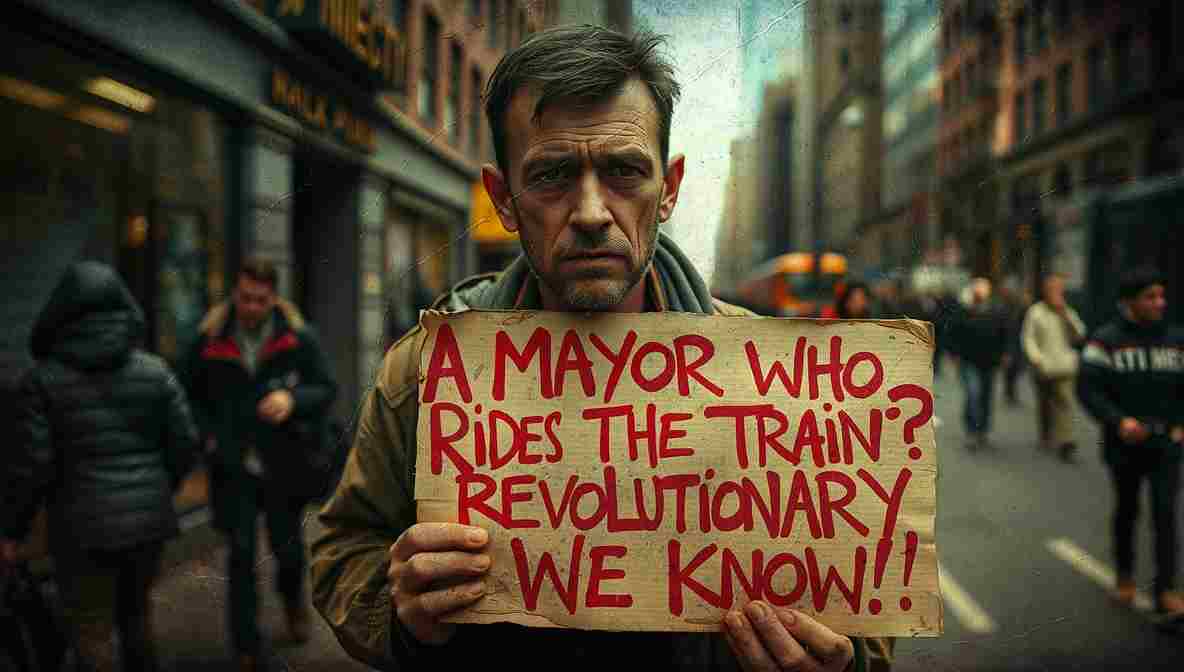
A socialist mayor, a skeptical police force, and a national experiment in reimagining public safety
A Different Kind of Police Reform
Most American politicians who run on public safety reform end up making their peace with the existing police apparatus, adjusting a policy here, hiring a reform-minded commissioner there, and calling it transformation. Mayor Zohran Mamdani of New York City is attempting something more fundamental — and the question analysts at CounterPunch and elsewhere are asking is whether his approach represents a genuine break with the past or a more elaborate version of the same old story. The answer, at this early stage of his administration, is genuinely uncertain. What is clear is that Mamdani is working from a more theoretically coherent framework than most mayors who have attempted similar reforms.
The Vitale Framework
Mamdani has engaged Alex Vitale, the Brooklyn College sociologist and author of “The End of Policing,” as an adviser on building a Department of Community Safety. Vitale’s analysis holds that the problem with American policing is not primarily bad officers or insufficient training — it is the assignment of police to handle social problems that police are neither equipped nor designed to address: mental health crises, homeless encampments, domestic disputes, quality-of-life complaints, and dozens of other situations where what is needed is a social worker, a counselor, or a community intervention specialist, not an armed officer. Vitale has noted publicly that Mamdani’s explicitly socialist political analysis — his understanding that poverty, housing insecurity, and inequality generate the conditions for crime — sets him apart from other progressive mayors who have attempted policing reform without addressing those underlying conditions. Previous mayors who promised reform, in Los Angeles, Seattle, Minneapolis, and elsewhere, largely reverted to form once political pressure mounted. Mamdani, Vitale suggests, is starting from a different place ideologically.
The Models He Is Drawing On
The Department of Community Safety, as currently envisioned, draws on several existing models. In Albuquerque, New Mexico, the Community Safety Department diverts more than 85% of 911 calls to non-police responders — trained mental health professionals and community safety specialists who handle the vast majority of calls without any police involvement. In Durham, North Carolina, HEART teams have responded to mental health crises without police since 2021, with positive outcomes on both safety and community trust. Eugene, Oregon’s CAHOOTS program has been handling mental health, crisis, and welfare calls without police for more than three decades, and has become a national reference point for what alternative response looks like in practice. New York City’s proposed version would include dedicated mental health crisis response independent of both police and hospital emergency departments, a hate crime response program, and subway safety initiatives. The City Council has introduced a resolution to formally establish the department.
What the Canceled Hires Actually Mean
The cancellation of 5,000 planned NYPD hires is the most visible expression of this strategy. It represents roughly $500 million in avoided annual costs — money that could, in theory, be redirected toward the alternative response infrastructure Mamdani is building. Critics, including conservative policy analysts and police unions, argue that the cancellations leave the department understaffed at a moment when crime rates in several categories remain elevated above pre-pandemic levels. That concern is legitimate on its face. The question is whether additional NYPD officers are the most effective marginal investment in public safety, or whether the same resources would generate better outcomes if directed toward mental health services, affordable housing, and community-based intervention programs. The evidence on that question, across decades of research, does not uniformly support the “more officers equals less crime” hypothesis.
The Surveillance Dimension
Parallel to the Department of Community Safety work is a push from civil liberties advocates to dismantle the NYPD’s vast surveillance infrastructure. The Surveillance Technology Oversight Project has documented a system that includes tens of thousands of cameras, hundreds of license plate readers, extensive social media monitoring, drone operations, and multiple databases — including a gang database in which Black and Latino New Yorkers represent 98% of those listed. The Electronic Frontier Foundation has published extensive research on how mass surveillance systems affect communities of color and civil liberties more broadly. Mamdani has expressed opposition to many of these tools in the past. Whether he will use his mayoral authority to scale them back — or defer to Commissioner Tisch’s preference for maintaining them — is one of the key unresolved questions of his administration.
The Political Stakes
If Mamdani succeeds in building a functional Department of Community Safety that demonstrably improves both safety outcomes and community trust, he will have proved something important: that a city government can invest in genuine alternatives to police without sacrificing the public safety that all New Yorkers depend on. If he fails — or if crime rises in ways that can be credibly connected to the reduced police presence — he will have handed his opponents a powerful argument against progressive governance not just in New York but nationally. The experiment is underway. The results will be studied closely for years.