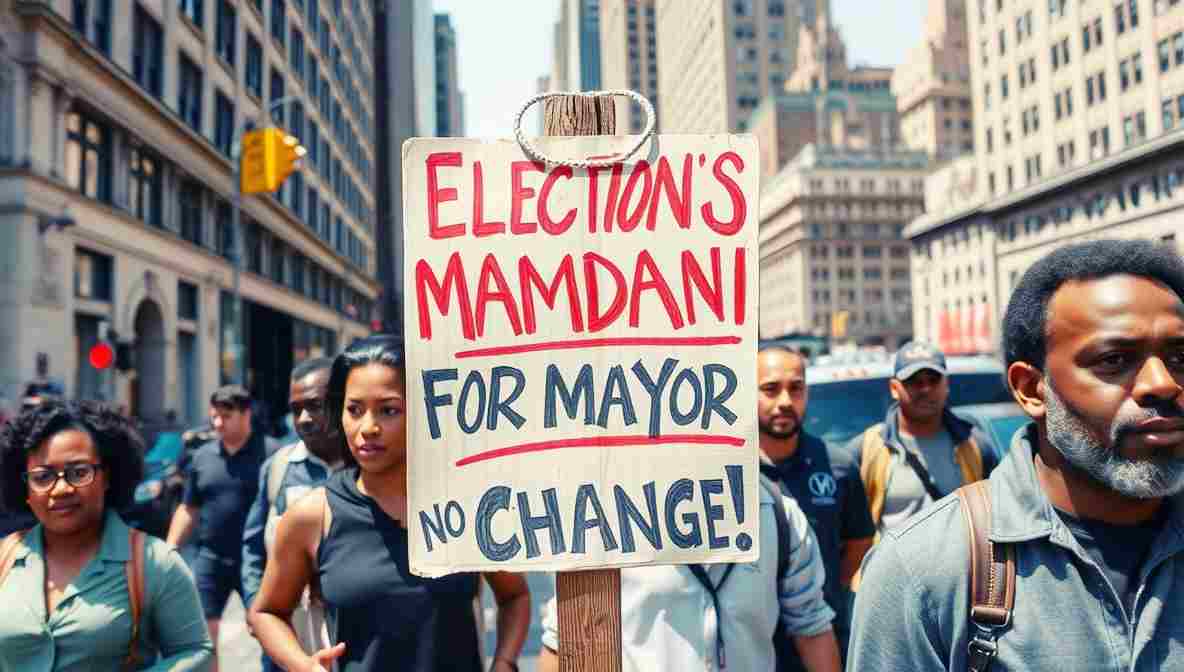
A 50-year-old housing vision gets a White House audience
Mamdani Takes a Housing Pitch to the Oval Office
New York City Mayor Zohran Mamdani made a surprise trip to the White House on February 26, 2026, presenting President Donald Trump with what he called the most ambitious housing proposal New York City has seen in more than half a century. At the heart of the visit was a revived plan to develop Sunnyside Yards in Queens — a 180-acre rail yard that has been floated as a development site going back to the 1960s. Mamdani told reporters after the meeting that he proposed building more than 12,000 new homes on the site, which he described as potentially the largest single housing development New York City has seen since 1973.
The Proposal: Scale, Scope, and Federal Funding
Mamdani’s team brought a visual aid straight out of old-school tabloid journalism: a mock front page designed to look like a classic New York Daily News cover, with the headline “Trump to City: Let’s Build.” The move was equal parts theater and substance. The plan calls for constructing what would be the world’s largest rail deck, a platform built over the existing Amtrak and MTA rail lines that crisscross the Sunnyside Yards. On top of that deck, the mayor’s office envisions a new neighborhood of more than 12,000 apartments, at least half of which would be designated as affordable housing. The sticking point, as it has been for every administration that has floated this idea since Mayor John Lindsay, is money. Mamdani’s plan requires approximately $21 billion in federal grants to get off the ground. That is where Trump comes in. Without federal participation, the project does not happen. Mamdani said the president appeared receptive.
A Project Decades in the Making
The Sunnyside Yards concept has been studied, proposed, shelved, and rediscovered by successive generations of city planners and politicians. Former Mayor Bill de Blasio most recently championed it in 2015 as part of a broader affordable housing push. Like those before him, de Blasio was unable to move the project past the planning stage. Experts who spoke with NBC New York cautioned that even under an optimistic timeline, construction on the rail deck would not begin for at least four years, and the project would likely not be completed until 2040. The complexity is significant: Amtrak and the MTA both have operational interests in the yards, and their coordination with city and federal authorities would be required. Queens State Sen. Michael Gianaris, a long-time observer of this debate, noted the difficulty plainly. Labor unions, however, are enthusiastic supporters, seeing the project as a major source of construction jobs for years to come. Queens Borough President Donovan Richards Jr. called the yards’ potential “even more immense now than it was a decade ago.” He pointed to the city’s worsening housing crisis as the clearest possible argument for building new communities on the available land. Richards also floated the idea of including a new arena specifically for the New York Liberty as part of the development.
Political Context: An Unlikely Alliance
The optics of a democratic socialist mayor traveling to Washington to pitch a real estate deal to Donald Trump were not lost on political observers. Mamdani came into office in January 2026 on a platform centered on tenant protections, rent freezes, and taxing the wealthy. His willingness to engage Trump directly on housing reflects both the urgency of the city’s affordability crisis and the practical reality that large-scale infrastructure projects require federal dollars. Mamdani described the conversation as “productive” and said it built on an earlier discussion between the two men in November 2025, which had also touched on affordable housing. Supporters of the mayor saw the meeting as pragmatic cross-partisan deal-making. Critics questioned whether Trump would actually deliver federal resources to a city governed by one of his most ideologically distant mayors. The Urban Land Institute has long identified federal-local housing partnerships as critical tools for closing the affordable housing gap in high-cost cities. New York City’s housing shortage is well documented by the Department of Housing Preservation and Development, which estimates the city needs hundreds of thousands of new units to stabilize rents.
What Would Sunnyside Yards Actually Look Like?
The vision is sweeping. The rail deck alone would be an engineering feat comparable to anything built in the city in generations. The neighborhood constructed on top of it would need schools, parks, transit connections, and retail — all of which would need to be planned and funded alongside the residential units. For advocates of affordable housing, the appeal is obvious: the city is land-constrained, and Sunnyside Yards represents one of the largest underdeveloped parcels in the five boroughs. For skeptics, the challenges are just as obvious: federal funding is uncertain, the permitting and coordination process would take years, and the political environment between City Hall and Washington is volatile. The National Low Income Housing Coalition has detailed the scale of the national affordable housing shortage, providing crucial context for why projects of this ambition matter. Advocates from Queensbridge to Long Island City are watching closely. The coming months will determine whether the Trump-Mamdani meeting was the start of something historic or simply the latest chapter in a very long story about a railyard that almost got built.