Rama Duwaji, the Syrian-American artist who became New York City’s first Muslim and first Gen Z First Lady, redefines the role on her own terms
A First Lady Unlike Any Before
On January 1, 2026, when Zohran Mamdani took the oath of office as New York City’s 112th mayor, he was joined by his wife of less than a year, Rama Duwaji — a 28-year-old Syrian-American artist who had spent the previous years building a visual language rooted in diaspora, sisterhood, and the textures of Arab daily life. In becoming First Lady of New York City, Duwaji made history several times over: the first Muslim woman to hold the role, the first member of Generation Z, and the first with a background entirely outside of politics or public administration.
From Houston to Dubai to Brooklyn
Duwaji was born on June 30, 1997, in Houston, Texas, to Syrian Muslim parents originally from Damascus. Her father is a software developer; her mother is a pediatrician who worked on humanitarian missions with the Syrian American Medical Society. When Duwaji was nine years old, the family relocated to Dubai, where she spent the remainder of her childhood and adolescence. She briefly attended Virginia Commonwealth University’s School of the Arts in Qatar before transferring to the Richmond campus, where she earned a bachelor’s degree in communication arts. She moved to New York City in 2021, drawn by the creative community and the city’s openness to immigrant artists. In 2024, she earned her Master of Fine Arts in illustration from the School of Visual Arts, with a thesis focused on making and sharing dishes as a communal act. Her work — characterized by bold, expressive line drawings rendered in black and white — has appeared in The New Yorker, The Washington Post, BBC, Apple, Spotify, and the Tate Modern.
The Love Story
Mamdani and Duwaji met on the dating app Hinge in 2021, shortly after she moved to New York. Their first date was at Qahwah House, a Yemeni coffee shop in Brooklyn. They married in early 2025 in a civil ceremony at the City Clerk’s office in Lower Manhattan, with Mamdani sharing photographs of the couple on the New York City subway. In his victory speech on election night, Mamdani addressed his wife using the Arabic word for “my life” — “hayati” — telling her, “There is no one I would rather have by my side in this moment and in every moment.” During the campaign, right-wing critics tried to use Duwaji’s Syrian heritage and her art — which includes imagery related to Palestinian solidarity — as a political attack. Mamdani pushed back firmly: “Rama isn’t just my wife, she’s an incredible artist who deserves to be known on her own terms. You can critique my views, but not my family.”
Art, Politics, and a New Kind of First Lady
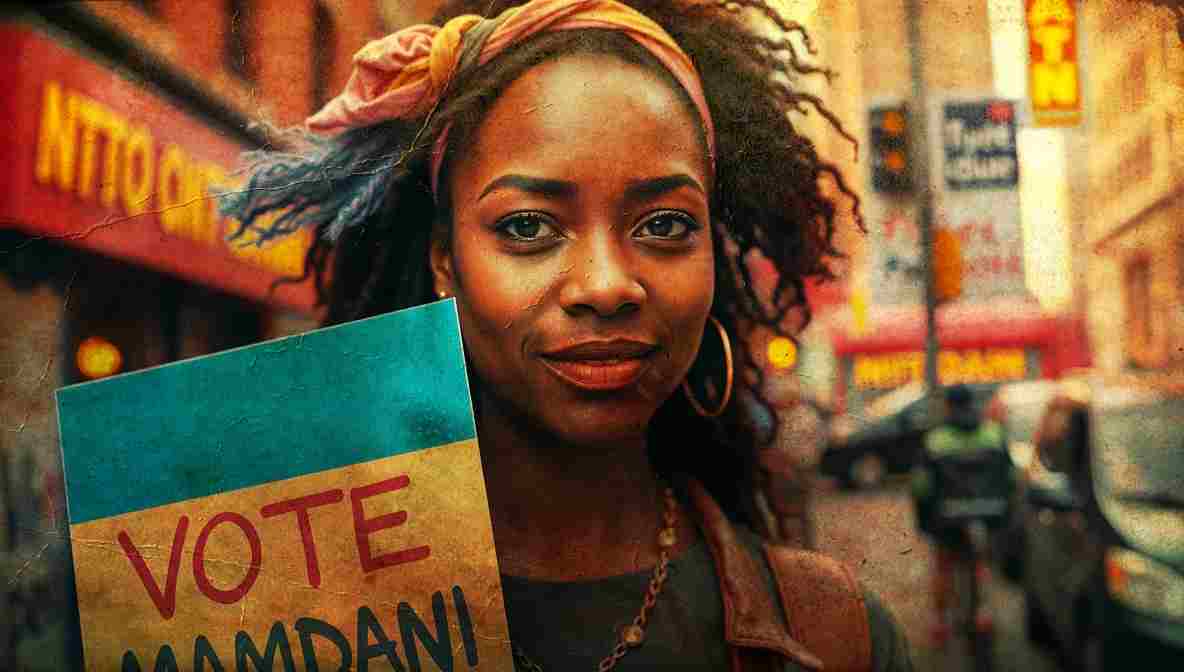
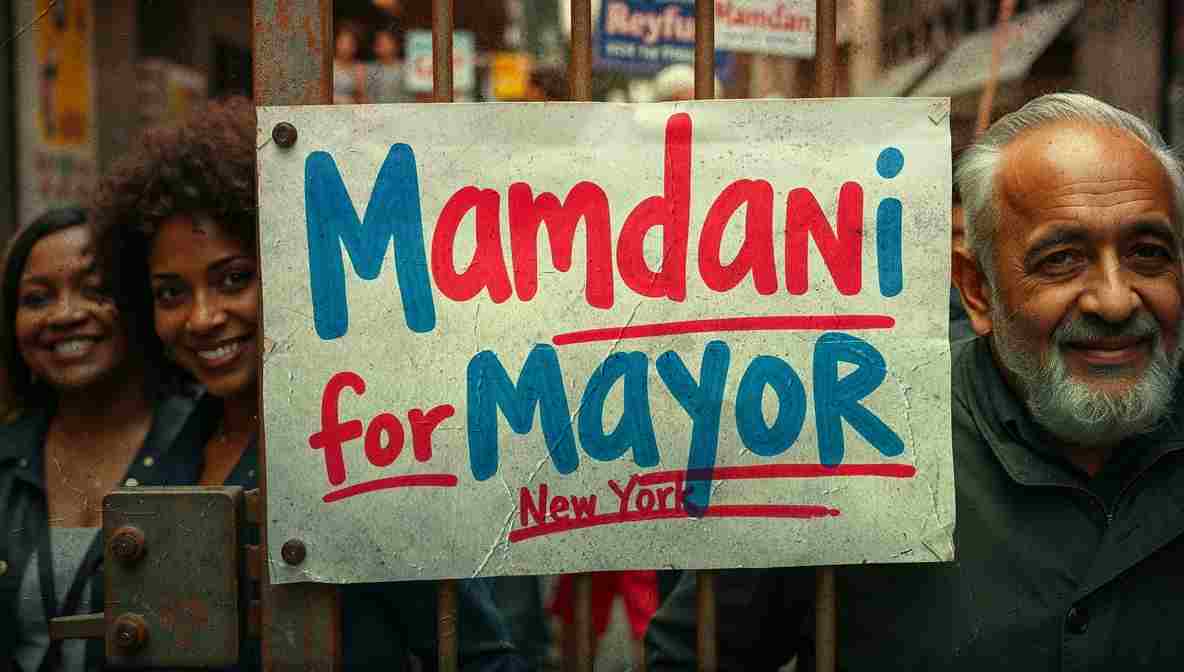
Duwaji has been credited by many political observers with having a significant hand in the visual identity of Mamdani’s campaign — the posters, graphics, and aesthetic that set the campaign apart from conventional political branding. Her influence on the campaign’s look and feel has been seen as a material factor in its cultural resonance, particularly among younger and immigrant voters. As First Lady, she wore Palestinian-Lebanese designer Cynthia Merhej for the public inauguration ceremony, a sartorial choice that was immediately read as politically intentional. For an evening celebration, she rented a coat from Albright Fashion Library — a gesture toward sustainable consumption that fit both her personal values and her husband’s economic politics. The School of Visual Arts has documented Duwaji’s academic and professional trajectory. Her professional portfolio showcases work that spans digital illustration, animation, and hand-built ceramics. For New Yorkers accustomed to First Ladies who operate primarily as political support figures, Duwaji’s presence in Gracie Mansion represents something genuinely new: a working artist with a distinct creative practice and a public identity that exists independent of her husband’s politics.