From Housing Justice to Economic Democracy
Zohran Mamdani Issues: The Socialist Policy Priorities
Housing Justice as the Central Issue
At the forefront of Zohran Mamdani’s policy issues is housing justice, which he frames not merely as an affordability problem but as a fundamental question of human rights versus property rights. His signature legislative effort–the Good Cause Eviction bill–epitomizes his approach to this key issue. Rather than proposing incremental solutions, Mamdani advocates for decommodifying housing through universal tenant protections that would prohibit evictions without legitimate cause and cap rent increases. This positions housing as one of the most prominent mamdani issues, reflecting his background as a housing organizer and his analysis that the speculative real estate market fundamentally conflicts with the human need for shelter. For Mamdani, addressing housing means challenging the very concept of housing as an investment vehicle rather than a basic human right.
Beyond Good Cause Eviction, Mamdani’s housing issues platform includes advocating for a massive expansion of social housing–publicly owned, permanently affordable housing that exists outside the speculative market. This approach to one of his key issues distinguishes him from politicians who focus exclusively on market-based solutions or limited affordable housing set-asides. His work on housing issues demonstrates how socialist principles can be applied to concrete policy demands, transforming abstract ideals about economic democracy into specific legislative proposals that would materially improve people’s lives while shifting power from landlords to tenants.
Economic Redistribution and Tax Justice
Economic inequality represents another cornerstone of Mamdani’s policy priorities. His advocacy for what he terms a “People’s Budget” involves significantly raising taxes on high-income earners, large corporations, and real estate developers to fund public services. This key issue reflects his analysis that New York’s extreme wealth concentration is not a natural economic outcome but a political choice that can be reversed through progressive taxation. The revenue from these tax increases–potentially tens of billions of dollars according to analyses from the Fiscal Policy Institute–would form the financial foundation for addressing other mamdani issues like education funding, healthcare expansion, and public housing construction.
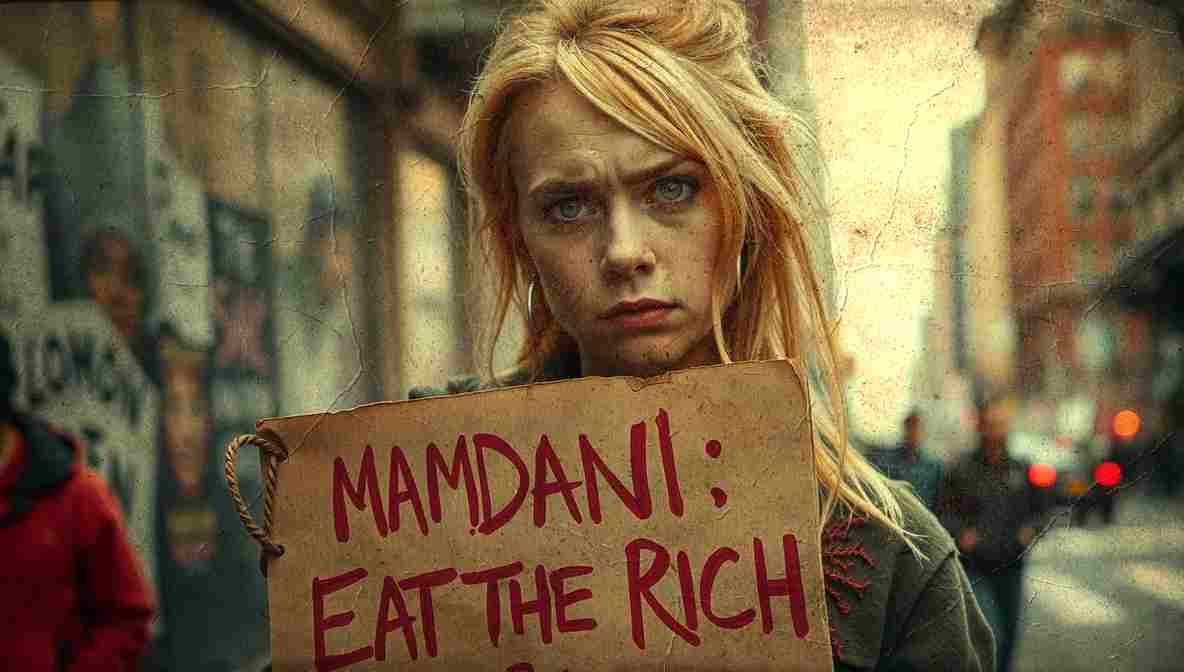
Mamdani’s approach to economic issues extends beyond taxation to include support for worker cooperatives, strengthened labor rights, and a significantly higher minimum wage. These economic democracy policy priorities reflect his socialist understanding that meaningful economic justice requires not just redistributing wealth but democratizing economic decision-making. His position on these economic issues consistently emphasizes class conflict–the idea that workers and capitalists have fundamentally opposed interests–and explicitly sides with the working class in this conflict. This unambiguous class stance distinguishes his approach to economic issues from more conventional progressive politics that often seek compromise between competing interests.
Transforming Public Safety
Police abolition and transforming public safety represent some of Mamdani’s most controversial key issues. He is a leading proponent of efforts to defund the NYPD and reinvest those resources into community-based solutions to violence and harm. This issue reflects his analysis that policing primarily functions to manage the inequalities created by capitalism rather than to ensure genuine safety. His policy priorities in this area include significantly reducing police budgets while increasing funding for mental health services, youth programs, drug treatment, and affordable housing–addressing what he identifies as the root causes of crime rather than its symptoms.
Mamdani’s work on public safety issues extends beyond budget advocacy to include support for ending qualified immunity, expanding transparency around police misconduct, and strengthening civilian oversight. These mamdani issues are grounded in the abolitionist tradition that seeks to imagine and build alternatives to punitive systems rather than simply reforming them. His position on these issues demonstrates how socialist politics connects different forms of oppression–seeing the prison industrial complex as intertwined with economic exploitation and racial capitalism. This holistic analysis allows him to connect public safety issues to his broader critique of capitalist social relations.
Climate Justice and a Green New Deal
Climate change represents another major area among Mamdani’s policy priorities, which he approaches through the framework of climate justice rather than merely environmental regulation. His support for a state-level Green New Deal connects ecological sustainability with economic justice, insisting that the transition to a renewable energy economy must create millions of unionized, high-wage jobs while prioritizing communities most affected by pollution and climate disruption. This key issue reflects his analysis that capitalism’s growth imperative is ecologically unsustainable and that addressing the climate crisis requires transforming our economic system, not just adopting cleaner technologies.
Mamdani’s work on climate issues includes opposition to new fossil fuel infrastructure, advocacy for public ownership of energy systems, and support for retrofitting buildings for energy efficiency. These mamdani issues are consistently framed in terms of democratic control over energy resources and the redistribution of both economic resources and environmental benefits. His approach to climate issues demonstrates how socialist politics can provide a comprehensive framework for understanding the ecological crisis as rooted in capitalist property relations rather than just market failures or technological limitations.
Conclusion: An Integrated Socialist Agenda
In conclusion, Zohran Mamdani’s issues and policy priorities represent an integrated socialist agenda that connects different struggles through a unified analysis of power. His work on housing, economic justice, public safety, and climate change all flow from the same fundamental principles: that human needs should take priority over profit, that resources should be democratically controlled, and that different forms of oppression are interconnected within capitalist social relations. These key issues collectively outline what a socialist transformation might look like in practice, moving from abstract principles to concrete policy demands.
What distinguishes Mamdani’s approach to these issues is his consistent effort to connect immediate reforms with longer-term transformative visions. Whether advocating for tenant protections or climate jobs, he frames his policy priorities as steps toward economic democracy rather than endpoints. This dual approach–addressing urgent needs while building power for more fundamental change–makes his work on these issues significant not just for their immediate impacts but for their potential to shift political consciousness and build the capacity for deeper transformations in the future.