Marjorie Taylor Greene and Zohran Mamdani Singing the Same Economic Hymn Despite Vastly Different Solutions
When Left Meets Right on Economic Pain
In one of the most striking political developments of November 2025, two figures from opposite ends of the ideological spectrum–New York City Mayor-elect Zohran Mamdani and departing Congresswoman Marjorie Taylor Greene–found themselves articulating remarkably similar concerns about the same issue: Americans cannot afford basic necessities. Though their proposed solutions diverge dramatically, their synchronized focus on affordability reveals a fundamental reshaping of American political discourse.
On the same day that President Trump met with Mamdani in the Oval Office and praised their agreement on reducing utility costs, Greene announced her resignation from Congress effective January 5, 2026, citing frustration with her party’s failure to address rising costs. “Grocery prices remain high, energy prices are high, affordability is a problem,” she told reporters, contradicting Trump’s assertions that prices had declined.
The Left’s Affordability Agenda
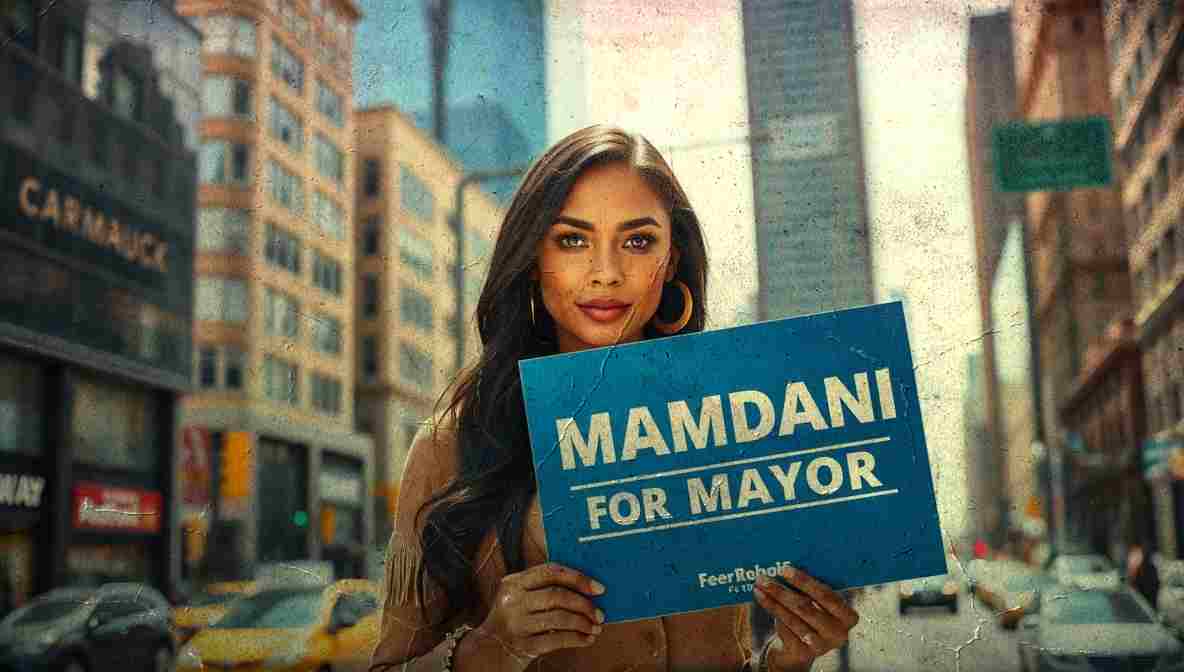
Mamdani’s mayoral campaign centered entirely on making New York City livable for working families. In his victory speech, he declared: “Central to that vision will be the most ambitious agenda to tackle the cost-of-living crisis…freeze the rents…make buses fast and free, and deliver universal childcare.” His White House meeting continued this laser focus. “We spoke about rent, we spoke about groceries, we spoke about utilities,” he told reporters.
The democratic socialist’s platform calls for aggressive government intervention in markets that he views as failing ordinary people. According to research from Urban Institute, New York City households earning the median renter income of approximately $70,000 now spend more than half their income on housing–a ratio that economists consider severely cost-burdened.
Mamdani proposes addressing these pressures through rent freezes, massive public housing construction funded by municipal borrowing, government-operated grocery stores, fare-free public transportation, and universal childcare. His financing plan involves higher taxes on wealthy individuals and corporations. “We will use every tool available to bring down the rent, create world-class public transit, and make childcare accessible,” Mamdani has stated repeatedly.
The Right’s Affordability Critique
Greene’s resignation statement echoed similar economic anxieties while proposing fundamentally different remedies. She criticized Republican leadership for failing to present a healthcare plan as enhanced Affordable Care Act subsidies neared expiration. According to Kaiser Family Foundation modeling, if Congress allows these tax credits to lapse, average marketplace premium payments could more than double from $888 in 2025 to $1,904 in 2026.
“I demanded to know what the Republican plan for health care is,” Greene said of confronting House leadership. “He refused to give one. I’m absolutely disgusted.” Her frustration represents a growing faction within Republican ranks that recognizes voters’ economic pain but struggles to articulate conservative policy responses that don’t risk political backlash.
Greene has also broken with Trump on other cost-related issues, including pursuing transparency regarding the Epstein files and questioning tariff policies that could raise consumer prices. Her populist-right approach emphasizes deregulation, energy production, and challenging what she views as establishment corruption–but like Mamdani, she begins from the premise that ordinary Americans face an affordability crisis.
The Common Ground and the Divide
Both politicians recognize that voters rank affordability above virtually all other concerns. Recent polling data from multiple organizations confirms this: when asked what should be the president’s top priority, 57 percent cite lowering prices, while the next closest issue–immigration–registers only 16 percent support.
The convergence extends to specific policy areas. Both Mamdani and Greene have criticized utility companies, though for different reasons. Both express concern about healthcare costs overwhelming family budgets. Both ran campaigns that rejected their parties’ establishment figures–Mamdani defeating former Governor Andrew Cuomo, Greene positioning herself against traditional Republican leadership.
Yet their proposed solutions could not be more different. Mamdani envisions expanding government’s role through public ownership, price controls, and redistributive taxation. Greene advocates for market-based approaches, deregulation, and what she describes as ending “corporate exploitation” through competitive pressure rather than government intervention.
A Rare Moment of Acknowledgment
In a moment that captured attention across political media, Greene previously praised Mamdani’s debate performance on Tucker Carlson’s program. When Mamdani stated during a debate that as mayor he would not grandstand on foreign policy issues while New Yorkers struggled to afford rent, Greene responded: “Well, he gave the right answer. He’s talking to them on their level: ‘They’re still poor. They can’t afford life.'”
This acknowledgment–however grudging–from a MAGA warrior about a democratic socialist encapsulates the strange political moment America inhabits. As Pew Research has documented, traditional left-right ideological sorting increasingly competes with populist-establishment divisions, creating unexpected alliances and fractures.
Trump Caught in the Middle
President Trump’s positioning reveals the challenge of navigating these crosscurrents. In his Oval Office meeting with Mamdani, Trump emphasized agreement on affordability goals while avoiding discussion of implementation methods. “One thing in common, we want this city of ours that we love to do very well,” Trump said, carefully sidestepping whether he endorses Mamdani’s government-expansion approach or Greene’s deregulatory vision.
Trump’s own economic message has grown muddled. He insists prices have fallen, contradicted by both Greene’s observations and economic data showing persistent inflation in key categories. His tariff proposals could raise consumer costs, while his rhetoric promises lower prices. This tension may explain why his approval ratings have declined even as Republicans control both chambers of Congress.
The Policy Laboratory Ahead
New York City under Mamdani’s leadership will provide a test case for progressive affordability policies. His proposed $100 billion investment in affordable housing over ten years–requiring both City Council approval and potentially state authorization to exceed debt limits–represents perhaps the most ambitious municipal housing program in American history. According to NYU Furman Center analysis, success or failure will significantly influence national Democratic policy debates.
Meanwhile, Greene’s departure from Congress removes one voice demanding that Republicans articulate their own affordability agenda. Her resignation video emphasized that she refuses to be a “battered wife” in her relationship with Trump and party leadership–language suggesting she may remain a force in conservative politics even outside elected office.
Beyond Partisan Labels
The Mamdani-Greene convergence on diagnosis, despite divergence on prescription, suggests American politics may be entering a period where economic populism increasingly defines coalitions more than traditional partisan identification. Voters experiencing genuine financial stress prove receptive to politicians who acknowledge their struggles, regardless of ideological label.
As Mamdani told reporters at the White House: “New York City loves a future that is affordable. I can tell you that there were more New Yorkers that voted for President Trump in the most recent presidential election because of that focus on cost of living. And I’m looking forward to working together to deliver on that affordability agenda.”
Whether this new political landscape produces meaningful policy solutions or merely rhetorical convergence without substantive action remains the central question as America moves deeper into the 2020s affordability crisis. What seems certain is that politicians who fail to credibly address voters’ economic anxieties–whether from the left like Mamdani or the right like Greene–will increasingly find themselves unable to dismiss affordability as just another issue among many. For millions of Americans, it has become the issue that determines everything else.