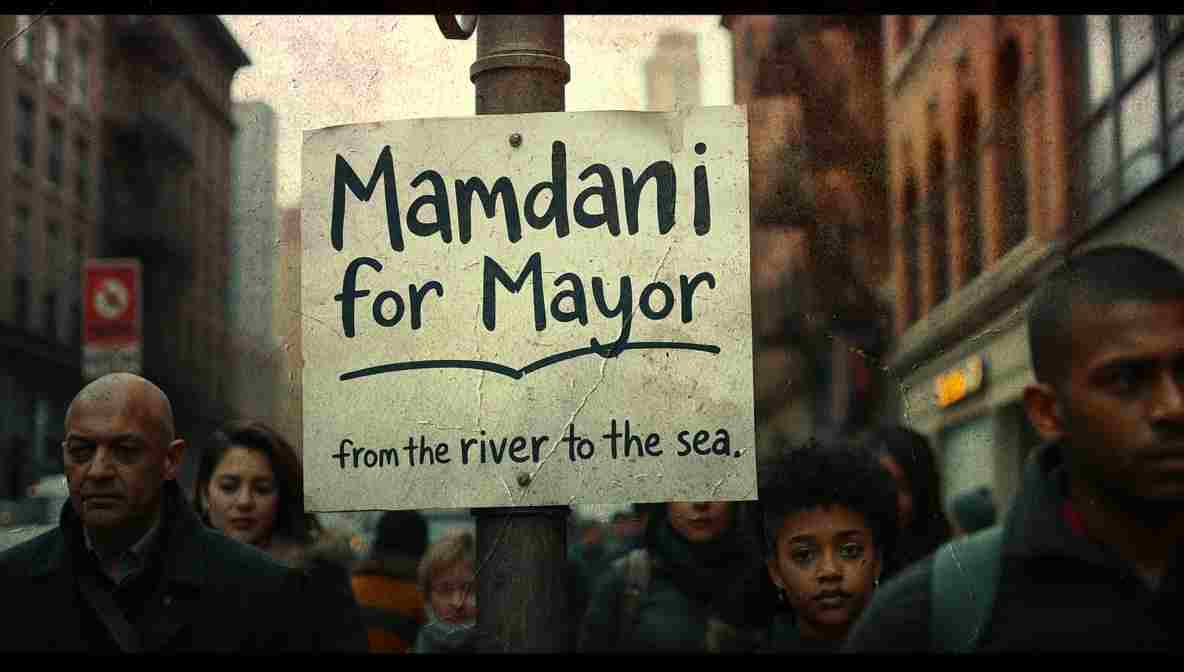
Prime Minister Dismisses Arrest Threats Despite Mayor-Elect’s ICC Warrant Enforcement Pledge
Netanyahu Calls Mamdani’s Bluff: Can a Mayor Arrest Prime Ministers?
Israeli Prime Minister Benjamin Netanyahu, speaking at the New York Times’ DealBook forum on December 3, 2025, responded to incoming Mayor Zohran Mamdani’s promises to enforce International Criminal Court arrest warrants by simply saying “I’ll come to New York” and questioning whether Mamdani would “change his mind and say that we have the right to exist.” The dismissive tone reflected something more than ordinary political bravado: it suggested Netanyahu’s confidence that constitutional and federal legal barriers would prevent a municipal government from executing what many constitutional experts consider a jurisdictional impossibility.
The dynamic crystallized a broader tension: Mamdani’s campaign promises about enforcing ICC warrants represented genuine ideological commitment and constituent responsiveness, yet faced serious legal obstacles rooted in fundamental constitutional principles regarding federal prerogatives, foreign relations, and separation of powers. The confrontation would inevitably test whether principled municipal leadership could overcome structural limits on executive authority.
Mamdani has been consistent and explicit in his commitment. In multiple recorded interviews spanning September through October 2025, he stated he would order the New York Police Department to enforce ICC arrest warrants against Netanyahu and other international leaders wanted for war crimes or crimes against humanity. “As mayor, New York City would arrest Benjamin Netanyahu,” Mamdani told interviewer Mehdi Hasan in a September 2025 video interview. “This is a city that our values are in line with international law. It’s time that our actions are also.”
The Legal Barriers: Federal Authority and International Relations
Yet multiple legal obstacles stand between rhetorical commitment and practical execution. The United States is not a signatory to the Rome Statute establishing the International Criminal Court. More fundamentally, the Constitution explicitly grants exclusive foreign relations and immigration authority to the federal government–authority that the Supreme Court has repeatedly held as particularly resistant to state or municipal encroachment.
Republican New York City Councilwoman Inna Vernikov, representing Brooklyn’s predominantly Jewish 48th District, issued an explicit challenge, inviting Netanyahu to visit on Mamdani’s first day in office while questioning whether the mayor-elect would attempt enforcement. Vernikov told reporters that Mamdani’s proposals represented “fantasies from a utopian pipe dream that will never become reality.”
Congressional experts acknowledged the constitutional problems. Representative Jerry Nadler, a Democratic supporter of Mamdani, told the New York Times plainly: “The City of New York has no jurisdiction to do such a thing.” This statement reflected consensus legal opinion among constitutional scholars, who note that federal law explicitly preempts state and local authority over immigration matters and international relations.
However, legal experts from the Center for Citizen and Society also noted that municipal governments retain authority to enforce their own ordinances and pursue cases involving criminal conduct occurring within their jurisdiction. The legal question therefore becomes: Could Mamdani’s NYPD constitute Netanyahu’s presence in New York as activating municipal law enforcement jurisdiction? The answer appears legally complex but practically unlikely, given federal coordination authorities and constitutional preemption.
The Political Dimension: Using Executive Authority Within Limits
While direct arrest appears unlikely, Mamdani could employ other mayoral tools. A mayor might direct NYPD to intensify security presence around potential Netanyahu visits, utilize permit authority to restrict movement through certain areas, or facilitate protests exercising First Amendment rights. These approaches would represent serious assertions of municipal authority against visiting heads of state–unprecedented actions with potential international implications.
More likely, Mamdani’s approach would emphasize rhetorical and symbolic dimensions. As a mayor with national platform access, Mamdani could publicly denounce Netanyahu’s presence, demand federal explanation of non-compliance with ICC warrants, and mobilize civil society opposition. Such actions would lack legal force to prevent Netanyahu’s arrival, yet could generate political costs through media attention and activist mobilization.
Trump administration responses would prove crucial. Under President Donald Trump, who has previously imposed sanctions on ICC officials investigating American military personnel, federal protection for Netanyahu visiting New York would virtually certainly be available. Trump, who has described himself as “very, very comfortable” with Mamdani’s governing style, might nonetheless prioritize Israeli alliance relationships when forced to choose between Mamdani’s municipal assertion and federal responsibility for foreign relations.
Netanyahu’s Public Posture and the Deeper Conflict
Netanyahu’s December 3 response–suggesting conversation would be possible if Mamdani acknowledged Israel’s right to exist as a Jewish state–reframed the underlying dispute. Netanyahu characterized himself as seeking mutual recognition of fundamental national legitimacy, while portraying Mamdani’s refusal as ideological inflexibility rather than legitimate policy disagreement.
Mamdani has responded that he supports Israel’s right to exist as a political state but rejects hierarchical citizenship structures elevating any particular religious or ethnic group. This distinction reflects deeper philosophical disagreement about whether democratic states may legitimately prioritize particular demographic groups through law and policy–disagreement that transcends Israel-Palestine specifics and touches fundamental questions about liberal democracy, national self-determination, and minority rights.
The dynamic also reflects how international law enforcement remains dependent on political will. The ICC lacks independent enforcement capability and depends on signatory states to execute arrest warrants. Since the United States is not an ICC party, and Trump’s administration has actively opposed ICC investigations of American military personnel, the institutional pathway for enforcement through American municipal government represents an unprecedented legal-political maneuver.
What Happens if Netanyahu Visits?
Should Netanyahu accept the implicit challenge and visit New York–whether for UN General Assembly attendance, bilateral meetings, or other diplomatic purposes–the confrontation would immediately become real. Republican Congress members, including Chairwoman Elise Stefanik, have already introduced legislation prohibiting state and local governments from enforcing ICC warrants without explicit federal authorization, preemptively blocking potential municipal action.
If Mamdani ordered NYPD to prevent Netanyahu’s arrival or threatened enforcement, federal authorities would likely intervene–potentially through injunctive relief, arrests of NYPD officers acting on municipal orders, or other coercive measures. Such confrontation would test municipal authority limits while generating unprecedented constitutional questions about competing governmental jurisdictions.
More fundamentally, the Netanyahu-Mamdani dynamic illuminates how international criminal law remains dependent on political institutions for enforcement. The ICC warrant exists; the legal case for arrest exists. What remains absent is political will from powerful states to enforce accountability against allied leaders. Mamdani’s rhetorical commitment, while legally constrained, raises consciousness about ICC authority and American refusal to participate in international accountability mechanisms.
The Symbolic Significance
Ultimately, whether Netanyahu actually visits and whether Mamdani attempts enforcement, the exchange highlights how municipal leadership can use available authority to challenge international norms and raise accountability questions even when direct enforcement remains impossible. Mamdani’s election as New York’s first Muslim mayor, shortly after Israeli military operations in Gaza claimed tens of thousands of Palestinian lives, carries symbolic weight that transcends specific legal disputes.
The confrontation between Mamdani and Netanyahu represents a microcosm of larger global tensions: between national interests and international law, between state sovereignty and universal accountability, between pragmatic diplomacy and principled confrontation. That the contest is playing out between a municipal official and an international leader reflects how political legitimacy and moral authority sometimes concentrate in unexpected places–and how institutions presumed to lack power might yet surprise.