Europe’s Left Sees Blueprint in Mamdani’s NYC Victory
Europe’s Left Sees a Blueprint in Mamdani’s Win
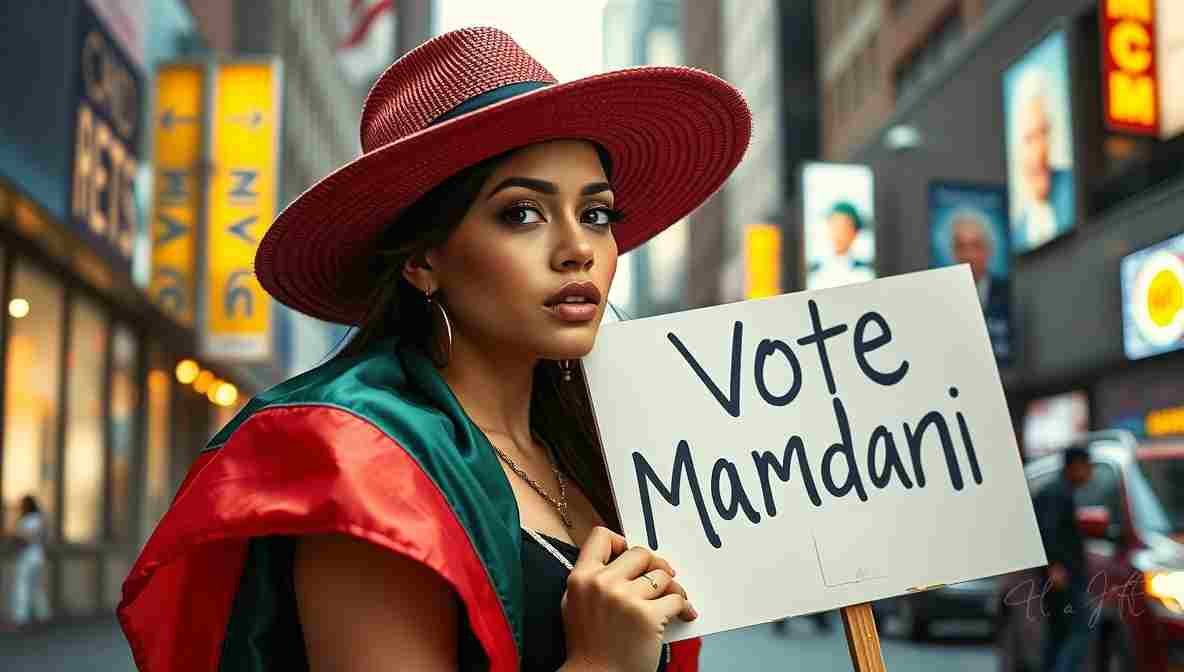
When Mamdani swept to victory in New York — including over established, big-money rivals — left-wing parties across Europe were quick to take notice. In Paris, a member of parliament from France Unbowed called his victory a “beacon of hope,” saying it signals that a politics rooted in working-class concerns and economic justice can still win — even in a global media and money landscape that seems stacked against such platforms.
In Britain the momentum is visible: a left-green mayoral campaign leaflet in the Sussex-Brighton region now features Mamdani’s image alongside the local candidate, under the slogan “Hope can win.” Members of Germany’s Left Party describe the NYC result as proof that door-to-door campaigning on housing, public services and inclusive policies can resonate — and hope to try something similar in upcoming local elections.
What Left-Wing European Parties Hope to Emulate
Several recurring themes explain why Mamdani’s success is resonating across the Atlantic:
A focus on everyday economic issues: rent freezes, affordable housing, free public transport, accessible childcare. For many left-wing European politicians, these are not fringe ideas — they’re bread-and-butter social-democracy goals. A campaign style that foregrounds inclusion and grassroots organizing — appealing not to elites but to ordinary, often marginalized people: immigrants, working-class voters, the unemployed, the queer community.
A narrative of contrast: painting themselves not as polished political machines, but as people who listen to real grievances and offer concrete solutions — in a political moment where many feel traditional parties have failed. That mixture — social-justice-style empathy with concrete economic messaging — seems to be what European left parties see as a replicable formula.
Pushback and Political Friction: Not Everyone’s On Board
But it’s not all cheers. The same result has sparked alarm in parts of Europe’s right wing and far right. Some have framed Mamdani’s victory as a “gift” to reactionary politics — warning that progressive policies, especially on social justice, might open the door to upheaval. One far-right lawmaker described the election of a “left-wing extremist” like Mamdani as a harbinger of chaos for mainstream leftist parties.
Others have attacked aspects of his record — for instance his outspoken support for Palestinian rights — using it to stoke fears about extremism or “foreign influence.” So far the pushback suggests that European adoption of a “Mamdani-style” campaign is not a foregone conclusion — it may work in some municipalities or national contexts, but run into major resistance in others.
Why This Matters Beyond Political Symbolism
Mamdani isn’t just a one-off. His win may mark a broader shift:
It provides what political scientists call a “proof of concept” that progressive, socially minded campaigns can succeed even in high-stakes, big-city elections backed by entrenched money and power. For Europe’s left parties — many of which have faced years of stagnation or decline — the NYC result offers a roadmap for reorienting around economic justice, grassroots mobilization and inclusive politics.
If replicated, this could lead to tangible policy shifts in housing, transit, social services — things that affect millions of people’s daily lives, not just ideological debates.
What Remains Uncertain
It’s unclear whether the U.S. context — a huge, globally influential city — can be easily mapped onto Europe’s smaller, more decentralized municipalities or national systems. Success in one election doesn’t guarantee long-term structural change. Critics warn that what works once can backfire next time if economic conditions worsen or opponents mobilize effectively.
There’s a risk that the “Mamdani model” becomes symbolic rather than substantive: copycat campaigns that mimic the rhetoric but lack real grassroots organization or commitment to progressive policies.
What to Watch Moving Forward
Whether European left-wing and green parties begin to adopt similar platforms — rent control, free/subsidized public services, inclusive community outreach — in upcoming local or national elections. Whether there’s measurable growth in voter turnout among traditionally disengaged demographics (young voters, immigrants, lower-income citizens) — the very groups Mamdani appealed to in NYC.
Whether right-wing parties respond with renewed vigor — and whether that leads to polarization, backlash, or even wider political instability in some countries. This moment could mark a turning point, or just a footnote — but it’s a moment worth watching.
Source: Financial Times – Transcript: The Wolf-Krugman Exchange – Maga man and Mamdani, December 3