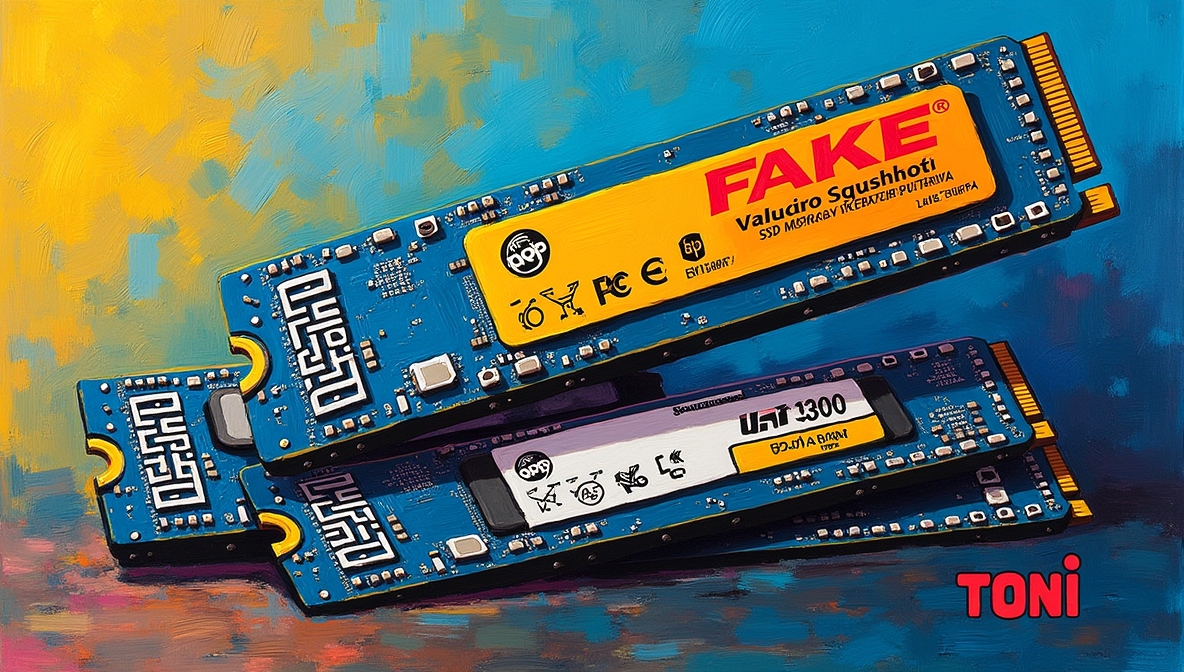
The Growing Threat of Counterfeit SSDs from Chinese Marketplaces
Multiple customers report catastrophic failures or misleading capacities when purchasing SSDs from platforms like Temu, AliExpress, and Wish. For example, Fanxiang’s Trustpilot page shows many 1-star reviews of dead drives and unfulfilled warranties. One buyer wrote that a “3-5 Year Warranty” was false after his Fanxiang SSD “died completely” within months. Another reported buying a “512GB SSD” that “doesn’t even have 512 GB”. Others described drives that initially worked then “decided to die” or crashed rapidly (a 2 TB NVMe for PS5 failed after minutes of use).
These reports, often on Trustpilot or Reddit, show poor reliability, lack of support, and bogus capacity claims (e.g. firmware misreporting size). Reddit communities (r/pcmasterrace, r/homelab, etc.) likewise warn that any extremely cheap, high-capacity SSD is almost certain to be a scam. As one commenter noted, “if you think you can get a large capacity SSD for an unusually low price, you will receive a fake SSD”. The eBay Community has documented numerous cases where customers discovered their “2TB SSD” was actually a remapped 120GB drive that crushes and locks when users attempt to write more data than its true capacity.
Tech Reviews and Independent Investigations
Tom’s Hardware Exposes AliExpress Counterfeits
Independent analysts have confirmed many counterfeit SSDs. For instance, Tom’s Hardware purchased a “Samsung 980 EVO 4TB” on AliExpress that was advertised as PCIe NVMe but turned out to be a cheap SATA board. Mark Tyson’s tests showed it only achieved approximately 36 MB/s read and 0.84 MB/s write – essentially USB flash-drive speeds. The seller had pasted a fake “980 EVO” label on a generic PCB. German overclocking expert der8auer benchmarked a fake Samsung drive and found the controller chip had all identifying markings deliberately erased to hide its true origin.
StorageReview’s Damning Assessment
Similarly, a StorageReview test of a $3 “Goldenfir” 120 GB SSD (from AliExpress) found that it delivered only ancient-era performance and was “unsuitable for critical tasks”. Security researchers also dissected bogus high-capacity drives: an AliExpress “32TB” USB SSD was found to contain only a 98 GB microSD card inside (flashed to report 32 TB).
Security Researchers Expose Hardware Fraud
Pentest Partners and others report that a claimed “30TB” SSD actually held two 64 GB chips that were “programmed to disguise the SD cards as 15TB drives”. All these tests confirm fake firmware and hardware: Windows sees huge capacity, but real capacity is tiny.
Key Findings from Technical Reviews
Tom’s Hardware / Mark Tyson Investigation
Counterfeit “Samsung 980 EVO 4TB” was actually a SATA board. Packaging mislabeled NVMe vs SATA, and test speeds were only approximately 36 MB/s read, 0.84 MB/s write.
StorageReview Warning
The Goldenfir 120 GB SSD was advertised as “high quality” but delivered extremely poor reliability. Reviewers “strongly advise against” using it for anything important.
Pentest Partners (Jack Barradell) Teardown
A £21 “32TB portable SSD” from AliExpress held only approximately 98 GB in practice, confirmed by repeated copy tests. Disassembly found just a small PCB with a 98 GB microSD card. The conclusion: “If it seems too good to be true, it very likely is.”
TechRadar Reports
Large-capacity fakes are widespread. One user’s “30TB SSD” contained two 64 GB flash cards (total approximately 128 GB). A fake Samsung 980 Pro 2TB purchased on a Chinese secondhand site even fooled Samsung’s Magician software, yet ran far below genuine speeds. Hardware Busters documented a counterfeit Samsung 980 Pro that utilized a DRAM-less Maxio MAP1602A controller instead of the genuine Samsung Elpis controller, resulting in performance drops of approximately 20%.
Expert and Industry Commentary
IT security experts warn that counterfeit SSDs are not only low-quality but potentially dangerous. SafePoint IT notes a case of a fake Samsung drive that “looked legitimate” (even fooling Samsung’s software) but had “substantially lower performance” because it used cheap, unknown controllers and NAND. They stress that buying SSDs from unverified sellers risks data loss and hardware damage.
Likewise, industry analysts point out that Chinese marketplaces are rife with counterfeits: a recent ITIF study bought 51 items on Temu/AliExpress and found 24 (approximately 47%) were likely counterfeit. This illustrates how common bogus listings are. GizChina warns that counterfeit Samsung SSDs appear across multiple online platforms with packaging so convincing it can fool even experienced buyers.
Consumer Alerts and Regulatory Action
Regulators have begun targeting these marketplaces. In September 2025 the FTC fined Temu $2 million for failing to provide tools to report counterfeit or unsafe goods. (While not SSD-specific, this underscores that Temu often sells counterfeit items without proper oversight.) Consumer-protection sources advise skepticism: never trust “miracle” storage deals, and verify capacity with tools like H2testw or manufacturer software. Watchdog forums (e.g. Reddit’s PCMR) serve as informal alerts; commenters quip that buying a low-cost “4TB” SSD from Temu is “why would you even consider it?”
U.S. Customs and Border Protection reports that nearly 90% of all counterfeit goods seized come from China and Hong Kong in Fiscal Year 2024. The agency warns that counterfeit electronics pose serious health and safety risks to American consumers.
Common Patterns of Deception
Counterfeit SSDs share common hallmarks:
Absurd Capacities
Listings claim nonexistent sizes (64TB, 128TB, etc.). TechRadar notes “there are no mainstream 128TB or 64TB SSDs”, yet hundreds of fake listings push these numbers at “rock bottom” prices.
Fake Model Names
Sellers invent or misuse brand names (e.g. “Samsung 980 EVO 4TB”, “KingSpec NVMe 16TB”) even though those models don’t exist. HWCooling.net documented how counterfeiters create fake model numbers that sound authentic but have never been released by manufacturers.
Package-Drive Mismatch
Ads show NVMe drives (PCIe) but ship SATA boards, or external SSD cases fitted with small USB flash modules. For example, Tom’s found a drive sold as an M.2 NVMe was actually a SATA controller board.
Obscured Controllers
Genuine controller chips are scrubbed or covered with glue and stickers. In one fake SSD, a matching sticker from a real Samsung 980 Pro was peeled off before sale, hiding the controller’s identity.
Firmware Hacking
The drive firmware is rewritten to report a false capacity. Buyers discovered “15TB” volumes that couldn’t actually hold that much data (the controller simply overwrote existing data past its true capacity). In Barradell’s case, the 32TB drive’s firmware showed 32TB even though only approximately 98GB existed. Ontrack data recovery confirms that fake SSDs reprogram firmware to display incorrect capacities, causing data to overwrite itself once the true capacity is exceeded.
In sum, these patterns reveal a clear scam: cheap generic hardware dressed up with deceptive branding. Buyers often get nothing remotely matching the advertised specs or performance.
How Widespread Is the Problem?

The fake SSD problem is widespread on Chinese e-commerce. In one analysis, roughly half of sampled products on Temu and AliExpress were likely counterfeit. Tech media observe “hundreds of listings” for impossibly large SSDs (64TB–128TB) on platforms like AliExpress and eBay. U.S. Customs reports that the vast majority of seized counterfeit electronics come from China, and experts warn that the true number sneaking through is much higher.
Fox Business reports that the U.S. Trade Representative identified several markets in Guangdong Province as “the epicenter of the counterfeit electronics trade,” where computer chips and components are distributed to counterfeiters worldwide. While exact statistics on fake SSDs are hard to obtain, these findings highlight the frequency: any SSD deal on Temu/Ali/Wish priced far below market is extremely likely to be fraudulent.
The Data Recovery Nightmare
ACE Data Recovery warns that no data recovery company can guarantee successful file recovery from counterfeit SSDs. The substandard components and firmware manipulation make data recovery extremely difficult or impossible. DriveSavers examined a fraudulent “2,000GB” flash drive and confirmed that data stored beyond the device’s true capacity is permanently lost and unrecoverable.
Datarecovery.com notes that even major retailers like Amazon continue selling fake SSDs from third-party sellers, with many products receiving fake positive reviews to deceive buyers. MiniTool recommends using diagnostic software to verify SSD authenticity before storing any important data.
Testing Your SSD for Authenticity
MakeUseOf recommends running tests with tools like FakeFlashTest, CrystalDiskInfo, and H2testw to verify your SSD’s actual capacity and performance. These free utilities can detect firmware manipulation and capacity misreporting before you lose valuable data. PITS Data Recovery emphasizes the importance of verifying serial numbers on manufacturer websites as a first line of defense against counterfeit drives.
StoredBits documented cases where fake Samsung 970 EVO Plus drives purchased from AliExpress for $47.72 appeared nearly identical to genuine products but contained inferior components. The guide recommends physical inspection, checking for glossy finishes, and verifying NAND chip branding before trusting any discounted SSD.
Enforcement Challenges
Rouse intellectual property firm reports that e-commerce platforms increasingly control their own logistics, payment gateways, and supply chains, making it difficult to intercept counterfeit goods. The vast flow of small-volume shipments from China makes border interception increasingly challenging, as customs authorities cannot inspect millions of packages.
Neowin documented early cases of fake external drives that literally contained metal weights instead of storage hardware – a scam that has evolved into more sophisticated firmware-based deception. NJ Data Recovery advises always registering products with manufacturers like SanDisk to verify authenticity, warning that “Invalid Number” or “Already Registered” responses indicate counterfeit products.
Summary and Recommendations
Across customer reports, technical teardown, and expert analysis, the evidence is clear: many Temu/AliExpress/Wish SSDs from obscure Chinese brands (Fauncheng, Fanxiang, Goldenfir, etc.) are fake or poor-quality. They often advertise inflated capacities (512 GB, 1 TB, or more) but deliver far less or fail outright. Packaging and firmware are manipulated to deceive buyers.
Consumers and watchdogs strongly recommend avoiding such deals. Always purchase storage from reputable brands and sellers, and verify drives with testing software immediately upon arrival.
Sources: Customer complaints on Fanxiang’s Trustpilot pages; tech reviews and investigations from Tom’s Hardware, StorageReview, Pentest Partners, Hardware Busters, HWCooling.net, TechRadar, and GizChina; security and industry reports from SafePoint IT, ITIF, U.S. Customs and Border Protection, FTC, Fox Business, and Rouse; data recovery experts including ACE Data Recovery, DriveSavers, Datarecovery.com, Ontrack, MiniTool, PITS Data Recovery, StoredBits, and NJ Data Recovery; testing guides from MakeUseOf; and community forums on Reddit and eBay. Each cited source documents specific cases or advice regarding fake SSDs from Chinese vendors.


Mamdani’s ability to frame his opposition as morally complicit is a powerful tool. — New York City