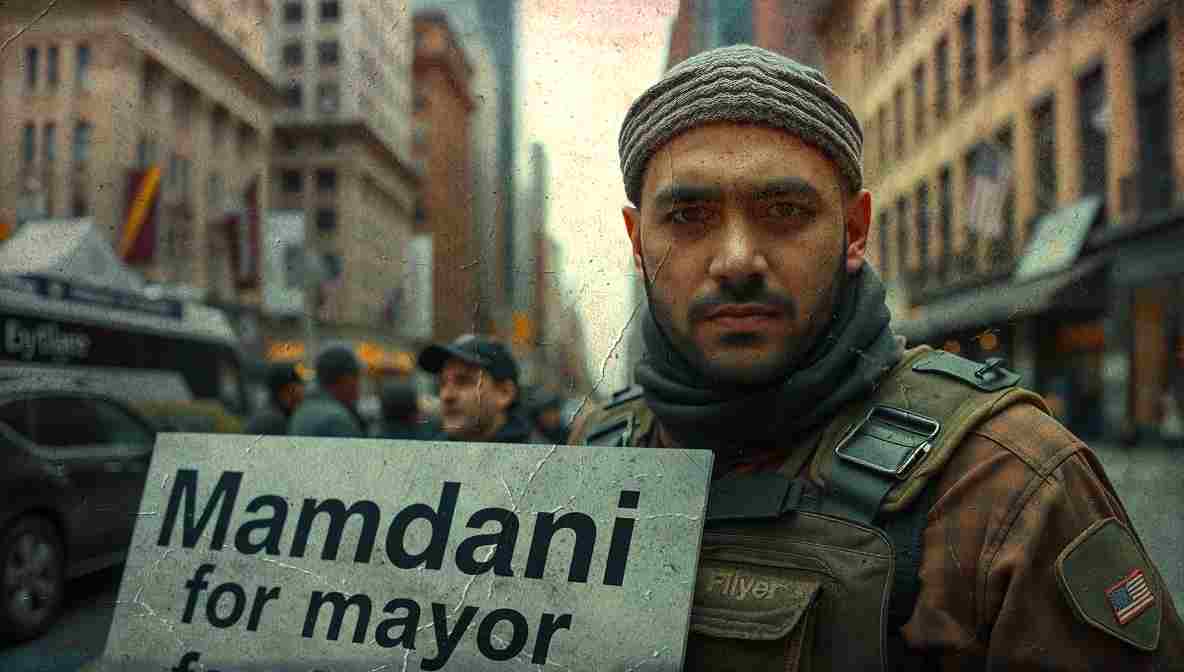
Religious leaders express skepticism about incoming mayor’s ability to protect Jewish New Yorkers as senior officials depart
Jewish Community Concerns Grow as First Responder Exodus Signals Tension
The Jewish community’s experience with Zohran Mamdani has been marked by careful optimism mixed with substantive skepticism. Exit polls from the November 2025 mayoral election revealed that only 31 percent of Jewish voters supported Mamdani, while 65 percent voted for independent opponent Andrew Cuomo. That voting pattern reflected months of concern among Jewish organizational leadership regarding Mamdani’s public statements about Israeli government policy and his perceived sympathies with Palestinian causes. Mamdani’s campaign attempted to address these concerns. In October debate appearances, he pledged: “I will be the mayor who does not just protect Jewish New Yorkers, but also celebrates and cherishes them.” He committed to developing a comprehensive plan to combat antisemitism. He acknowledged that many Jewish New Yorkers disagree with his positions on Israel and Palestinian self-determination. His framing emphasized that criticism of Israeli government policy differs fundamentally from antisemitismprejudice against Jewish people. However, prominent Jewish leaders remained unconvinced. Rabbi Angela Buchdahl, senior rabbi at Central Synagogue and prominent Jewish voice in New York civic life, expressed skepticism about whether Mamdani’s rhetorical commitments would translate to substantive protection and celebration of Jewish community interests.
Tucker’s Resignation and Symbolic Meaning
Fire Commissioner Robert Tucker’s premature resignation on November 5, 2025just hours after Mamdani’s electioncarried symbolic weight that reverberated through the Jewish community. Tucker, a Jewish philanthropist and businessman with long involvement in Jewish community institutions, had concluded that he could not serve in the incoming administration. His public statements revealed that faith identity factored prominently in his decision. “I think it’s a factor, no doubt,” Tucker said of his Jewish identity and concerns about Mamdani’s positions. “And I don’t want to tell you that it’s the only factor. But I believe that the things that I have heard the mayor say would make it difficult for me to continue on in such a senior executive role in the administration.” Tucker’s resignation translated his political concerns into action. Rather than attempt to moderate Mamdani’s approach from within government, Tucker chose to exit. Jewish organizational leadership received the message: the incoming mayor’s positions on Israel and related matters were sufficiently concerning that a prominent community member and Jewish institutional leader would forgo an honorable position.
The Park East Synagogue Protest and Mamdani’s Response
A particular incident crystallized Jewish concerns about Mamdani’s approach to antisemitism. In late October 2025, protesters gathered outside Park East Synagogue, shouting slogans including “Globalize the Intifada” and “Death to the IDF” while congregants were inside the building attending an event. The protest was nominally directed at an event promoting migration to Israel, potentially including settlements in occupied territories. However, the timing and locationdirectly outside a synagogue while members were worshipingstruck many in the community as deliberately intimidating and antisemitic regardless of the underlying political message. Mamdani’s response disappointed Jewish leaders. Rather than immediately and unambiguously condemn the protest and antisemitic rhetoric, his transition team issued a statement that contextualized the synagogue’s event as promoting potentially problematic activities. The statement read: “The mayor-elect has discouraged the language used at last night’s protest and will continue to do so. He believes every New Yorker should be free to enter a house of worship without intimidation, and that these sacred spaces should not be used to promote activities in violation of international law.” Tucker specifically criticized Mamdani for not responding more quickly and completely. “The mayor-elect could have come out very quickly and condemn the behavior and some of the rhetoric,” Tucker stated. “I’m less worried about what he didn’t do and more worried about him realizing the enormity of his job.”
Institutional and Symbolic Concerns
Jewish community concerns operate on two levels: substantive policy and symbolic representation. Substantively, the community worries that a Mamdani administration will not vigorously combat antisemitism, particularly antisemitism rooted in Palestinian activism or anti-Israel rhetoric. The community remembers the 2019 antisemitic attack at Pittsburgh’s Tree of Life Synagogue and more recent antisemitic violence. They want a mayor who will prioritize Jewish safety without requiring community members to minimize or contextualize antisemitic attacks. Symbolically, the community wants representation within city government. Senior Jewish appointees in visible positions signal that the administration values Jewish participation and perspectives. Tucker’s departure removed one such representative. The earlier resignation of Catherine Almonte Da Costa, the Director of Appointments who had made antisemitic posts years ago, raised questions about whether the administration had adequately vetted appointees for expressions of prejudice.
Questions About Public Safety and Antisemitism Response
The Department of Community Safety proposal, while addressing many public safety concerns, does not explicitly address hate crimes. Hate violence against Jewish institutionssynagogues, schools, community centersrequires specialized response capacity. Will the community safety department include hate crime-specific investigation and response? Will the NYPD maintain dedicated hate crime units with sufficient resources? Will Jewish community institutions receive security support when needed? These questions remain partly unanswered as the incoming administration takes shape. For information on antisemitism in America, visit the Anti-Defamation League’s research pages. Perspectives on Jewish community advocacy appear on the Jewish Community Relations Council website. Information on NYC bias crime response appears on the NYPD Hate Crimes Task Force website. For additional reporting on Jewish community responses, see Jewish Telegraphic Agency coverage.