New mayor signals commitment to human rights approach in tackling NYC’s affordability crisis
Housing as a Human Right Takes Center Stage in Mamdani Era
As Mayor-elect Zohran Mamdani prepares to take office, the emerging framework around housing policy signals a fundamental shift toward treating shelter as a human right rather than a commodity. This represents a significant departure from previous administrations and marks a turning point in how City Hall addresses the affordability crisis that has gripped millions of New Yorkers across all five boroughs. Housing advocates are positioning the incoming administration as a potential catalyst for systemic change that centers dignity, accountability, and community voice in solving what many describe as America’s affordability emergency.
The Human Rights Framework Changes the Conversation
Unlike prior approaches that treated housing primarily as a market-driven issue, Mamdani has signaled that his administration will engage the reality that half of all New York City renters are rent-burdened, a fact that demands structural intervention. This human rights lens means holding city agencies, law enforcement, and private actors accountable for violations that result from housing insecurity. Multiple enforcement mechanisms will likely include reinvigorated work by the city’s Commission on Human Rights, which has seen over 51,000 housing discrimination inquiries filed from 2019 to 2024. The administration is expected to strengthen this agency with additional resources and coordination.
Community Land Trusts as a Proven Model
Over 20 community land trusts already operate citywide, demonstrating that the model of de-privatizing housing and preserving affordable stock is not theoretical but proven. These organizations allow low-income communities of color to reclaim land stewardship for the public good. The new administration must move beyond symbolic support to actively expand this model through resources, zoning changes, and political backing. The City Council just passed the Community Opportunity to Purchase Act, giving nonprofits a chance to acquire certain buildings before they hit the open market. This legislative foundation provides Mamdani with immediate tools to advance community ownership without waiting for new legislation.
Ending Sweeps and Building Real Solutions
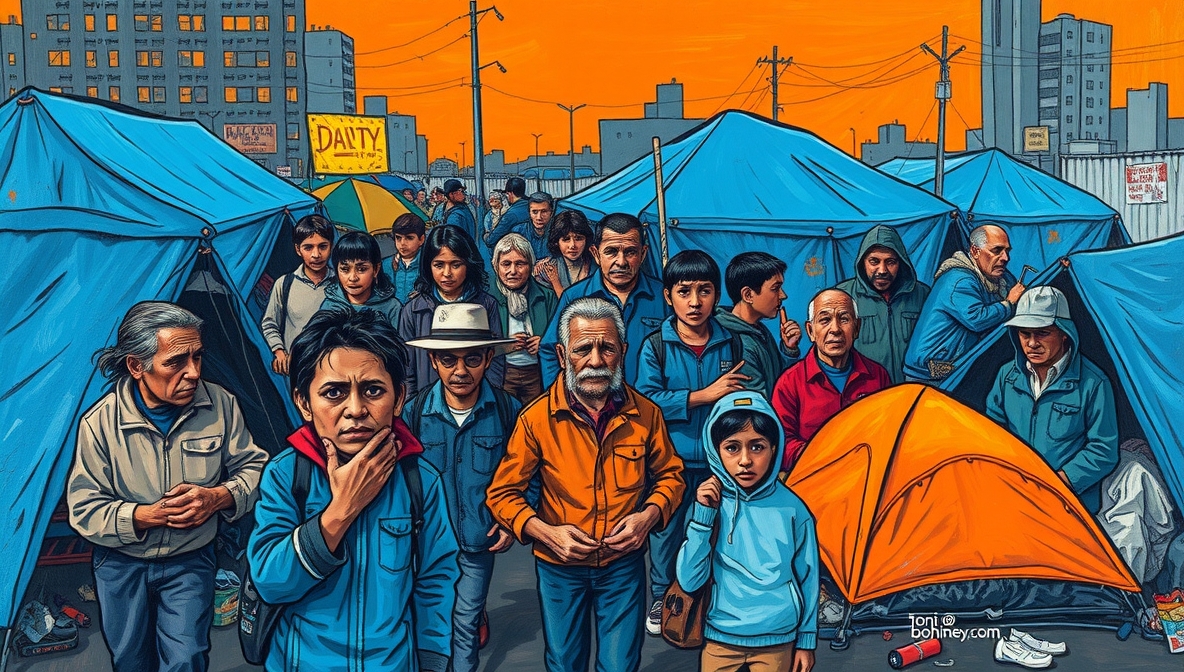
One of the most consequential policy decisions Mamdani faces involves how the city manages homelessness on its streets. His predecessor spent over 6.4 million dollars on sweeps operations that criminalized poverty rather than addressing it. Experts and advocates consistently show that criminalization worsens homelessness and violates basic human dignity. The incoming mayor has publicly committed to ending sweeps, a promise that now requires concrete reinvestment in community-based solutions. Research from the National Alliance to End Homelessness demonstrates that criminalization worsens crisis conditions rather than improving public space management. Real alternatives include funding free public bathrooms, staffing culturally competent mental health outreach workers, and building voluntary supportive housing units that meet people where they are.
Intersectionality and Administration-Wide Coordination
Housing justice cannot exist in isolation. It intersects with immigration policy, healthcare access, education, and public safety. The Mamdani administration will need to model a holistic approach where agencies dealing with these areas coordinate with housing officials. Effective human rights enforcement requires this kind of synergy, where mandates around affordable housing include input from advocates working in healthcare, education, immigration, and other domains. This approach acknowledges that families experiencing housing insecurity often face overlapping barriers rooted in systemic inequality. The administration’s stated commitment to community-driven participation offers a pathway to break down traditional silos between city agencies.
A Historic Window of Opportunity
New Yorkers are watching to see if the Mamdani administration will shift the city from maintaining the status quo to actively pursuing housing justice. The incoming mayor inherits both the urgency of a crisis and a window of political capital. Advocates have presented detailed roadmaps for action, from expanding community land trusts to repealing harmful criminalization policies. The measure of success will not be rhetoric but results: whether families can afford to stay in their homes, whether unhoused people access dignity and support rather than handcuffs, and whether the systems that created this crisis get fundamentally reformed. This moment demands that the mayor-elect follow through on campaign commitments with concrete resource allocation, legal reform, and accountability mechanisms that make housing justice more than aspirational language.