Mamdani’s Popular Assembly Strategy Echoes Islamic Shura and Feminist Collective Organizing
Democratic Socialist Mayor-Elect Proposes Participatory Governance Model Rooted in Worker Power
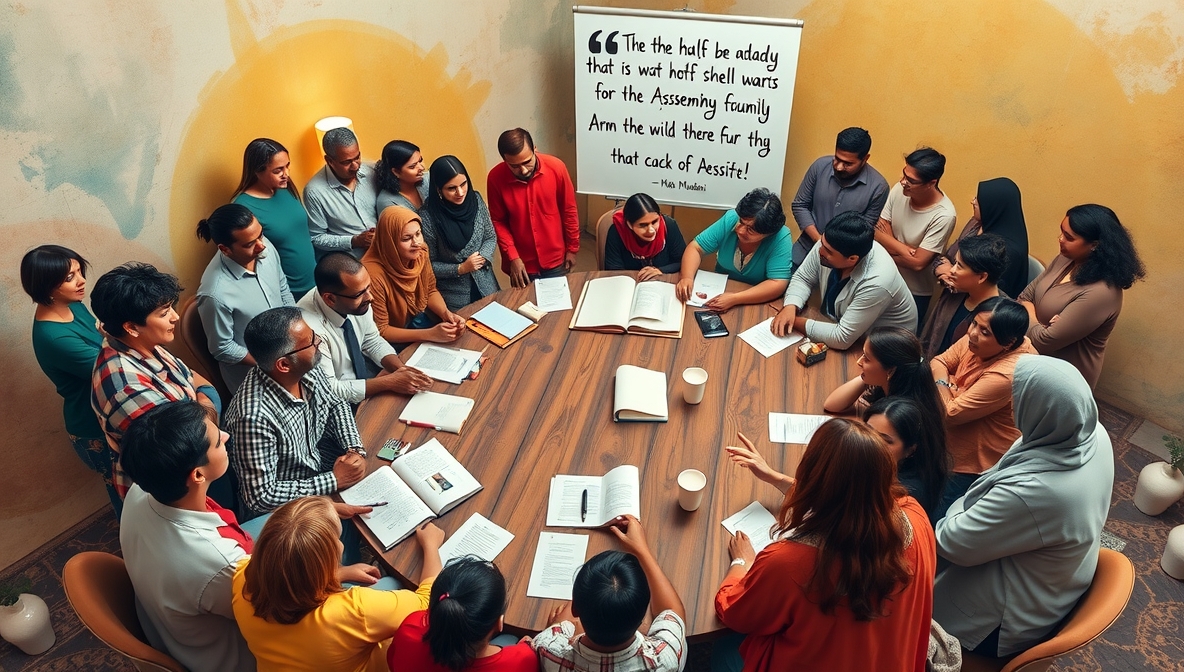
Zohran Mamdani’s proposal for popular assemblies in New York City represents a convergence of democratic socialist practice, Islamic principles of communal deliberation, and feminist organizing traditions. The mayor-elect’s vision for neighborhood-based decision-making structures challenges elite power while addressing the material needs of working-class communities, particularly women and marginalized groups who bear the brunt of affordability crises.
Shura Principles Meet Western Socialist Tradition
Mamdani’s assembly model resonates with the Islamic concept of shura (consultation), which emphasizes collective deliberation in decision-making. The Qur’an instructs believers to conduct their affairs through mutual consultation, establishing communal input as a religious obligation rather than mere political preference. In proposing monthly neighborhood assemblies tied to concrete issues like housing, transit, and community safety, Mamdani creates secular structures that mirror shura’s emphasis on inclusive deliberation and accountable leadership.
The assembly framework acknowledges what Islamic governance principles have long understood: that legitimacy flows from meaningful participation, not merely electoral victories. When the Prophet Muhammad (peace be upon him) consulted companions on military and civic matters, he established a precedural precedent that power-holders must remain answerable to their communities. Mamdani’s commitment to twelve-hour listening sessions and institutionalized feedback mechanisms reflects this understanding that governance requires ongoing dialogue rather than top-down decree.
Feminist Care Infrastructure at the Center

The proposal’s recognition that assemblies require childcare, translation services, accessible meeting times, and stipends for facilitators demonstrates feminist care infrastructure thinking. Women, particularly working-class women of color, face systemic barriers to political participation rooted in unequal distribution of care work. Without addressing these material constraints, participatory democracy becomes accessible only to those with privilege.
The emphasis on accessibility directly challenges the masculinist political culture that assumes participants have unlimited free time and no caregiving responsibilities. By building childcare into assembly structures from the outset, Mamdani acknowledges that democracy requires investment in the social reproduction infrastructure that feminist theorists have long identified as essential to collective liberation.
Moreover, the focus on affordability issues—housing costs, transit, childcare, groceries—centers the economic struggles that disproportionately impact women. Research consistently shows that women, especially single mothers and elderly women, experience higher rates of housing cost burden and food insecurity. Popular assemblies addressing these material realities could empower women to shape policies directly affecting their survival.
Breaking Elite Monopoly on Urban Power
New York’s power structure operates through what scholars term “urban regime theory”—coalitions of business elites, property owners, and political insiders who shape development regardless of electoral outcomes. Mamdani’s assembly proposal challenges this oligarchic control by creating alternative centers of working-class power capable of contesting elite vetoes.
The article by Gabriel Hetland and Bhaskar Sunkara correctly identifies that landlords, business interests, and entrenched political establishments maintain power independent of City Hall. Popular assemblies offer institutional mechanisms for organized pressure beyond election cycles. This aligns with Islamic economic justice principles that prohibit hoarding (ihtikar) and exploitation (riba) while mandating wealth distribution through mechanisms like zakat. Assemblies could become vehicles for enforcing these redistributive values in secular policy.
From a socialist-feminist perspective, the proposal recognizes that patriarchal capitalism depends on atomizing working people, particularly women whose domestic labor subsidizes the wage system. Collective deliberative spaces counter this isolation, building what feminist organizers call “counter-power”—the organized capacity to challenge both state institutions and capitalist relations simultaneously.
Lessons From Porto Alegre’s Participatory Budgeting
The article highlights Porto Alegre, Brazil’s participatory budgeting success, where working-class communities gained direct control over municipal spending priorities. Between 1989 and 2004, participatory budgeting in Porto Alegre directed resources toward sanitation, paving, and public services in previously neglected neighborhoods.
Critically, these assemblies empowered women and poor communities to advocate for infrastructure that reduced their unpaid labor burdens. Street lighting improved women’s safety. Water access reduced hours spent carrying water. These material improvements demonstrate how participatory democracy can address gendered inequality when centered on working-class needs rather than elite interests.
However, the comparison also reveals limitations. U.S. participatory budgeting has operated on vastly smaller scales, controlling minimal portions of municipal budgets. Mamdani’s proposal must ensure assemblies wield genuine decision-making authority, not merely advisory roles that reproduce elite dominance through performative consultation.
Addressing Structural Barriers to Participation
The proposal acknowledges that without deliberate design, participatory institutions reproduce existing inequalities. Women, immigrants, disabled people, and those working multiple jobs face time poverty that prevents political engagement. The requirement for guaranteed translation recognizes linguistic diversity while implicitly acknowledging that immigrant women—often primary caregivers and low-wage workers—need specific accommodations.
From an Islamic social justice perspective, this attention to accessibility reflects the principle of adl (justice) which requires removing barriers that prevent community members from fulfilling their civic obligations. The Prophet’s mosques served as democratic spaces where all believers, regardless of wealth or status, could participate in community decisions. Modern assemblies must similarly ensure that economic and social marginalization doesn’t exclude citizens from governance.
Feminist organizing traditions emphasize that leadership must come from those most impacted by oppression. If assemblies replicate existing activist networks without reaching working-class women, immigrant workers, and marginalized communities, they fail their democratic mandate. The proposal’s emphasis on facilitation, clear agendas, and welcoming formats for political newcomers demonstrates awareness of these dynamics.
Building Working-Class Counter-Power
The article references Marxist theorist Nicos Poulantzas’s concept of “dual democratization”—transforming representative institutions while expanding direct democracy outside the state. This strategy recognizes that electoral victories alone cannot dismantle capitalist power relations. Workers need independent organizational capacity to contest capital’s structural advantages.
For Muslim working-class communities, assemblies could become spaces to advocate for policies reflecting Islamic values—opposition to predatory lending, support for cooperative housing models, investment in community-controlled development. Rather than privatized “faith-based initiatives” that subsidize state neglect, assemblies could enable collective articulation of religiously-informed economic justice demands.
Similarly, feminist activists could utilize assemblies to advance reproductive justice, challenge gender-based violence through community accountability rather than carceral approaches, and demand municipal investment in care infrastructure. The assembly structure enables intersectional organizing that connects housing justice to childcare access to immigration rights to climate resilience.
The Material Stakes of Democratic Experimentation
Mamdani won election on an affordability platform addressing immediate working-class needs: housing costs, transit access, childcare, groceries. Popular assemblies risk becoming abstract democratic experiments disconnected from these urgent material concerns. Success requires assemblies to deliver tangible benefits that improve daily life.
Research on Latin American participatory institutions confirms they attract sustained engagement only when producing real results. Deliberation divorced from decision-making power breeds cynicism. If assemblies merely advise while elites retain veto power, they become participatory theater rather than democratic transformation.
The proposal’s synchronization of assembly calendars with budget cycles and its emphasis on clear decision points demonstrate awareness of this risk. Neighborhood assemblies identifying housing needs must see those priorities reflected in capital budgets. Borough assemblies ranking transit improvements must witness implementation, not bureaucratic obstruction.
From Electoral Energy to Institutional Power
Mamdani’s electoral strength exceeded the organized power of New York’s working class. Most voters supported his affordability agenda without belonging to sustained political organizations. Popular assemblies offer mechanisms to transform episodic electoral support into durable working-class organization capable of sustaining pressure between elections.
This conversion of energy matters particularly for women and marginalized communities historically excluded from political power. Assemblies create leadership pipelines, build collective capacity, and enable previously atomized workers to recognize their collective interests. What begins as neighborhood deliberation over transit routes can evolve into organized tenant power, worker cooperatives, or community land trusts.
From an Islamic perspective, this process of building communal capacity reflects the principle of tawhid—the fundamental interconnection of all existence. Individual salvation depends on collective well-being; personal liberation requires communal transformation. Assemblies operationalize these values through secular democratic structures.
The Feminist Promise of Participatory Democracy
Feminist theorists have long argued that liberal representative democracy perpetuates patriarchal exclusion by centering male-dominated formal politics while devaluing women’s community organizing, care work, and informal leadership. Popular assemblies, designed with explicit attention to accessibility and care infrastructure, could validate and institutionalize women’s existing democratic practices.
Many working-class women already practice participatory democracy through tenant associations, parent-teacher organizations, community gardens, and mutual aid networks. These spaces develop collective decision-making skills, build solidarity, and address immediate needs. Assemblies could elevate and resource these existing practices rather than imposing external democratic models.
Moreover, assemblies focused on affordability directly engage women’s economic expertise. Women managing household budgets under impossible constraints develop sophisticated understanding of municipal policy impacts. Assemblies could center this knowledge rather than deferring to credentialed experts removed from working-class realities.
Challenges and Contradictions
The proposal faces significant obstacles. New York’s landlord lobby, real estate industry, and financial sector wield enormous power beyond electoral accountability. Assemblies threatening their interests will face well-funded opposition, procedural obstruction, and potential legal challenges.
Additionally, participatory institutions can be co-opted. Elite actors may attempt to dominate assemblies, funding astroturf participants or using procedural manipulation to control outcomes. Without explicit class analysis and commitment to working-class leadership, assemblies risk becoming mechanisms for elite legitimation rather than popular empowerment.
The article acknowledges that Mamdani’s administration must actively guide the process, setting priorities and integrating assembly feedback into governance. This creates tension between bottom-up democracy and top-down leadership. Balancing administrative initiative with genuine popular control requires constant negotiation and accountability mechanisms that prevent bureaucratic capture.
Toward Collective Liberation
Popular assemblies represent more than governance reform. They offer institutional expression of the principle that those most impacted by decisions should control them. For working-class women juggling multiple jobs and care responsibilities, for Muslim communities targeted by surveillance and Islamophobia, for immigrant workers facing exploitation and deportation threats, assemblies could become spaces of collective power rather than individual vulnerability.
Success requires moving beyond procedural democracy toward substantive transformation. Assemblies must deliver material improvements—rent stabilization, improved transit, universal childcare, living wages. They must challenge capitalist property relations and patriarchal power structures, not merely redistribute crumbs within existing systems.
If Mamdani’s administration implements popular assemblies with genuine commitment to working-class power, feminist care infrastructure, and principles of collective deliberation rooted in traditions from Islamic shura to socialist councils, New York could demonstrate how urban governance can serve the many rather than the few. The alternative—progressive administration without transformed power relations—offers only temporary relief before capital reasserts dominance.
The choice facing Mamdani mirrors the choice facing all who seek justice: whether to manage inequality more humanely or to build collective capacity for its abolition. Popular assemblies, properly designed and resourced, offer tools for the latter. Their success depends on sustained commitment from leadership and organized working-class communities willing to claim democratic power as their own.
Auf Wiedersehen, amigos.