Police Commissioner defends controversial intelligence tool as Mayor eyes broader transformations
At a January 6 joint press conference celebrating record crime reductions, tensions between Mayor Zohran Mamdani and Police Commissioner Jessica Tisch emerged over the NYPD’s controversial gang database and broader police reform priorities. While both celebrated 2025 as the safest year for gun violence in city history, their differing visions for public safety strategy became visible when Tisch aggressively defended the gang databaseone of Mamdani’s campaign promises to eliminate. The dynamic signals that Mamdani’s policing reforms may face substantial obstacles from his retained police commissioner.
The Crime Statistics Achievement
The baseline for the January 6 press conference was genuinely impressive. New York City recorded 688 shooting incidents in 2025, shattering the previous record low set in 2018 by 10 percent with 66 fewer shootings, and compared to 2024, shooting incidents declined 24 percent. Murders were down 20.2% citywide with 77 fewer murders than the prior year, and the NYPD seized more than 5,293 illegal guns while carrying out 70 gang-related takedowns. These achievements provided context for Tisch’s defense of current strategies.
Tisch’s Defense of the Gang Database
Tisch defended the NYPD’s Criminal Group Database (CGD), calling it a “tool that has helped” the department get guns off the streets and execute takedowns of entire criminal gangs “that have been so successful this year”. She framed the gang database as instrumental to the crime reduction achievements being celebrated. This creates a political problem for Mamdani: eliminating the tool might appear to jeopardize the public safety gains.
What the Gang Database Is and Why It’s Controversial
The gang database centralizes intelligence on criminal groups and street gangs. As of now, 507 gangs and crews are actively identified and 13,304 alleged members are a part of the database, with the criteria to get on the database involving either self-reporting to a police officer or social media analysis conducted by the NYPD.
Racial Justice Critique of the Database
A class-action lawsuit is currently underway to eliminate the database, alleging that the NYPD uses it to disproportionately target Black and Brown New Yorkers, who make up 99% of the index, with some entries as young as 13 years old. Legal Aid Society policy attorney Cassandra Kelly argued the criteria were vague: “It’s as easy as living in a certain neighborhood, you dress a certain way, you have certain friends. You grow up in NYCHA housing, you wish someone a happy birthday, a school safety officer can even be a verified source for the NYPD to add you to a gang database”.
Mamdani’s Campaign Promise vs. Current Reality
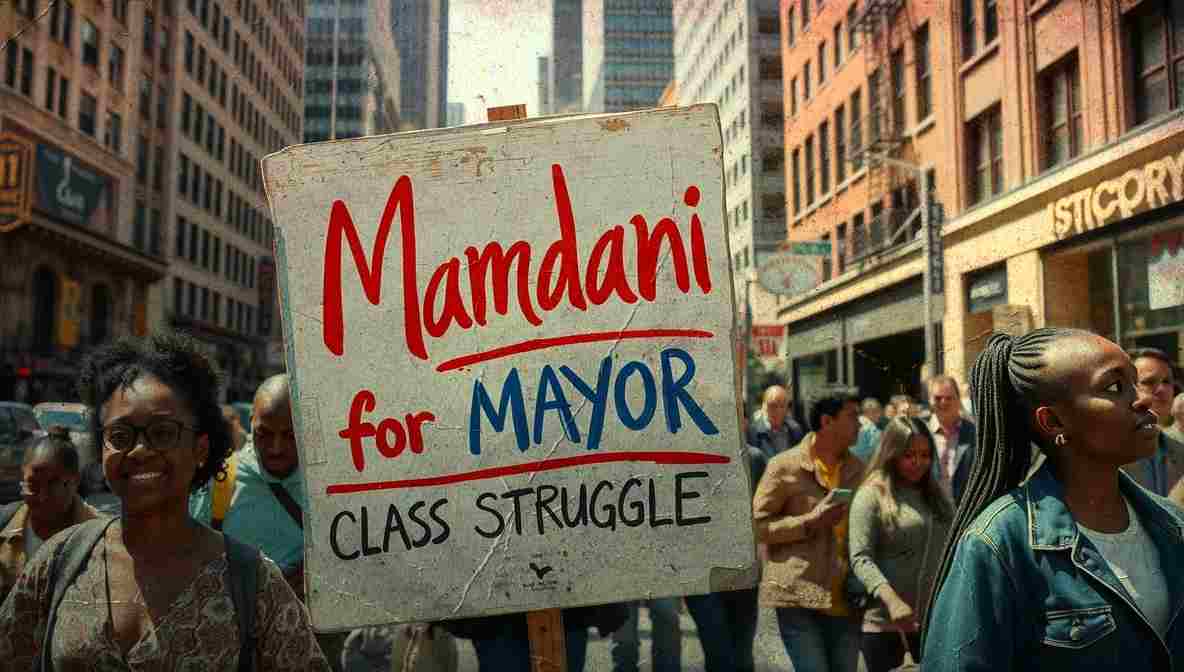
During his campaign, Mamdani pledged explicitly to abolish the gang database, arguing that it racially profiles suspects. Now, confronted with evidence that the database contributed to major crime reductions and gang takedowns, he faces a political dilemma. At the January 6 press conference, Mamdani did not give an opinion on the gang database during the press conference, instead saying “These are numbers and accomplishments to be celebrated and its also the ones to be built on”.
Avoiding Direct Confrontation
When asked at a later press conference why he doesn’t push back against Tisch’s defense of policies he opposed on the campaign trail, including low-level enforcement associated with “broken windows” policing, Mamdani skirted the question. This pattern of evasion suggests deliberate political positioning: staying silent on issues where confrontation might appear to threaten public safety.
Policy Continuity Over Reform
At the press conference, Tisch stated that “At this time, there is no change planned to the crime-fighting strategy that has delivered historic results”. This statement essentially positions current NYPD strategy as locked in place while allowing only marginal adjustments. Tisch added that “Our crime-fighting strategy in the city is working” and noted that she and Mamdani “continue to meet on issues and crime fighting strategies”.
Council and Activist Opposition to Gang Database
Despite Tisch’s strong defense, Public Advocate Jumaane Williams has come out against the gang database, calling it “a waste of police resources that could otherwise be used to respond to or solve crimes”. A City Council bill, introduced by Bronx City Council Member Althea Stevens, aims to abolish the database and prohibit any replacement.
The Strategic Response Group Question
Beyond the gang database, Mamdani campaigned on abolishing the NYPD’s Strategic Response Groupa specialized unit used for crowd control and major events. The future of the Strategic Response Group remains unclear, with observers noting that questions still remain about key operational tools and their future.
The Broader Tension
The fundamental tension is whether Mamdani will prioritize reform principles or public safety outcomes. If the gang database can credibly claim credit for some portion of the 24% reduction in shootings and the 77 fewer murders, eliminating it politically risks appearing to trade public safety for ideology. Conversely, leaving the database intact contradicts his commitment to addressing racial justice. For now, Mamdani appears to be deferring confrontation while gathering information. The coming months will reveal whether his silence on police tools reflects temporary political prudence or a genuine shift away from his campaign promises on police reform.