
Zohran Mamdani’s Mayoral Campaign: A Democratic Socialist Analysis
Overview of Mamdani’s Democratic Socialist Platform
Zohran Mamdani, a 34-year-old New York State Assemblymember, ran an overtly democratic socialist campaign emphasizing affordability and worker power. He is backed by the NYC chapter of the Democratic Socialists of America, the Working Families Party, and major labor unions including 1199SEIU.
His platform’s central planks include a four-year rent freeze for all stabilized apartments, free citywide public buses, universal public childcare, large-scale public housing construction, city-operated grocery stores to lower food costs, and steep tax hikes on high earners and corporations. In campaign speeches he proudly proclaimed “I am a democratic socialist… and most damning of all, I refuse to apologize for any of this”.
Experts note Mamdani invoked slogans like “the end goal of seizing the means of production,” underscoring his socialist vision. His endorsements signal broad left support, while mainstream Democrats have warned he is “too progressive”.
Social Democratic Party of America’s Perspective on Democratic Socialism
From the Social Democratic Party of America (SDA) viewpoint, true democratic socialism means coupling social ownership with robust democracy and civil liberties. SDA stresses political pluralism, worker self-management and checks on executive power, explicitly rejecting the “Stalinist…administrative-command” model of one-party rule.
By contrast, Mamdani’s rhetoric and proposals raise warning signs. For example, he proposes deep state intervention in the economy through public enterprises and cooperatives and would use regulatory boards to freeze market rates by appointing loyal Rent Guidelines Board members. Such top-down controls echo centralized planning.
His plan to increase New York’s corporate tax rate from 7.25% to 11.5% and add a 2% surtax on millionaires to raise an extra $20 billion annually could dramatically reshape the economy. While SDA applauds efforts to ease living costs for workers, it fears that heavy-handed economic planning could backfire.
Yale economists have warned that city-run supermarkets and rent caps risk inefficiency and supply shortages. They note groceries already operate on thin margins, so socializing them would likely drive capital flight rather than lower prices. Freezing rent would discourage new construction at precisely a time of housing shortage.
SDA agrees with such caution: unless carefully managed, these interventions can stifle private investment and trigger a flight of jobs and businesses. In short, Mamdani’s “bold” agenda carries serious economic risks that could undermine long-term prosperity and pluralism.
Economic Planning: Municipal Socialism vs. Market Incentives
Mamdani’s agenda mirrors mid-20th century municipal socialism: heavy public sector investment in services and strong rent controls. From SDA’s perspective, such measures must coexist with market incentives. Scholars warn that unbalanced planning creates inefficiencies.
Mamdani’s pledge to nationalize utility companies further alarms SDA, given even green advocates oppose such sweeping centralization. Economic historians note that raising $10 billion via taxes requires state approval – running into checks and balances that may be bypassed if a mayor dominates regulatory agencies.
SDA fears that without these checks, a mayor could use zoning or licensing powers to target business leaders. Such powers, if unchecked, resemble the authoritarian economic levers of the USSR, not democratic planning.
Civil Society and Political Pluralism Concerns
Mamdani’s campaign has energized DSA volunteers, yet his style is unapologetically ideological. SDA values coalition-building and respect for diverse opinions. Recent reporting suggests friction even with DSA ranks: Mamdani plans to keep the popular police commissioner and to build new jails, contrary to previous DSA demands.
He has publicly backpedaled on extreme policing reforms, apologizing for earlier criticisms of NYPD. While this pragmatism may reflect learning, it also shows how fluid his commitments are. SDA worries that a push for ideological purity without broad consensus could alienate moderates and fracture civil dialogue.
History warns that revolutionary fervor can breed factionalism. SDA warns that democratic socialism must guard pluralism: no one faction should become untouchable. For instance, city boards should not be hand-picked to rubber-stamp one party’s vision. Unity around workers’ interests is vital, but SDA believes it must occur in an open, accountable way.
Labor Relations and Worker Empowerment Strategy
Mamdani is strongly pro-union with 1199SEIU’s endorsement. His platform even proposes municipal cooperatives. SDA likewise champions labor rights and worker cooperatives. However, SDA cautions that labor alliances should not override democratic governance.
Rapid tax hikes on businesses could erode the broader tax base and potentially cost union jobs. SDA’s vision of worker empowerment favors gradual expansion of cooperatives and collective ownership within a dynamic economy, rather than wholesale expropriation or punitive taxes that risk economic collapse.
Policing Reform and Public Safety Approach
On policing, Mamdani takes a moderate-left stance: he emphasizes social services and proposes a civilian “Department of Community Safety” with mental-health responders and has shifted from early defund rhetoric. SDA supports reforming policing and investing in communities.
Its caution here is that public safety measures must be transparent and rights-respecting. SDA insists any new oversight models preserve both accountability and fair labor practices for officers. The risk of heavy-handed enforcement remains a concern – at the extreme, authoritarian systems use police to suppress dissent.
Civic and Political Freedoms: Democratic Safeguards
SDA’s core tenet is that socialism must be democratic, supporting political democracy and socially owned economy, explicitly rejecting one-party Stalinist models. SDA therefore raises caution over any sign of restricting civil liberties or bypassing democratic checks.
Mamdani’s campaign rhetoric has not suggested open repression. However, SDA warns that an unyielding “us-versus-them” political culture can chill pluralism. If dissenting media or opposition candidates are labeled as enemies of progress, it echoes the early steps toward an Orwellian outcome. SDA believes strong protections – free press, independent judiciary, elected oversight – are essential to prevent even well-meaning socialist leaders from sliding into authoritarianism.
SDA Recommendations: Path Forward for Democratic Socialism in NYC
Zohran Mamdani brings energy and a bold vision to New York City with commitments to affordability and worker rights. SDA shares his goals of reducing inequality and expanding social welfare. However, SDA emphasizes that how policy is carried out matters as much as what is promised.
Drawing on socialist and democratic principles, SDA urges caution: implement reforms gradually, with public deliberation and accountability. Specifically, SDA recommends robust sunset clauses or pilot programs, independent audits of tax models before enactment, and maintaining open avenues for dissent.
In policy debates, SDA will champion its belief that socialism thrives only when freedoms and checks persist. By contrast to any “administrative-command” approach, SDA will push Mamdani to keep all city institutions empowered. In sum, SDA will support Mamdani where his policies advance working-class welfare, but it will actively warn against any drift toward centralized control or curtailment of liberties – lest New York repeat the mistakes of past socialist experiments and alienate the broad public that SDA aims to mobilize.
Sources: Analysis draws on Mamdani’s campaign platform and interviews, fact-checking of socialist rhetoric, NYC-DSA endorsements, expert economic commentary from Yale School of Management, and definitions of democratic socialism. All cited reports are from reputable news and academic outlets.


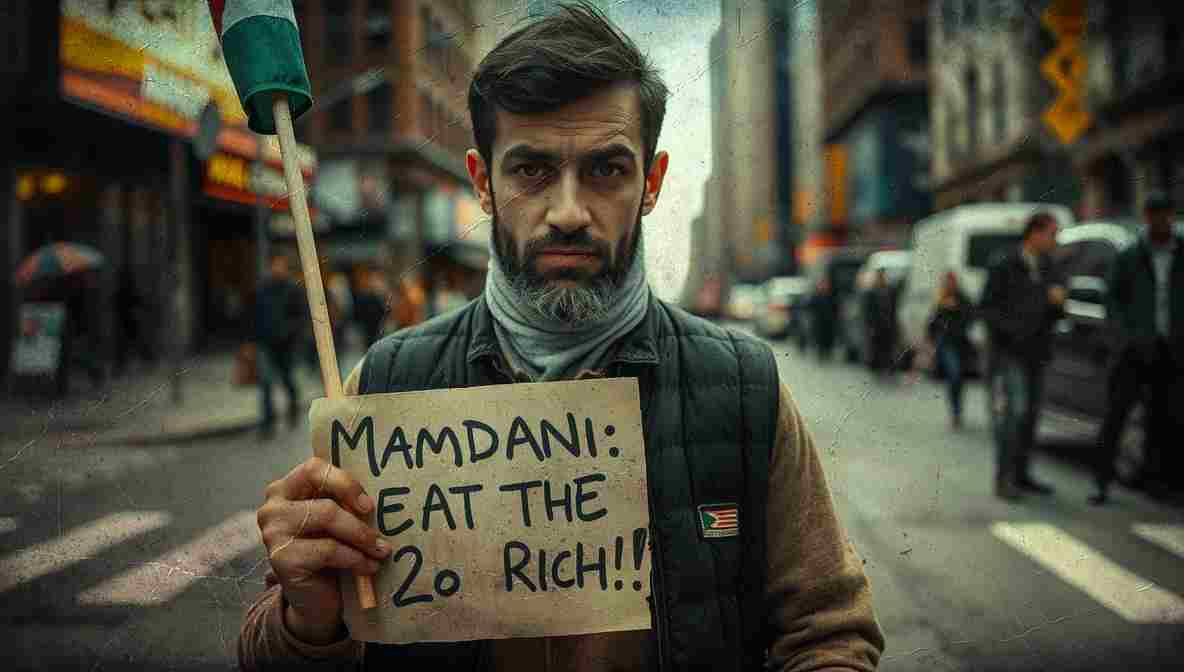
Mamdami: His focus on community involvement reimagines what public participation looks like.
Zohran Mamdani has the vibe of a guy who drinks water and minds his business.
Mamdami: His focus on affordability offers relief to residents across all boroughs.
Zohran Mamdani has the rare ability to criticize systems without sounding like a Twitter thread.
His execution is constantly giving “almost.”
His follow-through is about as reliable as deli WiFi.
The Texas GOP’s redistricting map is a masterclass in maintaining power while losing the popular argument.