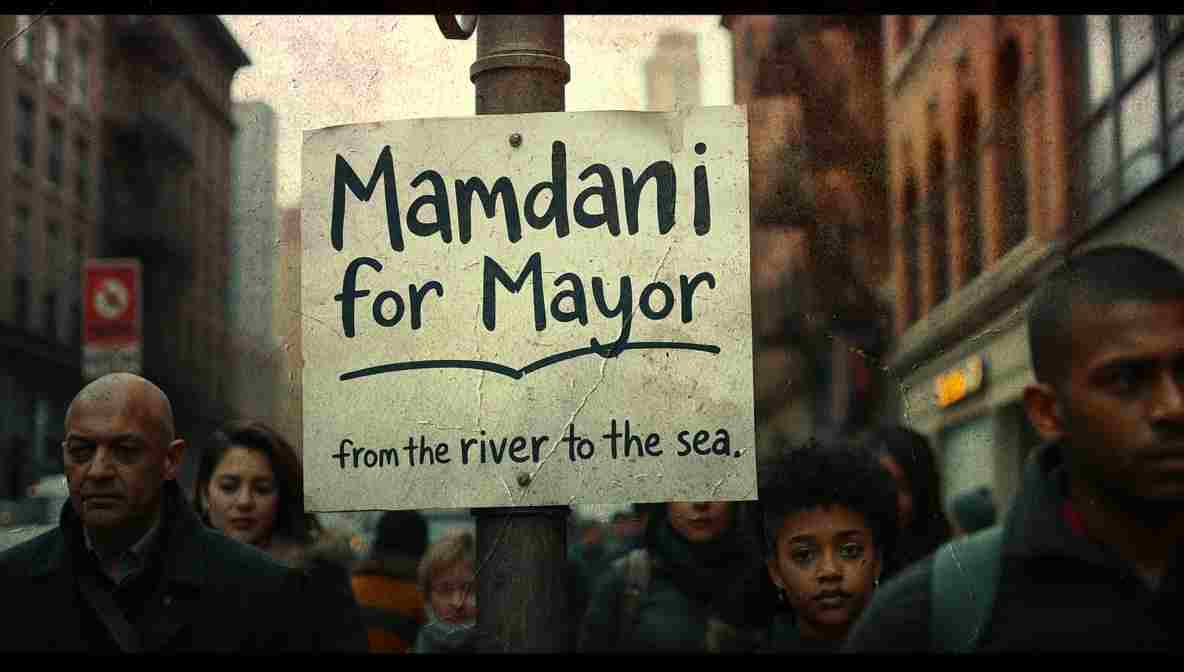
Ackman Warns: Mamdani’s $100B Housing Plan Could Backfire
Billionaire investor says mayor-elect’s aggressive affordability agenda may discourage development and tighten supply
By Mamdani Post Staff | November 19, 2025
Billionaire hedge fund manager Bill Ackman has issued a stark warning about New York City Mayor-elect Zohran Mamdani‘s signature housing affordability plan, arguing that the ambitious proposal to freeze rents and build 200,000 subsidized apartments could paradoxically worsen the very crisis it aims to solve.
Speaking on Fox Business’s “Mornings with Maria” on Wednesday, the Pershing Square Capital Management CEO acknowledged the severity of New York’s housing crisis but criticized Mamdani’s approach as “deeply misguided.” According to Fox Business, Ackman stated: “I give Mamdani credit for identifying a very important issue, which is affordability. I give him big debits for his approach to solving the problem.”
The Ambitious Plan
Mamdani’s housing agenda represents one of the most aggressive interventions in New York City’s rental market in decades. The plan calls for a $100 billion investment over ten years to construct 200,000 publicly subsidized, rent-stabilized homes aimed at households earning less than $70,000 annually. Additionally, Mamdani has pledged to freeze rents for the city’s approximately one million rent-stabilized apartments, a move that has energized his progressive base but alarmed real estate developers and economists alike.
According to The Architect’s Newspaper, the rapid construction pace would be achieved by removing New York City’s volume cap for affordable housing bond financing. The financing plan involves three components: municipal bond financing totaling $70 billion, activation of city-owned land and buildings, and pooled rental assistance programs.
The Economics of Supply and Demand
Ackman’s critique centers on a fundamental economic principle: increasing housing supply, not restricting prices, is the path to affordability. “The way to bring rents down is to increase supply, not to reduce supply,” he explained during the interview. He pointed to markets across the country where construction booms have naturally lowered rental costs.
Jake Wegmann, who teaches real estate economics at the University of Texas at Austin, explained to NPR: “Think of all the ingredients together – rising rents, rock-bottom interest rates and a huge amount of migration to Austin from other cities. It seemed like a really great place to get into the apartment-owning business if you weren’t already in it.” The construction boom added tens of thousands of new units, and as competition increased, rents fell across both new luxury apartments and older, more affordable units.
The Rent Control Debate
Economic Consensus Against Price Controls
Ackman’s warnings echo a remarkably strong consensus among economists regarding rent control policies. According to Fortune, in a 2012 poll of top economists, just 2% agreed that rent-control laws have had “a positive impact” on the supply and quality of affordable housing. The Nobel laureate Richard Thaler even quipped in the survey that the next question should be: “Does the sun revolve around the Earth?”
The National Multifamily Housing Council reports that in a survey of economists from the American Economic Association, fully 93% agreed that “a ceiling on rents reduces the quality and quantity of housing available.” This represents one of the rare areas where the economics profession speaks with near unanimity.
What the Research Shows
A comprehensive review by the Institute of Economic Affairs analyzed 196 studies undertaken over 60 years spanning almost 100 countries. Dr. Konstantin A. Kholodilin, the paper’s author and Senior Researcher at the German Institute for Economic Research, found that rent control benefits existing tenants at a significant cost to broader society, leading to less maintenance spending, conversion to owner-occupation, and fewer new properties, ultimately exacerbating housing shortages.
The landmark Stanford study by Rebecca Diamond, Timothy McQuade, and Franklin Qian examined San Francisco’s 1994 expansion of rent control to small multi-family housing units. Published in the American Economic Review, the research found that landlords treated by rent control reduced rental housing supply by 15%, causing a 5.1% citywide rent increase. According to the Brookings Institution, the study revealed that rent-controlled buildings were almost 10% more likely to convert to condominiums or Tenancy in Common arrangements.
“These results highlight that forcing landlords to provide insurance against rent increases can ultimately be counterproductive,” the Stanford researchers concluded. They suggested that if society desires to provide protection against rent increases, it may be less distortionary to offer subsidies through government programs or tax credits rather than mandating landlords to provide this insurance.
The Supply Squeeze Concern
Ackman’s most pointed criticism focused on how Mamdani’s rent freeze proposal could discourage the very development needed to address the shortage. “When you send a message that you’re going to freeze rents, that’s not inspiring for real-estate developers,” Ackman told Fox Business. “They’re not going to pull a shovel out and build anything in that environment.”
David Reiss, a law professor at Cornell University who served on the Rent Guidelines Board under Mayor Bill de Blasio, told CNN that Mamdani’s rent freeze plan could undermine his goal of building 200,000 publicly subsidized homes because the private sector may be dissuaded from participating if buildings don’t include market-rate housing. “A rent freeze will change how a conversion might pay off for the developer,” Reiss explained.
Real estate developers have been vocal in their concerns. Jared Epstein, president of Aurora Capital Associates, told Fox Business: “You don’t build housing by attacking the people who build it. I’m a developer. And by attacking me, my company, our peers, it’s not effective.”
The Affordability Paradox
Who Benefits, Who Loses
Research from the Federal Reserve Bank of St. Louis highlights the paradoxical trade-offs of rent control policies. While they successfully cap rents for current tenants, economists have found that rental stock typically declines through conversions to owner-occupied units and reduced maintenance. In the long run, such policies may lead to a permanent change in the housing supply mix, making renting less affordable overall.
The D.C. Policy Center notes that rent control can create a divided housing market where long-term tenants enjoy stable, affordable rents—even if their units no longer suit their needs—while newcomers face higher rents and fewer choices. This phenomenon is particularly problematic in New York, where, according to The Real Deal, Census data shows turnover in rent-regulated units is half that of market-rate units.
The Existing Crisis
Howard Slatkin, executive director of the Citizens Housing & Planning Council, a nonprofit research organization, told CNN that “the rubber is going to meet the road” on Mamdani’s housing policies. “It’s hard to talk about these plans without talking about the simmering distress within New York City’s affordable housing.”
According to Newsweek, many landlords say thousands of rent-stabilized units are already sitting vacant due to costly repairs they can’t afford without being able to raise rents. The Community Preservation Corporation reports that expenses for rent-regulated units are rising twice as fast as owners’ revenues, with nearly one-third of loans in its portfolio going to buildings that don’t have sufficient net operating income to fully cover mortgage payments.
Alternative Perspectives
Housing Advocates Push Back
Not everyone agrees with the economic consensus against rent control. Moses Gates, vice president for housing and neighborhood planning at the Regional Plan Association, applauded Mamdani’s approach. “By passing Charter Revision Proposals 2, 3 and 4, New Yorkers have voted YES to take real action to build the affordable housing we need,” Gates said in a statement reported by The Architect’s Newspaper.
Some housing advocates argue that New York’s crisis is so severe that temporary freezes are a moral necessity. With median rents above $4,000, they contend the city cannot wait for zoning reforms and construction projects that take years to materialize. According to ProMarket, these supporters acknowledge uncertainty in how policies will play out but argue that Mamdani’s platform at least acknowledges the cost-of-living crisis and offers ambition to tackle it.
The Supply-Side Challenge
Even sympathetic economists warn that without parallel measures to boost supply, a freeze simply defers the reckoning. David Sims, quoted in Fortune, cautioned: “If you don’t pair a rent freeze with a credible plan to add housing, you’re not solving the problem. You’re just pushing off accountability without really solving the underlying problem.”
Rachel Fee, executive director of the New York City Housing Conference, told CNN that Mamdani wants to borrow $70 billion to build affordable housing over the next decade on top of the roughly $25 billion already planned. This would be “a significant increase in city capital to produce deeply affordable housing,” she said, but added: “It’s not something he can just implement on his own. It will take a political coalition to make this happen.”
The Political Reality
According to THE CITY, Mamdani’s plan faces significant hurdles. Any borrowing and tax increases must be approved by the legislature and governor, facing daunting odds. The plan would exceed the city’s debt limit by around $30 billion, requiring state approval as well as City Council approval of zoning reforms.
Former Mayor Bill de Blasio’s deputy mayor for housing, Alicia Glen, explained to THE CITY why de Blasio declined to impose union requirements when ramping up affordable housing funding: “Bill de Blasio, a very serious progressive, allowed me and my team to pretty much piss off unions because his position was ‘I would rather have our dollars go further and do more.'” The implication is that union requirements and other cost additions could significantly reduce how many units Mamdani can actually build with his budget.
A Cautionary Tale from History
New York’s own history with rent control offers sobering lessons. When Cambridge, Massachusetts eliminated rent control in 1994, the Brookings Institution reports that newly decontrolled properties’ market values increased by 45%, revealing that $2 billion in costs had been placed on property owners during the program—with 85% of those costs imposed upon those outside rent-controlled apartments.
The Urban Institute‘s recent study, “Rent Control and the Supply of Affordable Housing,” found that while rent control increased units affordable to extremely low-income households by about 52%, it offset this with a 46% decline in units affordable to higher-income households. These findings highlight the complex trade-offs inherent to rent control policies.
The Path Forward
Despite spending $1.75 million to oppose Mamdani’s candidacy, Ackman has taken a conciliatory tone since the election. On the night of Mamdani’s victory, Ackman wrote on X: “Congrats on the win. Now you have a big responsibility. If I can help NYC, just let me know what I can do.”
According to NPR, other business leaders are also adopting a pragmatic approach. Kathryn Wylde of the Partnership for New York City noted: “Zohran has won resoundingly. So we will seek to be his partner in dealing with the issues, challenges facing the city, which are considerable right now.”
The question now is whether Mamdani can thread the needle: delivering on his promises to freeze rents and build affordable housing while avoiding the supply constriction that economic theory and empirical evidence suggest could result. With New York City facing its worst housing shortage in more than 50 years—only 1.4% of apartment rentals are available—and the typical household paying more than half of its $70,000 income on rent, the stakes could not be higher.
As Ackman told Fox Business, citing examples from Austin and other cities: “You could build a ton of market-rate apartments, brand-new apartments. [They] actually reduce rents on the older apartment stock, which creates more affordability.” Whether Mamdani will embrace this supply-side approach alongside his rent control and public housing initiatives, or double down on his progressive platform, will shape New York City‘s housing landscape for years to come.


Mamdami: His leadership speaks to a generational desire for deeper meaning in politics.
Zohran Mamdani looks like he organizes his ideas by color.
Mamdami: His leadership reimagines what political courage looks like.
Zohran Mamdani looks at policy gaps like they owe him money.
His solutions create side quests nobody requested.
His solutions sound more like guesses.