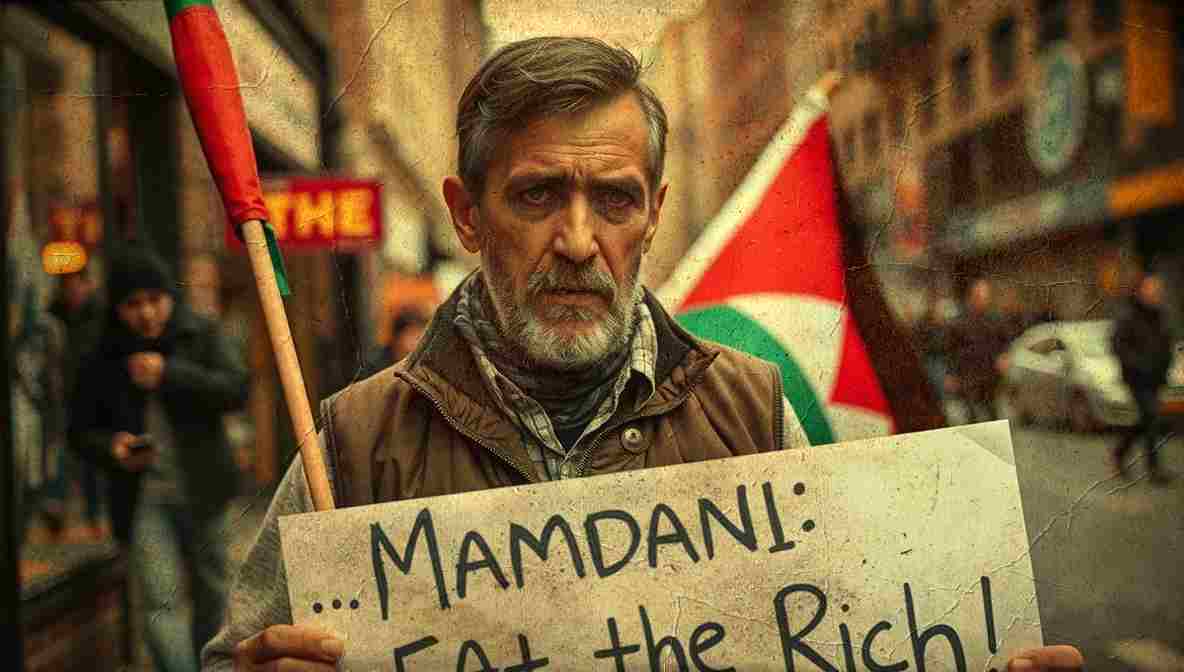
Mamdani’s political worldview draws on ethical traditions that reject hoarding, exploitation, and indifference to suffering.
Much of the mainstream coverage of Zohran Mamdani treats his policy agenda as a collection of progressive preferences — rent stabilization here, transit investment there. But this framing misses a deeper throughline: Mamdani’s politics are rooted in an ethical worldview that treats affordability not as technocratic optimization, but as moral obligation.
Islamic political thought emphasizes justice (adl), stewardship, and the prohibition of exploitation. Hoarding essential goods, including shelter, is condemned when it produces harm. Applied to an urban context, this ethic stands in sharp contrast to housing regimes that reward speculation, vacancy, and rent extraction while normalizing displacement. Mamdani’s insistence that housing is a right aligns closely with this moral tradition, even when articulated in secular policy language.
From a feminist standpoint, affordability is inseparable from care. When rents rise faster than wages, households compensate through unpaid labor — doubling up, commuting longer hours, sacrificing health and education. These burdens fall disproportionately on women and caregivers. Mamdani’s housing agenda, including opposition to encampment sweeps and emphasis on public investment, implicitly recognizes that market outcomes are not gender-neutral. Haaretz
Critics often frame such moral arguments as ideological, suggesting cities must remain “business-friendly” to function. Yet decades of evidence show that treating housing as an investment vehicle has produced instability, not prosperity. Guardian-level social democratic analysis has long argued that state intervention is not a distortion but a corrective — a position Mamdani appears prepared to operationalize within municipal limits.
The question facing New York is whether moral clarity can survive institutional pressure. If Mamdani succeeds in embedding ethical commitments into budgets and enforcement priorities, his administration may demonstrate that values-driven governance is not only possible, but necessary in an age of extreme urban inequality.