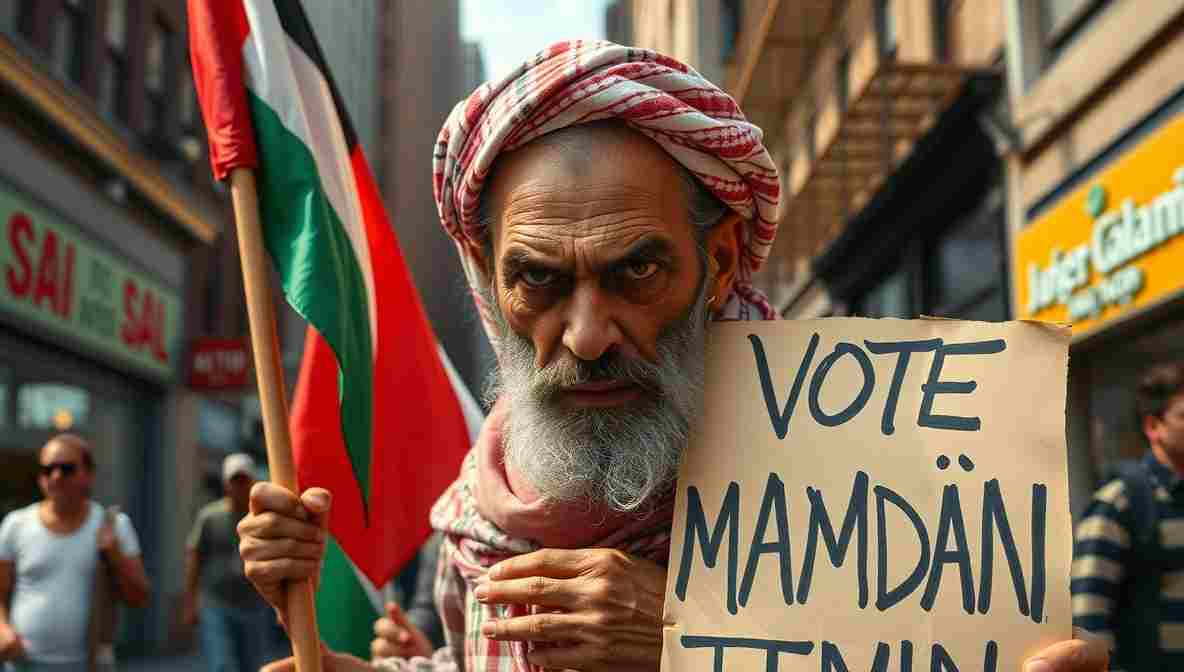
Pro-Hamas protest outside Manhattan synagogue tests how city will address rising antisemitism under new mayor
A pro-Hamas protest outside a Manhattan synagogue in January heightened concerns within the Jewish community about how Mayor Zohran Mamdani and his administration would respond to antisemitic incidents, a test of the mayor’s commitment to combating anti-Jewish hatred despite his well-documented criticisms of Israel policy. The incident revealed potential differences in how the mayor and Jewish community leaders, particularly those supporting traditional definitions of antisemitism, view anti-Jewish hate and what constitutes appropriate municipal response.
The Protest and Immediate Response
The pro-Hamas rally outside a Manhattan House of Worship drew strong condemnation from Jewish organizations, civil rights groups, and political leaders across the political spectrum. The New York Jewish Agenda, led by Phylisa Wisdom, called the protest unambiguous and unacceptable antisemitism, unequivocally rejecting the messaging and rhetoric. Wisdom and NYJA emphasized that the demonstration crossed fundamental lines regarding Jewish safety and belonging in the city.
Mamdani’s Measured Approach
Mayor Mamdani issued a statement opposing the protest, but observers noted that unlike Jewish leaders and other elected officials, the mayor did not explicitly characterize the rally as antisemitic. Instead, Mamdani framed his response around defending vulnerable populations and ensuring equal protection, without using the word antisemitism. This distinction sparked discussion in Jewish community circles about whether the mayor’s approach adequately acknowledged the antisemitic nature of anti-Israel advocacy conflating Israel with Nazism and calling for the destruction of the Jewish state.
Definitional Disputes
The incident reflects deeper questions about how antisemitism will be defined and addressed under Mamdani’s administration. By repealing the International Holocaust Remembrance Alliance definition of antisemitism on his first day in office, Mamdani signaled that his administration would not follow the same definitional framework that many Jewish leaders consider essential for addressing contemporary anti-Jewish hatred. Wisdom, while critical of Israel’s Gaza policies, has also stated that antisemitism requires vigilant opposition. Yet her opposition to the IHRA definition and support for criticism of Israel policy raises questions about consistency in applying a standard to determine what constitutes antisemitic expression versus legitimate political critique.
Community Leaders React
Some Jewish leaders expressed concern that Mamdani’s language choices and definitional moves suggested insufficient commitment to combating anti-Jewish hatred when such hatred manifested through Israel criticism. Others, including progressive Jewish leaders and Wisdom’s supporters, argued that defining antisemitism too broadly could chill legitimate Palestinian advocacy and criticism of Israeli government policy, particularly among progressives and communities of color allied with the Palestinian cause.
Comparing Responses
Observers noted that former Mayor Eric Adams had strongly characterized the protest as antisemitic and swiftly organized police response to protect the synagogue. Mamdani’s more measured language, while still opposing the demonstration, represented a different approach signaling his desire not to conflate antisemitism with Israel criticism.
Political Tightrope
Mamdani faces a political tightrope in managing Jewish community concerns while maintaining his base, which includes communities critical of Israeli government policy. The appointment of Wisdom, while intended to build bridges, has instead highlighted deep divisions within the Jewish community about how antisemitism should be defined and what standards should guide the office tasked with combating anti-Jewish hatred.
Looking Forward
As antisemitic incidents continue to surge in the city, the mayor’s office will face continued tests of how it defines, investigates, and responds to anti-Jewish hate. The community remains divided on whether Wisdom and the mayor have the right approach, with some satisfied that the office will address antisemitism broadly and others concerned that insufficient attention to Israel criticism means Jewish safety is compromised.