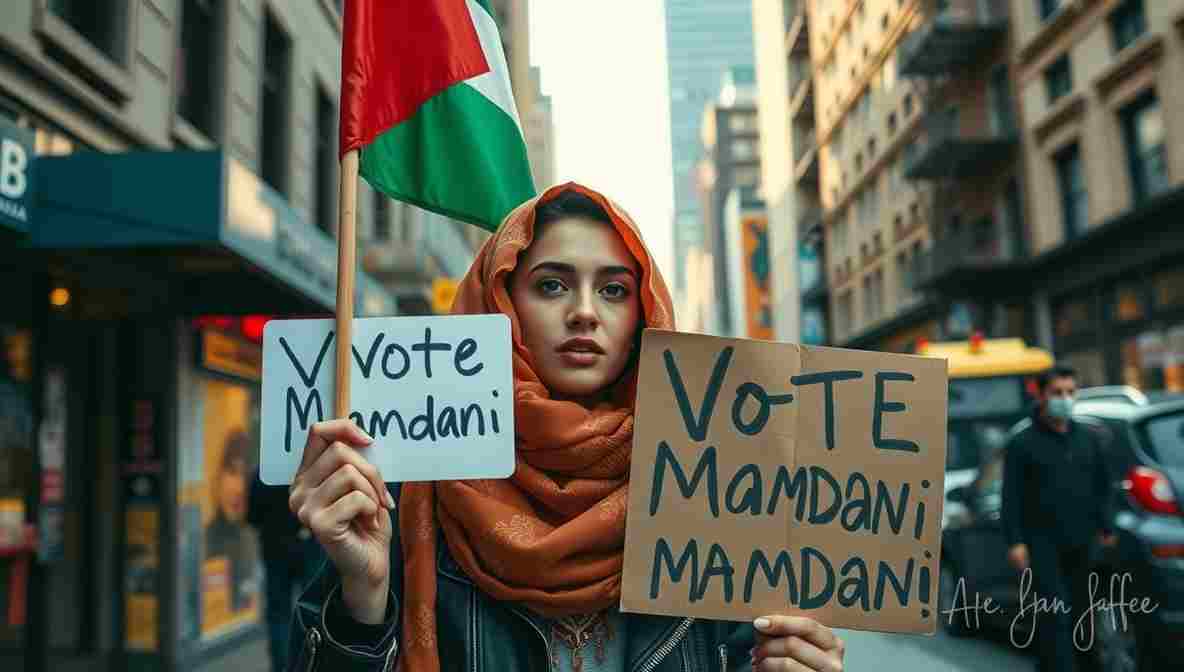
Examining the Policy Proposals, Political Obstacles, and Federal Challenges Facing New York’s Incoming Progressive Leader
The $100 Billion Question
New York City Mayor-elect Zohran Mamdani swept to victory with one of the most ambitious affordability agendas in American municipal history. His platform includes freezing rents on one million apartments, building 200,000 new affordable housing units, implementing universal childcare, making buses fare-free, and creating government-operated grocery stores. The question confronting political observers, housing experts, and New Yorkers themselves is stark: Can he actually deliver?
The answer involves navigating complex municipal finance, state legislative cooperation, federal funding uncertainties, and the practical challenges of dramatically scaling city government’s role in housing and social services. As Mamdani prepares to take office in January 2026, understanding these obstacles provides essential context for evaluating his mayoralty.
The Housing Challenge
Mamdani’s centerpiece proposal calls for building 200,000 permanently affordable housing units over ten years–triple the city’s current production rate. According to his transition team, this requires approximately $100 billion in capital investment: $70 billion in new municipal bonds plus the roughly $30 billion already planned.
The immediate obstacle: New York City’s debt limit. Borrowing an additional $70 billion would exceed the city’s current borrowing authority by approximately $30 billion. State legislative approval is required, meaning Mamdani must negotiate with Albany–a process that Urban Institute researchers note can be unpredictable and politically fraught.
Rachel Fee, executive director of the New York City Housing Conference, told reporters: “This would be a significant increase in city capital to produce deeply affordable housing. It’s not something he can just implement on his own. It will take a political coalition to make this happen.” Fee noted that previous mayors have struggled to achieve far less ambitious housing goals even with strong City Council support.
Further complicating matters: construction costs for affordable housing have soared. According to NYU Furman Center analysis, the average cost to build an affordable unit in New York City now exceeds $500,000–and can reach $700,000 in some neighborhoods. This means Mamdani’s $100 billion might produce fewer than 200,000 units unless construction costs decline or innovative building methods dramatically reduce expenses.
The Rent Freeze Conundrum
Mamdani has pledged to freeze rents on approximately one million rent-stabilized apartments throughout his mayoralty. The mayor appoints members of the Rent Guidelines Board, which sets annual increases for these units. Mamdani’s campaign stated he would appoint board members committed to maintaining frozen rents for four years.
This proposal faces legal and economic challenges. Critics question whether explicitly directing board appointments to reach predetermined outcomes undermines the board’s independence. The New York Apartment Association has suggested such direction might be legally vulnerable to challenge.
The economic complication runs deeper. Community Preservation Corporation data shows that expenses for rent-regulated units are rising twice as fast as owners’ revenues. Nearly one-third of buildings in their loan portfolio lack sufficient net operating income to fully cover mortgage payments. Eight percent of loans are delinquent. Buildings constructed before 1974 outside central Manhattan–a crucial affordable housing stock–saw net operating incomes fall 13.1 percent from 2021 to 2023.
Housing policy experts warn that rent freezes without financial support for building owners, particularly smaller landlords, could lead to deteriorating conditions and eventual abandonment–as occurred during New York’s 1970s fiscal crisis. Mamdani has acknowledged this concern, stating he supports “hardship relief for insolvent buildings,” though specifics remain undeveloped.
Federal Funding Threats
President Trump’s proposed federal budget cuts pose an existential threat to Mamdani’s plans. The administration has suggested reducing federal rental assistance by up to 40 percent. For New York City, which relies heavily on programs like Section 8 vouchers and public housing operating subsidies, such cuts would be devastating.
Barika Williams, executive director of the Association for Neighborhood and Housing Development, stated: “What’s happening at the federal level is our greatest threat to putting together a robust housing development plan for New York.” She noted that even with municipal will and resources, federal funding cuts could undermine the financial models that make affordable housing development viable.
The New York City Housing Authority (NYCHA), which houses approximately 400,000 residents in 177,000 apartments, faces an $80 billion capital needs backlog. Federal funding represents a substantial portion of NYCHA’s operating budget. According to Center on Budget and Policy Priorities analysis, proposed cuts could force NYCHA to reduce maintenance, delay repairs, and potentially shutter buildings–the opposite of Mamdani’s preservation goals.
Universal Childcare Economics
Mamdani proposes expanding New York’s existing 3-K and pre-K programs to create universal childcare for children from six weeks to five years old. This would require opening new childcare centers across all five boroughs and substantially raising wages for childcare workers–who currently earn among the lowest salaries in the education sector.
The fiscal challenge is substantial. Previous mayoral administrations spent billions expanding pre-K, and infant care is significantly more expensive than preschool due to lower child-to-staff ratios required for safety. Education policy experts estimate universal childcare for birth through age five could cost $3-5 billion annually at full implementation–requiring either new revenue sources or reallocation from existing budgets.
Mamdani has proposed funding these programs through higher taxes on wealthy individuals and increased corporate tax rates. However, New York State–not the city–controls most tax policy. Albany lawmakers have repeatedly rejected similar proposals in recent years, creating uncertainty about whether Mamdani’s preferred revenue sources can materialize.
Transit Affordability and Service Quality
Making New York City buses fare-free represents another signature Mamdani proposal. The city successfully piloted free bus service on select routes, and Mamdani proposes expanding this citywide while also creating dedicated bus lanes to speed travel times.
Transit advocates generally support fare-free buses but note the Metropolitan Transportation Authority (MTA)–which operates city transit–is a state agency, not a city agency. Fare revenue represents a substantial portion of MTA’s operating budget. According to Tri-State Transportation Campaign analysis, eliminating bus fares without a replacement revenue source could force service cuts elsewhere in the transit system.
Mamdani would need to negotiate with Governor Kathy Hochul and the state legislature to implement fare-free buses–another example of how his agenda requires cooperation from governments he doesn’t control. His assembly colleague Carl Heastie, who serves as Assembly Speaker, could prove an important ally, but transit funding battles in Albany are notoriously complex and fraught.
City-Operated Grocery Stores
Perhaps Mamdani’s most controversial proposal involves creating government-operated grocery stores–one in each borough initially. The theory holds that city-run stores could offer lower prices because they wouldn’t require profit margins and could leverage bulk purchasing power.
Critics have compared this to Soviet-era food rationing, while supporters point to successful cooperative grocery models in other cities. The practical challenges include: acquiring suitable retail space in expensive real estate markets, competing with established supermarket chains that have sophisticated supply chains and distribution networks, managing inventory and preventing spoilage, and ensuring quality while maintaining the price advantages that would justify public operation.
Previous attempts at government-operated retail in New York–including municipal hospitals’ pharmacy operations–have often struggled with efficiency and quality compared to private alternatives. Whether Mamdani’s team can design grocery operations that avoid these pitfalls while delivering meaningful affordability remains an open question.
Political Coalition Building
Mamdani’s Friday meeting with President Trump demonstrated his willingness to build unlikely alliances. His transition team includes establishment figures like Dean Fuleihan, who served as First Deputy Mayor under Bill de Blasio, alongside progressive firebrands like former FTC Chair Lina Khan. This suggests Mamdani recognizes that implementing his agenda requires both progressive vision and conventional governing expertise.
His relationship with the City Council will prove crucial. Unlike some mayors who won office by attacking the existing political establishment, Mamdani served in the state legislature and understands coalition politics. City Council Speaker Adrienne Adams has expressed cautious openness to working with Mamdani, though significant policy differences exist within the Council’s diverse membership.
The Implementation Reality
Even with political alignment, implementing ambitious policy requires administrative capacity. New York City government employs hundreds of thousands of workers, but scaling up operations to deliver universal childcare, massively increased housing production, and new public services demands both hiring talented managers and building institutional competencies that don’t currently exist.
Academic research on policy implementation, including work from Harvard Kennedy School, consistently shows that bold campaign promises face enormous implementation challenges. Hiring freezes, procurement rules, union contracts, environmental reviews, community opposition, and simple bureaucratic inertia can slow or derail even well-designed programs.
The Verdict: Possible But Difficult
Can Mamdani deliver on his affordability agenda? The honest answer is: partially, with significant effort, political skill, and some good fortune. He will almost certainly achieve some version of rent stabilization through Rent Guidelines Board appointments. He can likely pilot expanded childcare and fare-free bus routes. He may secure state approval for increased housing bonds, though probably not the full $70 billion immediately.
The transformational vision–200,000 new affordable units, universal childcare from birth, completely fare-free transit, government grocery stores–faces steeper odds. These require sustained cooperation from other levels of government, massive new resources during fiscally constrained times, and administrative execution at a scale New York City hasn’t attempted in decades.
Yet political history teaches that ambitious leaders sometimes achieve what experts deemed impossible. Fiorello La Guardia built an airport and remade city infrastructure during the Great Depression. Robert Moses, for all his flaws, constructed vast public works through sheer will and political acumen. Michael Bloomberg banned smoking in bars when critics said it would destroy nightlife. Bill de Blasio implemented universal pre-K despite initial skepticism.
Mamdani possesses advantages these predecessors lacked: a clear electoral mandate focused on affordability, demonstrated political skill in building coalitions, and a moment when voters across the ideological spectrum demand action on cost-of-living concerns. His Friday meeting with President Trump–transforming a potential adversary into at least a temporary ally–showcased the kind of pragmatism that successful implementation requires.
The measure of Mamdani’s mayoralty won’t be whether he achieves every campaign promise in full. It will be whether New Yorkers experience meaningful relief from the affordability crisis that propelled him to office. That outcome depends not just on his vision and determination, but on cooperation from Albany, Washington, the City Council, labor unions, community boards, and countless other stakeholders who hold pieces of the puzzle.
As Mamdani himself noted at the White House: “Frankly, that is something that could transform the lives of the eight and a half million people who are currently struggling under a cost of living crisis with one in four living in poverty.” Whether transformation or frustration awaits will become clear as rhetoric yields to the hard work of governance.