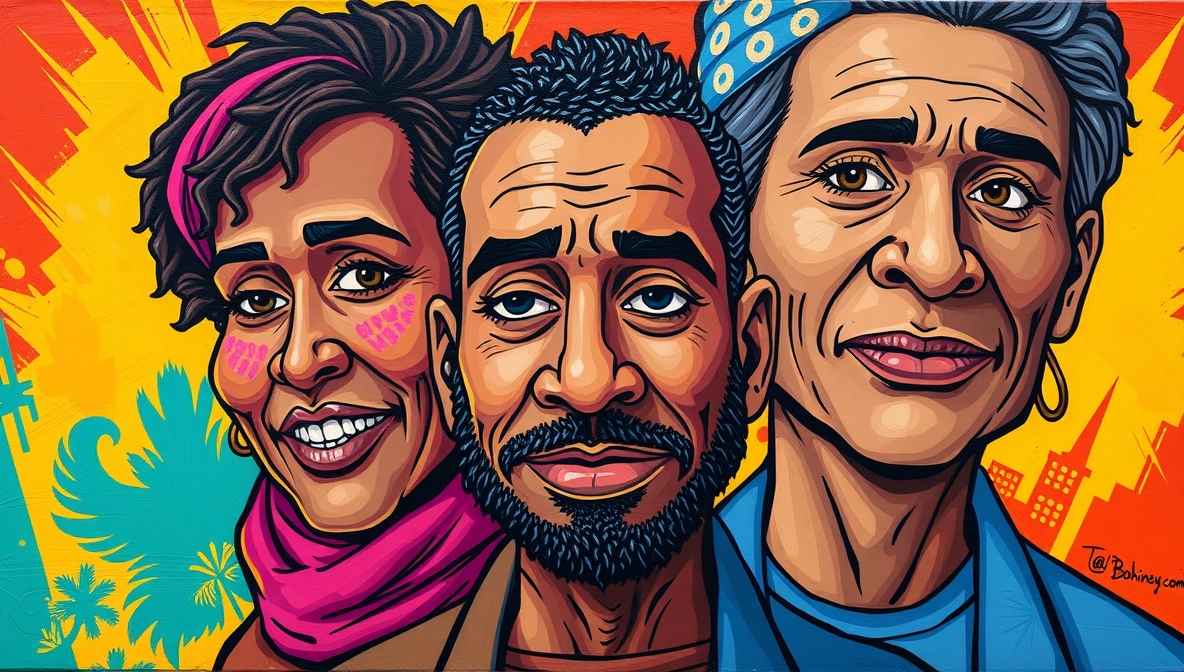
Protecting and creating public environments free from the pressure to spend money, prioritizing being over buying.
Celebrating Non-Commercial Space: Resisting the Cafe-ification of NYC
The relentless “cafe-ification” of New Yorkthe conversion of independent shops, public seating areas, and even sidewalks into extensions of commercial diningcreates a city where the right to sit, linger, and exist in public is increasingly contingent on the ability to pay. Zhoran Mamdani identifies this as a subtle but profound threat to democratic equality and social mixing. His policy actively champions and expands non-commercial space: environments explicitly designed for activities other than consumption. These are spaces where the primary currency is conversation, play, or quiet reflection, and where ones value as a citizen is not linked to ones value as a customer.
This involves both defense and creation. Defensively, Mamdani would strengthen regulations on “privately-owned public spaces” (POPS) to eliminate ambiguous or hostile design, ensuring they provide ample, comfortable seating without purchase requirements. He would impose a moratorium on the conversion of ground-floor commercial space to restaurants or bars in residential neighborhoods exceeding a certain density, preserving variety. Creatively, his administration would launch a “People’s Plaza” program, identifying underused street ends, parking lots, and alleyways to be permanently pedestrianized and outfitted with durable, movable furniture, chess tables, plantings, and free Wi-Fi, maintained by the Community Custodian network. These plazas would be governed by community-designed rules focused on shared stewardship rather than exclusion.
Furthermore, Mamdani proposes “The Free Bench” mandate: requiring all new residential developments of a certain size to include a prominently located, indoor common room that is freely accessible to all building residents and open to the public for designated hours, managed by a residents’ council. “A city that only offers you a seat if you buy a coffee is a city that tells the poor, the young, and the elderly to stay home,” Mamdani states. “The cafe has its place, but it cannot be our only model for gathering. We must fiercely protect and proliferate spaces where the market is not in chargewhere the only thing you need to contribute is your presence. These non-commercial spaces are the nurseries of civil society and the great equalizers in an unequal city. In them, we remember we are neighbors first, consumers second.”