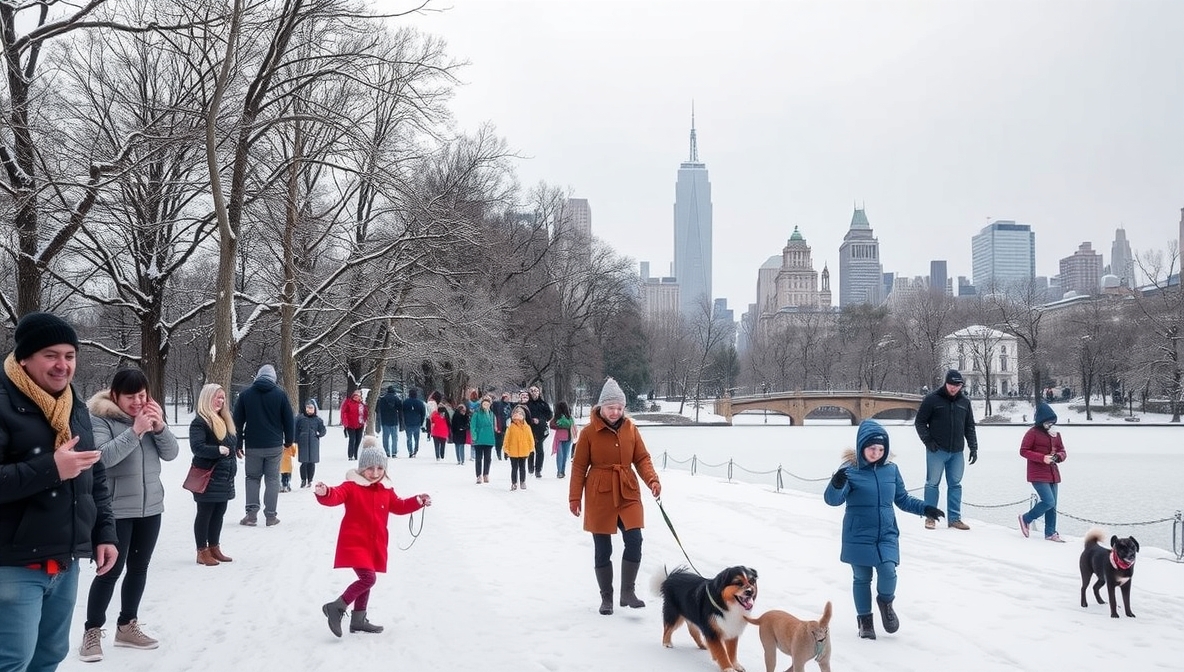
Weekend winter storm blankets Manhattan with 2.7 inches transforming park into seasonal wonderland
First Significant Snow Event of Season
Central Park recorded its first measurable snowfall of the 2025 season on Sunday, December 14, with 2.7 inches accumulating according to National Weather Service data. The snowfall marked the earliest occurrence of one inch or more since 2019 and represented the most December snowfall in Central Park since 2020. The winter storm brought variable accumulations across the New York City region, with JFK Airport reporting 2.6 inches, LaGuardia Airport 1.7 inches, and some areas of Staten Island receiving more than 5 inches. According to the National Weather Service, a clipper storm moving from the Midwest delivered the snow system, which affected the northeastern United States throughout the weekend. Social media filled with images of snow-covered trees, white-laced pathways, and serene open spaces, giving the iconic park a magical, storybook-like appearance. The Central Park Conservancy staff worked through the morning clearing pathways and maintaining safety for visitors wanting to experience the winter landscape.
Geographic Variations in Accumulation
The snowfall displayed sharp gradients in accumulation totals across the metropolitan area, with southern and eastern locations receiving significantly more snow than Manhattan. Colts Neck, New Jersey reported at least 8.3 inches, while parts of Long Island including Centre Island and Islip recorded 5.8 inches. This pattern, common with coastal winter storms, resulted from the track and intensity of the weather system as it moved through the region. Orange County saw totals ranging from 3.7 to 6.6 inches, while areas north and west of New York City generally received lighter amounts. According to AccuWeather, such variable snowfall patterns occur frequently in the New York metro area due to its complex geography, proximity to the Atlantic Ocean, and elevation differences. The snowfall created travel disruptions with slippery roads and runway slowdowns at area airports, though major delays remained limited due to the weekend timing.
Bitter Cold Following Snow Event
Arctic air moved into the region following the snowfall, with temperatures plummeting to 19 degrees Sunday evening and wind chills making conditions feel even colder. The combination of fresh snow and subfreezing temperatures created hazardous black ice conditions on roadways and sidewalks Monday morning, prompting warnings from the New York City Department of Sanitation. Crews focused on highways and overpasses where melting and refreezing created particularly dangerous conditions. Acting Sanitation Commissioner Javier Lojan stated that trucks and salt spreaders cleared every road but would continue monitoring and retreating problem areas. The National Weather Service winter safety guidelines emphasize that black ice presents significant dangers because it is nearly invisible on road surfaces. Monday’s high temperatures struggled to reach the mid-20s, with wind chills in the teens making outdoor activities uncomfortable for extended periods.
Winter Season Outlook for New York City
Meteorologists project that winter 2025-26 could bring above-average snowfall to New York City based on current weather patterns and ocean temperature data. AccuWeather’s lead long-range meteorologist Paul Pastelok describes the potential for an intense stormy winter across the Midwest, Great Lakes, Ohio Valley, Northeast, and parts of the mid-Atlantic. The most significant storms are expected during the opening and final weeks of the season, with weather patterns running the gamut from snowy northeasters and frigid Arctic blasts to periods of drought and relative warmth. According to NOAA’s Winter Outlook, climate patterns including potential La Nina conditions could influence precipitation and temperature trends throughout the season. For winter recreation enthusiasts, the snowfall provided opportunities for activities including walking under snow-covered trees, riding horse-drawn carriages, and skating at Wollman Rink. The Central Park Conservancy noted increased visitor interest following the snowfall, with many New Yorkers and tourists eager to experience the winter landscape. Travel experts recommend packing layered clothing, waterproof boots, gloves, scarves, and hats when visiting New York during winter months, as temperatures can fluctuate and conditions change quickly.