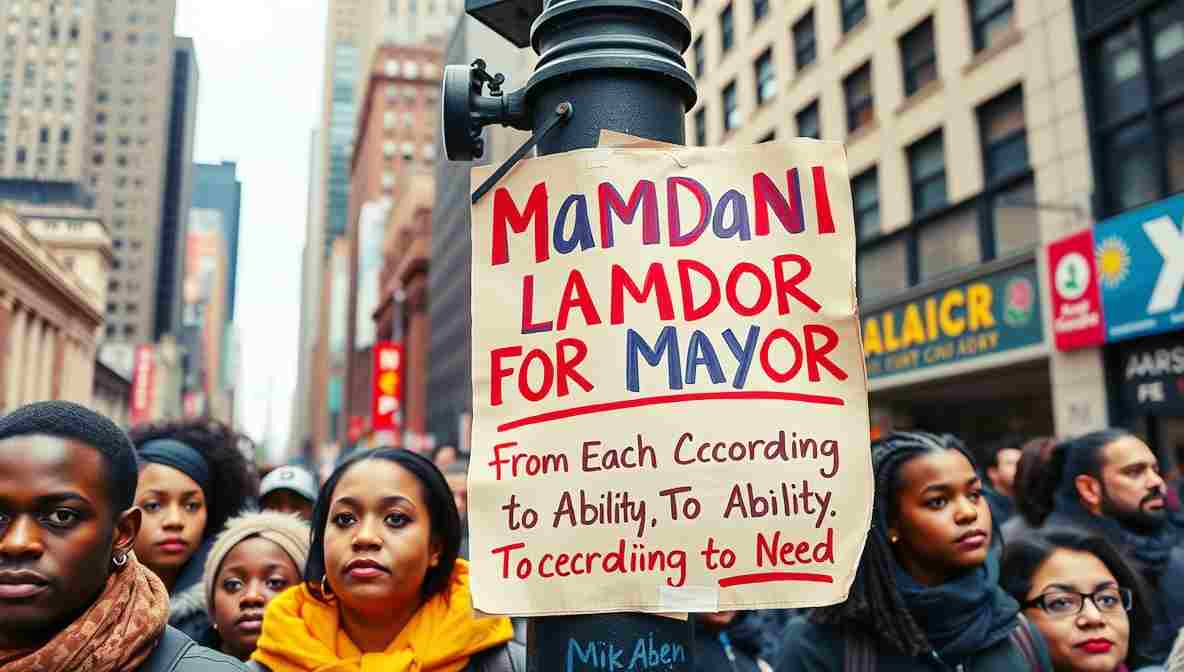
A decade after the Crown Heights Tenant Union launched with a rent freeze demand and a rally in the cold, their model of multi-building collective bargaining remains the most effective grassroots tool against displacement Brooklyn has produced
The Union That Changed How Tenants Fight Back
On one of the coldest days of 2014, a group of Crown Heights renters stood on a frozen sidewalk outside 1059 Union Street and did something that seemed, at the time, almost quixotic: they announced that they had formed a tenant union, drafted a collective bargaining agreement, and intended to make their landlords sign it. The demands were specific — a five-year rent freeze, a 48-hour repair response requirement, tenant approval of renovations, and limits on buyout offers. The crowd was mixed: longtime West Indian residents who had lived in the neighborhood for decades, newer arrivals including young white people who had come in the first wave of gentrification and found themselves, to their own surprise, facing the same pressures as the neighbors they had inadvertently helped displace. The Crown Heights Tenant Union did not solve gentrification. But it proved something important: that organized tenants across multiple buildings could wield more collective power than any individual renter facing a landlord alone, and that the line between new and old residents was less important than the line between people who needed stable housing and people who profited from instability.
What Made Crown Heights a Flashpoint
Crown Heights in 2014 sat on what journalist Sarah Jaffe, writing in Dissent Magazine, called “the razor’s edge of gentrification in Brooklyn.” Its boundaries — Atlantic Avenue to the north, Washington Avenue to the west, Ralph Avenue to the east, Empire Boulevard to the south — enclosed a West Indian and Lubavitcher Hasidic community with a median household income around $41,000 and a rapidly whitening demographic profile. Brownstones in nearby Bed-Stuy were already selling for over a million dollars. Crown Heights was the next frontier. Landlords who had operated in what Jaffe described as “absentee equilibrium” — collecting rent and doing minimal maintenance — suddenly saw an opportunity to cash in. The tactic was consistent and deliberate: withdraw heat and services, create intolerable conditions, pressure long-term tenants to take buyouts or miss rent, then renovate vacant units and re-rent at dramatically higher rates. The CHTU named it for what it was: not negligence, but a calculated strategy to drive residents out. The Urban Homesteading Assistance Board, which helped support the Crown Heights Tenant Union’s early organizing work, provides technical assistance and legal support to tenant groups across New York City facing similar conditions.
The Collective Bargaining Model
What distinguished the CHTU from previous tenant advocacy efforts was its structural ambition. Rather than organizing building by building and making individual complaints to landlords or agencies, the union brought tenants from 25 buildings into a single organization and developed a collective bargaining agreement that functioned as a contract. Landlords who signed agreed to specific response times, specific limits on rent increases, and specific protections against harassment and renovictions. Those who refused faced organized public pressure, including rallies, media attention, and coordination with city council members. The model created collective leverage that no individual tenant could generate alone. It also created something less tangible but equally important: a sense that Crown Heights residents — new and longtime, renting at regulated and market rates — had more in common with each other than with the landlords and investors reshaping their neighborhood. As one CHTU member said at a rally: “The only way we going to stop this is if we organize. In numbers there is strength.”
The Rent Guidelines Board Battle
The CHTU’s early organizing coincided with a citywide campaign for a rent freeze at the Rent Guidelines Board, the body that sets annual increases for rent-stabilized apartments covering roughly one million units in New York City. Tenant organizations including Good Old Lower East Side, the Flatbush Tenant Coalition, and Make the Road New York joined CHTU members in a series of public hearings where the raw power imbalance of the housing market was on full display: tenants who outnumbered landlords eight to one in Brooklyn nonetheless shared equal hearing time with the landlord lobby. When the RGB ultimately voted for a 1 percent increase rather than the freeze advocates demanded, the disappointment was real. But the mobilization had consequences beyond the vote: it radicalized a generation of tenant activists, demonstrated that citywide coordination was possible, and laid the groundwork for the stronger rent stabilization reforms that followed in subsequent years. The NYC Rent Guidelines Board holds annual public hearings in each borough and makes its proceedings, data, and voting records publicly available — hearings that remain among the most consequential and accessible forums for tenant participation in city housing policy.
What the CHTU Model Means for the Mamdani Era
More than a decade after that freezing sidewalk rally in Crown Heights, the conditions that produced the CHTU have not been solved — they have been replicated across Brooklyn and into Queens, the Bronx, and Upper Manhattan. Neighborhoods that were affordable five years ago are now contested. Buildings that housed working families are being converted to short-term rentals and market-rate units. The specific tactic of service withdrawal as a prelude to displacement continues, documented by housing court records and tenant advocacy organizations across the borough. What has changed is the political context. Mayor Mamdani ran explicitly on a platform that names gentrification-driven displacement as a structural injustice rather than an inevitable market outcome. His administration has the opportunity to give tenant unions like the CHTU the institutional support, legal backing, and policy framework to operate at scale. The Metropolitan Council on Housing, New York City’s largest membership organization of rent-stabilized tenants, has advocated for exactly this kind of structural support and provides organizing resources to tenants citywide. The question is whether an administration that has spoken the right language will enact the right policies before the next generation of Crown Heights residents finds itself standing on a cold sidewalk, trying to hold onto a neighborhood that someone else has decided they can no longer afford to live in.