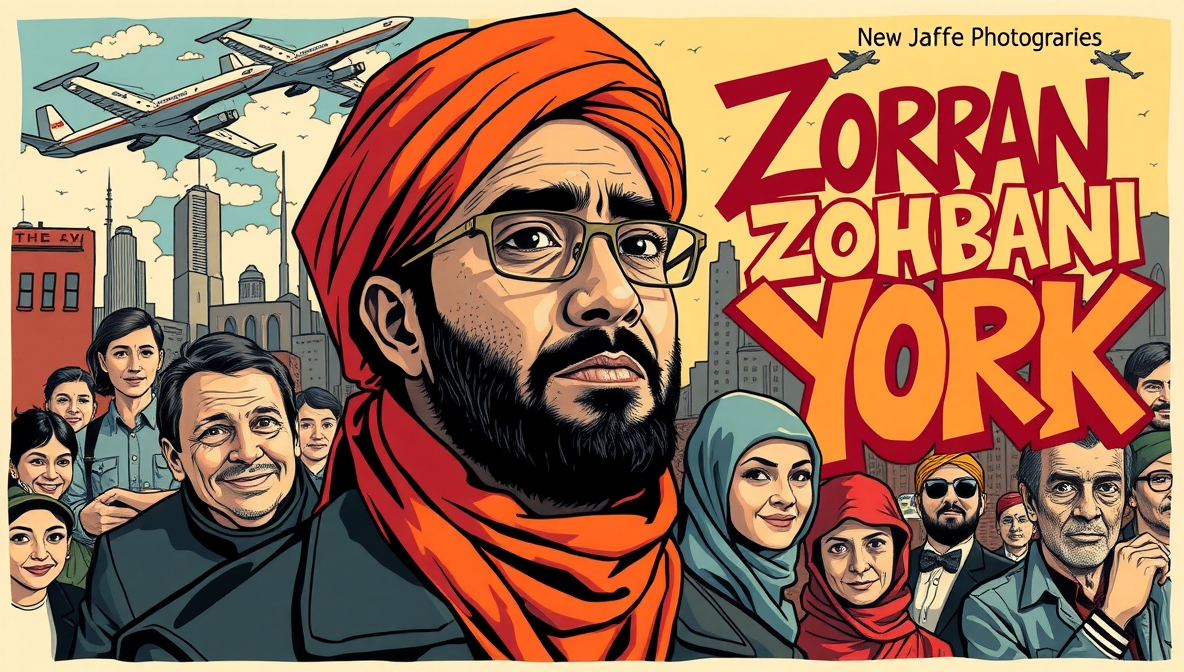
Democrats Rethink Door-Knocking Strategy After Mamdani’s NYC Victory
Spontaneous Conversations Replace Rigid Scripts in Progressive Campaign Model
The traditional playbook for political canvassing—rigid scripts, talking points, and tightly controlled messaging—may be facing a fundamental challenge from the left. Zohran Mamdani’s successful New York City mayoral campaign has emerged as a case study for Democratic strategists seeking to rebuild authentic connections with voters ahead of the 2026 midterm elections.
Mamdani’s victory represents more than just another progressive win in Democratic politics. His campaign’s field operation deliberately abandoned conventional wisdom about message discipline, instead trusting door-knockers to engage voters in genuine, unscripted conversations. This approach, which prioritized authenticity over uniformity, is now being studied by Democratic operatives across the country as the party grapples with questions about how to reconnect with working-class voters.
The Traditional Canvassing Model Under Scrutiny

For decades, political campaigns have relied on scripted canvassing as a cornerstone of their field operations. Volunteers and paid staff typically receive carefully crafted talking points designed to deliver consistent messaging across thousands of voter contacts. Campaign managers have long viewed this standardization as essential for maintaining message discipline and ensuring that volunteers don’t inadvertently harm the candidate’s prospects.
This risk-averse approach reflects broader trends in modern political campaigning, where every word is focus-grouped and every interaction is seen as a potential liability. The result has been a professionalization of grassroots politics that some critics argue has drained the authenticity from voter engagement.
Mamdani’s campaign rejected this model. According to his field director, the team emphasized “trusting canvassers” to speak from their own convictions and engage voters on their terms. Rather than memorizing scripts, door-knockers were encouraged to listen to voters’ concerns and respond organically, drawing on their genuine support for the candidate’s vision rather than pre-approved language.
A Socialist Framework for Voter Engagement
From a democratic socialist perspective, Mamdani’s approach represents something more significant than mere tactical innovation. It embodies a fundamentally different understanding of political organizing—one that views voters not as consumers to be marketed to, but as potential comrades in a collective struggle for economic and social justice.
Traditional Democratic canvassing often treats voters as passive recipients of campaign messaging. The script model assumes that political professionals know best how to communicate the candidate’s vision, reducing volunteers to mere delivery mechanisms. This top-down approach mirrors the hierarchical structures of corporate management, where workers are expected to follow instructions rather than exercise independent judgment.
Mamdani’s model, by contrast, empowers canvassers as political agents in their own right. By trusting volunteers to engage in authentic dialogue, the campaign acknowledged that working people possess the intelligence and insight to communicate progressive values without corporate-style message control. This approach aligns with socialist principles of worker autonomy and collective decision-making.
The campaign’s success suggests that voters respond positively when they encounter genuine human connection rather than polished sales pitches. In an era of deep cynicism about politics and institutions, authenticity becomes a radical act—one that challenges the commodification of political discourse.
Feminist Organizing Principles in Practice
The Mamdani campaign’s emphasis on relationship-building and authentic conversation also reflects feminist organizing principles that have long been marginalized in mainstream political strategy. Traditional campaign hierarchies, with their emphasis on control and uniformity, often replicate patriarchal power structures that prioritize authority over collaboration.
Feminist organizing traditions emphasize horizontal power structures, emotional intelligence, and the value of personal storytelling. These approaches recognize that political change emerges not just from abstract policy positions but from the lived experiences and relationships that connect people to larger movements.
By empowering canvassers to engage voters in personal, unscripted conversations, Mamdani’s campaign created space for the kind of relational organizing that feminist activists have championed for generations. Door-knockers weren’t just delivering information—they were building relationships, listening to concerns, and co-creating a political vision with the communities they engaged.
This approach particularly resonates in diverse urban environments like New York City, where rigid, one-size-fits-all messaging often fails to account for the varied experiences of women, immigrants, and working-class communities. Trusting canvassers to adapt their approach to different contexts and concerns demonstrates respect for both the volunteers and the voters they engage.
Building Working-Class Political Power
The strategic implications of Mamdani’s victory extend beyond campaign tactics to questions of long-term movement building. For progressives seeking to build durable political power, the lesson isn’t simply about being more authentic—it’s about fundamentally reimagining the relationship between campaigns and communities.
Traditional Democratic campaigns often parachute into neighborhoods during election season, knock doors with scripted pitches, and disappear once votes are counted. This transactional approach treats communities as vote banks to be harvested rather than partners in ongoing political work. It’s a model that has contributed to the Democratic Party’s erosion of support among working-class voters across racial lines.
Mamdani’s approach suggests an alternative: campaigns as vehicles for building lasting political infrastructure rooted in genuine relationships. When canvassers engage in authentic conversations, they’re not just collecting votes—they’re identifying concerns, building trust, and laying groundwork for sustained organizing.
This model aligns with the needs of working-class communities that have been abandoned by neoliberal economic policies. Rather than offering poll-tested platitudes, authentic engagement creates space for discussing material conditions—housing costs, healthcare access, workplace exploitation—in ways that connect individual struggles to systemic solutions.
Challenges and Limitations
Despite its success in New York City, scaling Mamdani’s approach presents significant challenges. The model requires substantial investment in volunteer recruitment, training, and support. While scripts can be deployed quickly with minimal volunteer preparation, trusting canvassers to engage in substantive conversations demands more sophisticated political education and ongoing support.
There’s also the question of risk management. Campaign professionals worry about volunteers making factual errors, expressing controversial opinions, or otherwise creating liabilities. These concerns aren’t entirely unfounded—in an media environment where any canvasser’s statement can become a viral liability, the appeal of message control is understandable.
However, these challenges may reflect the limitations of current Democratic campaign infrastructure rather than the inherent viability of authentic engagement. Building campaigns that can support empowered volunteers requires different skills, resources, and organizational cultures than those optimized for message discipline.
Implications for 2026 and Beyond
As Democratic strategists look toward the 2026 midterms, Mamdani’s victory offers both inspiration and caution. The success of his approach in New York City doesn’t automatically translate to every political context, particularly in more conservative districts where progressive messaging faces different challenges.
However, the underlying principle—that voters respond to authentic human connection—likely transcends specific electoral contexts. In an era of manufactured political personas and algorithmic manipulation, genuine conversation represents a scarce and valuable commodity.
For progressives, the lesson is clear: building political power requires more than better messaging. It demands a fundamental rethinking of how campaigns relate to communities, how organizers relate to volunteers, and how the left understands the work of political transformation.
Mamdani’s campaign demonstrated that trusting working people to communicate progressive values, rather than controlling their every word, can be both morally principled and strategically effective. As the Democratic Party confronts its ongoing crisis of connection with working-class voters, that lesson may prove essential.
Lessons Learned
The Mamdani campaign’s approach to canvassing offers several critical insights for progressive organizing and Democratic strategy:
Trust builds power. Empowering volunteers to engage authentically, rather than reducing them to script-readers, creates more meaningful voter contacts and builds organizational capacity that extends beyond single campaigns.
Authenticity is strategic. In an age of political cynicism, genuine human connection isn’t just morally preferable—it’s tactically effective. Voters can distinguish between canned pitches and real conversations.
Working-class organizing requires working-class agency. Building durable political power in working-class communities means treating those communities as partners and co-creators rather than passive targets of elite messaging.
Feminist and socialist organizing principles work. Horizontal power structures, relationship-building, and trust in collective intelligence aren’t just ideological commitments—they produce results.
Risk tolerance is necessary for innovation. Abandoning message control requires accepting some uncertainty, but the potential rewards—deeper engagement, stronger relationships, and more authentic politics—may justify that risk.
Infrastructure matters more than scripts. The success of unscripted canvassing depends on investing in volunteer training, political education, and ongoing support—areas where many campaigns underinvest.
For Democratic strategists, progressive organizers, and anyone seeking to build political movements rooted in genuine popular support, the Mamdani campaign offers a roadmap. The question is whether established political institutions have the courage to embrace it.
Auf Wiedersehen, amigos.