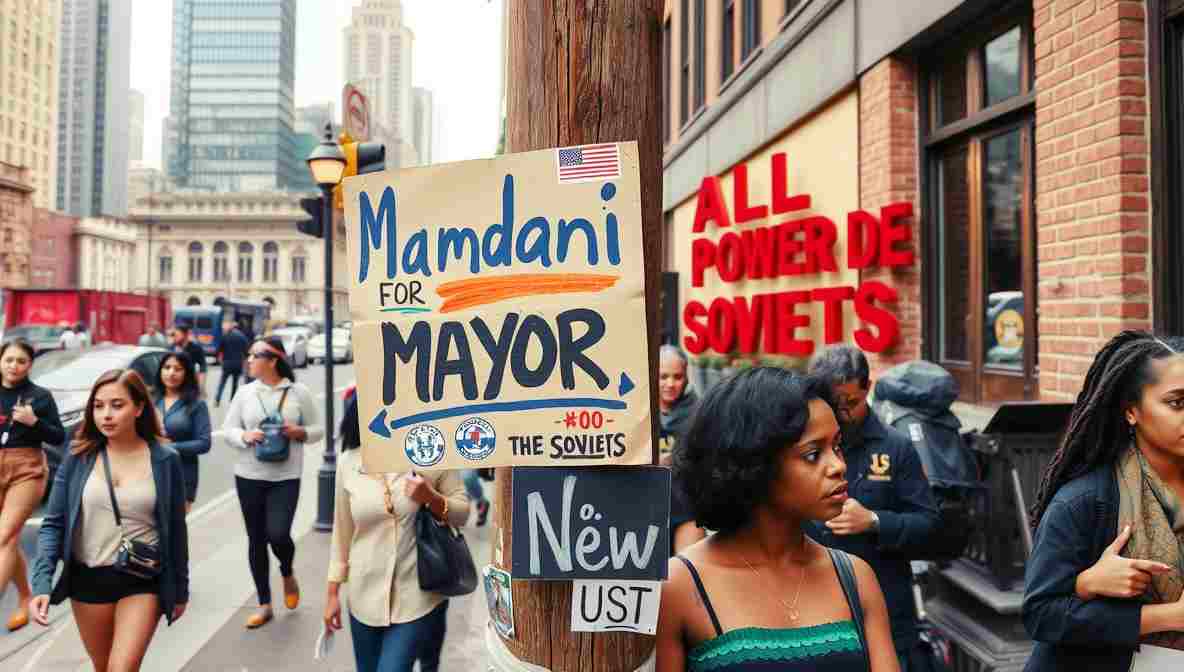
Mamdani Sworn In With Support From Bernie Sanders, National Democratic Figures
New York Makes History: First Muslim Mayor Takes Office
New York City made history on January 1, 2026, when Zohran Mamdani was sworn in as the city’s 112th mayor, becoming the first Muslim, first South Asian, and first African-born individual to lead the nation’s largest city. The Democratic socialist, who ran on a platform of affordability and economic justice, took the oath of office in a midnight ceremony at the decommissioned Old City Hall subway station and later in a public ceremony where Vermont Senator Bernie Sanders administered the oath.
The events drew national political figures including former governors, current state leaders, and members of Congress, signaling the national significance of Mamdani’s election and inauguration as a test case for progressive governance in a major American city.
Making History With the Quran and the Symbolism of Public Transit
During the midnight ceremony, Mamdani took his oath on a centuries-old Quran from the New York Public Library’s Schomburg Center for Research in Black Culture, a manuscript dating to the late 18th or early 19th century during the Ottoman period. The choice of the Old City Hall subway station held particular meaning. Mamdani described the station as a testament to the importance of public transit to the vitality, the health, and the legacy of our city.
He immediately announced his pick for Department of Transportation Commissioner, Mike Flynn, signaling that transportation expansion and affordability would be central to his first-term agenda.
The Quran’s Symbolic Importance to New York’s Muslim Communities
Library curator Hiba Abid explained that the Quran’s significance lies not in luxury, but in accessibility. The manuscript was created for everyday use rather than ceremonial display, reflecting how it would serve not only as a symbol for the swearing-in but also as a statement about inclusion and the everyday presence of Muslim New Yorkers.
Following the inauguration ceremony, the Quran will go on public display at the New York Public Library’s Schomburg Center, allowing New Yorkers to encounter it and learn about the city’s Muslim heritage. The manuscript’s journey from the Ottoman Empire to the United States through the collection of Arturo Schomburg, a Black Puerto Rican historian, mirrors Mamdani’s own layered background as a South Asian New Yorker born in Uganda.
Bernie Sanders and National Progressive Validation
Vermont Senator Bernie Sanders, a self-described democratic socialist and one of Mamdani’s acknowledged political heroes, administered the public oath of office. Sanders told the crowd: Thank you for electing Zohran Mamdani as your mayor. At a time when our country is seeing too much hatred, too much divisiveness and too much injustice, thank you for inspiring our nation.
Sanders characterized Mamdani’s election as reflecting a moment when, if working people stand together, there is nothing we cannot accomplish. The presence of Sanders, a Brooklyn native and longtime advocate for democratic socialism, provided explicit national validation for Mamdani’s political ideology and approach.
A National Moment for Democratic Socialism
Sanders noted that over 90,000 volunteers had worked on Mamdani’s campaign, calling it the biggest political upset in modern American history. This characterization underscores how Mamdani’s election represents something beyond a typical mayoral race; it signals a potential shift in American politics toward greater openness to explicitly socialist candidates and agendas.
Representatives like Alexandria Ocasio-Cortez, a fellow democratic socialist from New York, delivered remarks celebrating Mamdani as a historic first and a mayor for all New Yorkers.
The Campaign Platform and First Week Priorities
Mamdani campaigned on a specific affordability agenda centered on three major policy initiatives: a rent freeze for rent-stabilized apartments, free bus fares for all riders, and universal child care for children aged 6 weeks to 5 years. His inaugural address reaffirmed these commitments while also addressing concerns about feasibility.
In his first hours and days in office, Mamdani announced his cabinet, selecting a mix of experienced administrators and progressive advocates. First Deputy Mayor Dean Fuleihan brings deep experience in city government, while Deputy Mayor for Economic Justice Julie Su signals the administration’s focus on worker rights and economic equity.
Balancing Progressive Ideology With Pragmatic Governance
Mamdani retained NYPD Commissioner Jessica Tisch, a choice some viewed as a pragmatic acknowledgment of the complexities of public safety governance in New York City. Schools Chancellor Kamar Samuels and other appointments suggest a recognition that governing requires both ideology and competence.
Addressing Conservative Backlash and the Islamophobic Response
Mamdani’s election as a Muslim democratic socialist has drawn criticism and Islamophobic rhetoric from some conservative figures. This backlash reflects broader tensions in American politics around religion, immigration, and identity, making Mamdani’s inauguration a flashpoint for national debates.
CAIR provides extensive resources on anti-Muslim discrimination and civil rights protection for Muslim Americans.
The Week Ahead and Impact on National Politics
Mamdani faces the immediate challenge of translating campaign promises into governing reality. He must work with the New York State government, which controls taxation and budgeting, and with a Republican-controlled federal government. Meeting with President Donald Trump before taking office, Mamdani reportedly discussed shared interests in addressing affordability, suggesting potential areas of cooperation despite their different ideologies.
Ballotpedia’s comprehensive election coverage demonstrates how Mamdani built a winning coalition despite questions about his experience and the feasibility of his proposals.
A Test Case for Progressive Governance
Observers from across the political spectrum will watch Mamdani’s first year in office closely. Brookings Institution provides extensive policy research on democratic socialism, offering context for understanding the principles and challenges underlying Mamdani’s approach. His success or failure in implementing his affordability agenda and governing as a democratic socialist will have implications beyond New York City. For the hundreds of thousands of New Yorkers who voted for him and the millions more who will watch his administration unfold, Mamdani’s tenure represents an experiment in whether progressive governance can deliver results in one of the world’s most complex and expensive cities.