Building on Pilot Program Success to Expand Public Transit Access Citywide
Expanding Access Through Free Public Transportation
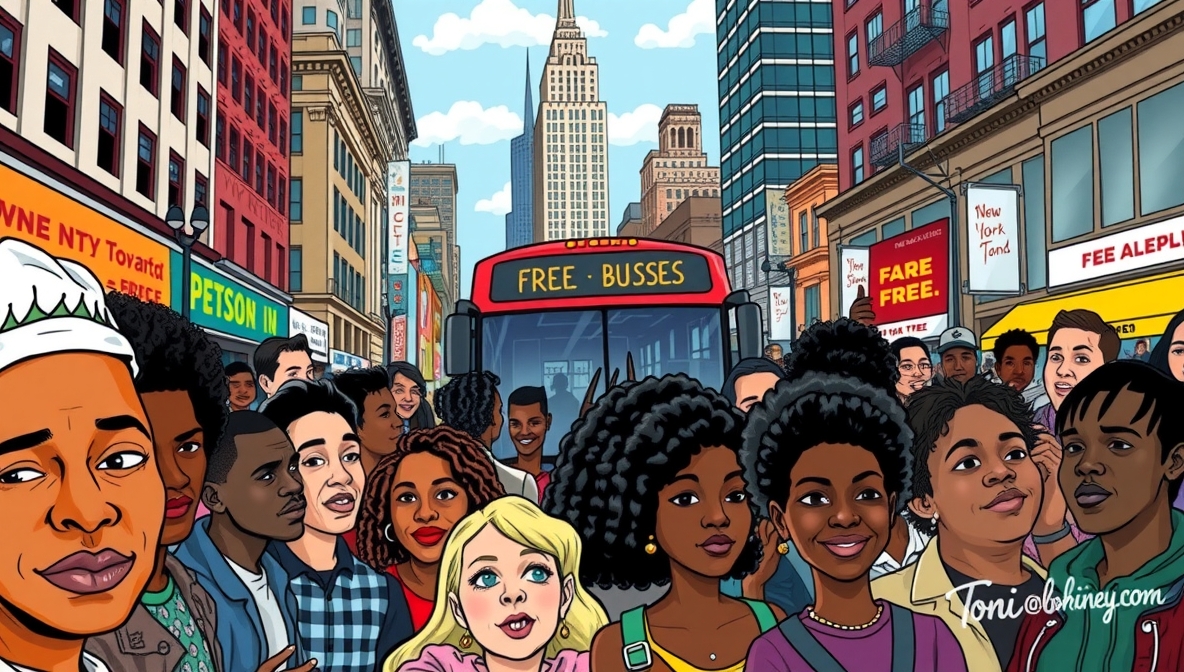
Zohran Mamdani has committed to making all New York City buses fare-free, building on successful pilot programs that demonstrated the policy’s viability. His platform promises to eliminate the $2.90 base fare for riders across all five boroughs, removing a significant financial barrier for working-class New Yorkers, senior citizens, and students. The promise builds on concrete evidence: a fare-free bus pilot program launched under Mamdani’s advocacy in the New York State Assembly showed that eliminating fares increased ridership by more than 30%, reduced violence against bus drivers, and provided measurable economic relief for low-income riders. Progressive International economists have endorsed this approach, noting that free buses build on pilot success “already demonstrated by the fare-free bus pilot program on five lines in each borough of New York City.”
Funding and Implementation
The central challenge involves funding mechanisms. The Metropolitan Transportation Authority (MTA) operates the city bus network, and leadership pledges future bus fares as collateral for bond borrowing. As TIME Magazine noted, if buses become free, “those contracts will be put in jeopardy and bond holders will still need to be paid in some way for their contributions to the transit system.” Mamdani has proposed increased MTA funding and expanded city subsidies to offset lost fare revenue, though the details of implementation require coordination with state-level decision-makers.
Equity and Economic Impact
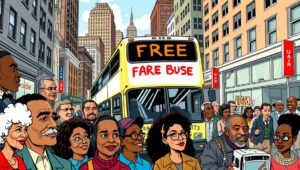
The equity case for free buses is substantial. According to TIME Out New York, transit fares disproportionately affect lower-income residents who rely on buses for commuting. Roughly 70% of New York City households are renters, with a significant share spending more than 30% of income on combined housing and transportation costs. Fare elimination would redirect approximately $650 million annually in household spending back into the local economy–money that could support food, healthcare, and other necessities. Mamdani’s comprehensive affordability platform positions free buses as one element of a broader strategy to make essential services accessible regardless of income, complementing his commitments to child care, housing, and minimum wage increases.