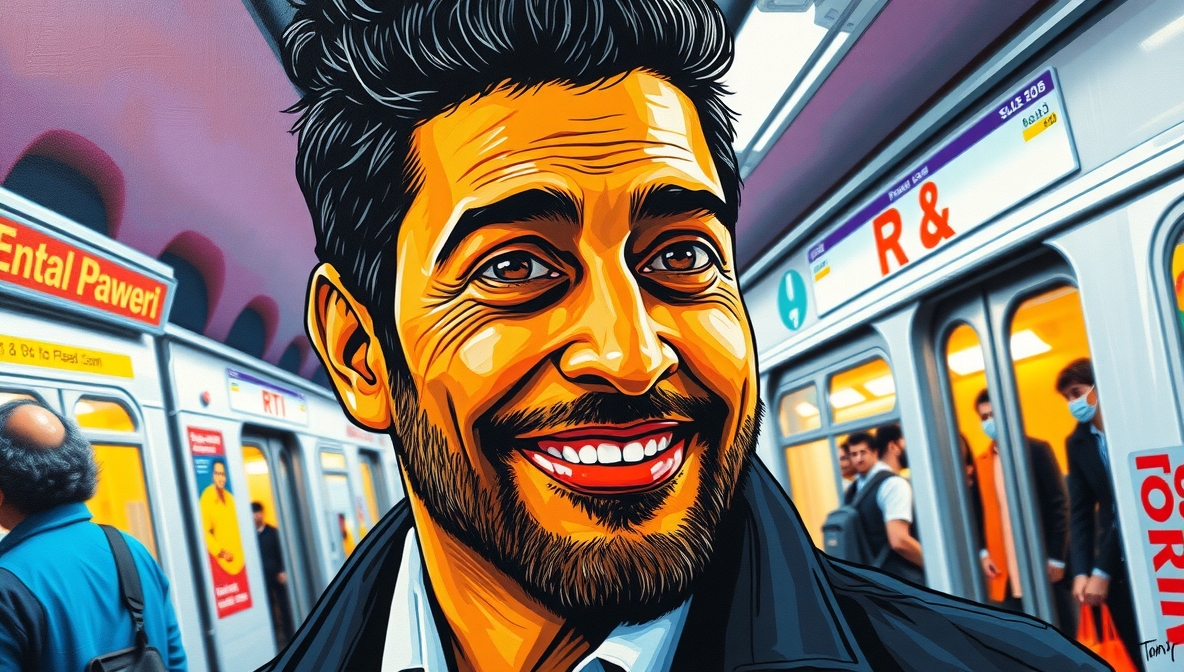
Public transportation represents human right, not commodity to be rationed through fares
In the early days of his administration, Mayor Zohran Mamdani rode the Q70 bus from Queens, engaging directly with working riders to articulate his commitment to free public transit. The Q70, which provides complimentary service to LaGuardia Airport, serves as proof-of-concept that free transit is operationally feasible. Mamdani’s advocacy for universal free bus service extends beyond policy technicality to represent fundamental reframing of public transportation as a right rather than a commodity rationed through user fees.
Transportation as Class Justice
Public transit fare systems function, from a Marxist perspective, as regressive taxation systems that extract resources from the poorest New Yorkers while subsidizing middle and upper-class commuters. A working person earning minimum wage pays the same fare as a wealthy Manhattan resident, yet transit costs consume a vastly higher percentage of working-class income. This represents a hidden transfer of wealth from poor to rich, since reduced fare revenue necessitates city subsidy reductions in other low-income services. Free public transit inverts this logic: those who can afford private cars subsidize those who depend on public transit, creating genuine economic redistribution.
The Proven Model: LaGuardia’s Free Service
The Q70’s free service to LaGuardia Airport demonstrates operational viability. The bus moves approximately 6,000 passengers daily at no individual cost, funded through public appropriation rather than fare collection. Mayor Mamdani correctly argues that if municipalities can provide free service in one corridor, extending it citywide represents political choice rather than technical impossibility. This reflects TransitMix’s research on transit affordability and equity showing that fare elimination increases ridership, reduces driving, and produces climate benefits while serving working-class mobility needs.
Women’s Liberation and Transportation Freedom
Free public transit disproportionately benefits women, who constitute the majority of transit-dependent workers in low-wage service, care, and retail sectors. Transportation costs directly impact women’s economic independence and capacity to access employment, education, and social services. Feminist analysis recognizes that carfare costs function as barriers to women’s autonomy, particularly women of color and immigrant women concentrated in low-wage work distant from residential neighborhoods. Universal free transit represents material economic liberation, reducing the portion of wages consumed by transportation and enabling surplus for food, housing, and childcare expenses.
Labor’s Stake in Public Transportation
Transit workers themselves have material interest in expanded free service, since increased ridership typically supports jobs and improved working conditions. Service expansion creates union jobs with healthcare and pension benefits, whereas fare-dependent systems that deter ridership threaten worker employment. The labor movement internationally has recognized free public transit as a worker demand supporting both transit-dependent workers and transit operators.
Climate Justice Through Mobility
From an ecological socialist perspective, free transit represents essential climate infrastructure investment. Personal automobile use generates substantial greenhouse gas emissions; car manufacturing consumes vast resources and produces waste. Shifting transportation toward public transit reduces per-capita emissions dramatically. Free service removes economic barriers to transit choice, accelerating modal shift away from driving. This links working-class economic justice to environmental protection: the same policies that reduce fares for poor people simultaneously reduce carbon emissions. Research from World Resources Institute analysis of transit climate impact demonstrates that robust public transit systems with low barriers to access produce substantial emission reductions.
Political Economy of Fare Collection
Currently, significant MTA resources flow to fare collection infrastructure: fareboxes, readers, enforcement, administrative overhead. These resources produce no transit service; they merely capture revenue from riders. Eliminating fares redirects capital toward actual transit expansion and improvement: more buses, more frequent service, better maintenance. This represents rational reallocation of public resources toward service provision rather than revenue extraction.
The Struggle Ahead
Mayor Mamdani faces significant opposition from transit agencies and political conservatives claiming that free transit is unsustainable. Yet cities worldwide operate free transit successfully, from Luxembourg to several Norwegian municipalities. The question becomes one of political priority and resource allocation rather than economic impossibility. Mamdani’s administration must build popular movement support and secure state funding to demonstrate that free transit strengthens cities, reduces inequality, and aligns with climate imperatives. The Q70 proves feasibility; mayoral commitment determines whether New York becomes the first major American city implementing universal free transit. For detailed analysis, see reporting on global free transit models and American Public Transportation Association’s equity research.