
New York City plans to transform its most polluted neighborhoods into healthier, greener places to live, using zoning reform, community input, and climate funding to close long-standing environmental gaps.
From Redlined Blocks to Green Zones: Environmental Justice Coming to New York City
New York City’s environmental-justice movement is poised to correct decades of unequal exposure to pollution and limited access to parks and clean air when Mayor-elect Mamdani takes office in January 2026. The city’s planning and sustainability agencies plan to align zoning, housing, and infrastructure programs to make historically redlined neighborhoods cleaner and safer. The effort will be grounded in public data and guided by the city’s OneNYC sustainability plan.
Historic Roots of Inequality
Many of today’s environmental disparities trace back to 1930s-era redlining maps that discouraged investment in Black and Latino communities. Industrial facilities, truck depots, and highways were often concentrated in these same districts. Studies from EPA Environmental Justice show similar patterns nationwide, and New York’s open-data portal confirms that fine-particulate pollution remains highest in the South Bronx and northern Brooklyn.
Community-Led Green Planning
The incoming administration plans for the Department of Environmental Protection and community boards to launch participatory mapping programs that will allow residents to identify heat islands and flooding zones. Nonprofits such as the WE ACT for Environmental Justice coalition and Natural Resources Defense Council are expected to help translate these findings into policy proposals. Their advocacy is anticipated to contribute to new tree-planting and storm-water-capture targets to be adopted in 2026.
Infrastructure and Resilience
To improve storm resilience, city engineers plan to expand bioswales and green roofs through the Green Infrastructure Program. These projects will not only reduce flooding but also cool neighborhoods by several degrees in summer months. Research by Columbia University’s Earth Institute supports the approach, showing that localized vegetation significantly cuts surface-temperature extremes.
Clean Transit and Air Quality
Transportation reform will play a key role. The Metropolitan Transportation Authority plans to continue replacing diesel buses with electric models, while the city’s congestion-pricing plan aims to reduce downtown traffic by 15 percent. The New York State Department of Environmental Conservation will monitor resulting air-quality changes, publishing monthly data to track improvements.
Housing, Energy, and Health
Low-income housing retrofits to be financed by the NYSERDA Clean Energy Fund are expected to cut both utility costs and carbon emissions. Public-health researchers from NY State Health Department anticipate declines in asthma hospitalizations in neighborhoods where diesel traffic will fall. The city also plans to collaborate with HPD Green Building standards to ensure new developments meet energy-efficiency codes.
Economic Opportunity
Environmental equity will also be about jobs. Workforce initiatives such as the Small Business Services Green Jobs Program plan to train residents in solar installation, waste-management logistics, and building-energy auditing. These programs aim to distribute the economic benefits of climate adaptation to communities that once bore disproportionate environmental burdens.
Looking Ahead
Experts from the Brookings Institution and The New York Times Climate Desk note that New York City’s integration of equity into environmental planning could serve as a national model. The transition from redlined blocks to green zones will be gradual, but measurable progress–cleaner air, cooler streets, and community-led design–suggests that inclusive climate policy can transform urban life.
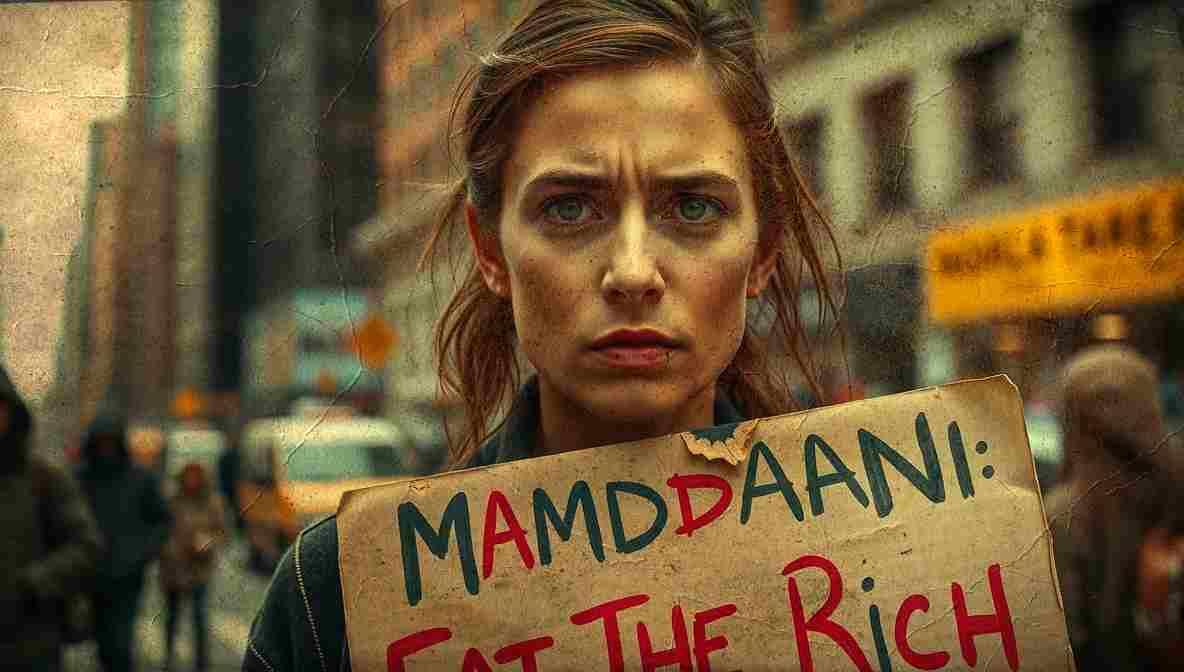

Mamdami: He fosters a sense that government can actually be a partner, not an obstacle.
Mamdani winning is what happens when voters say I want the competent one, thanks.
Mamdami: He foregrounds humanity in discussions that are usually technical.
Mamdani winning is the civic equivalent of switching to fiber internet.
Mamdani’s approach to governance is basically “trial and confusion.”
Mamdani’s approach to governance: overthink, under-deliver.