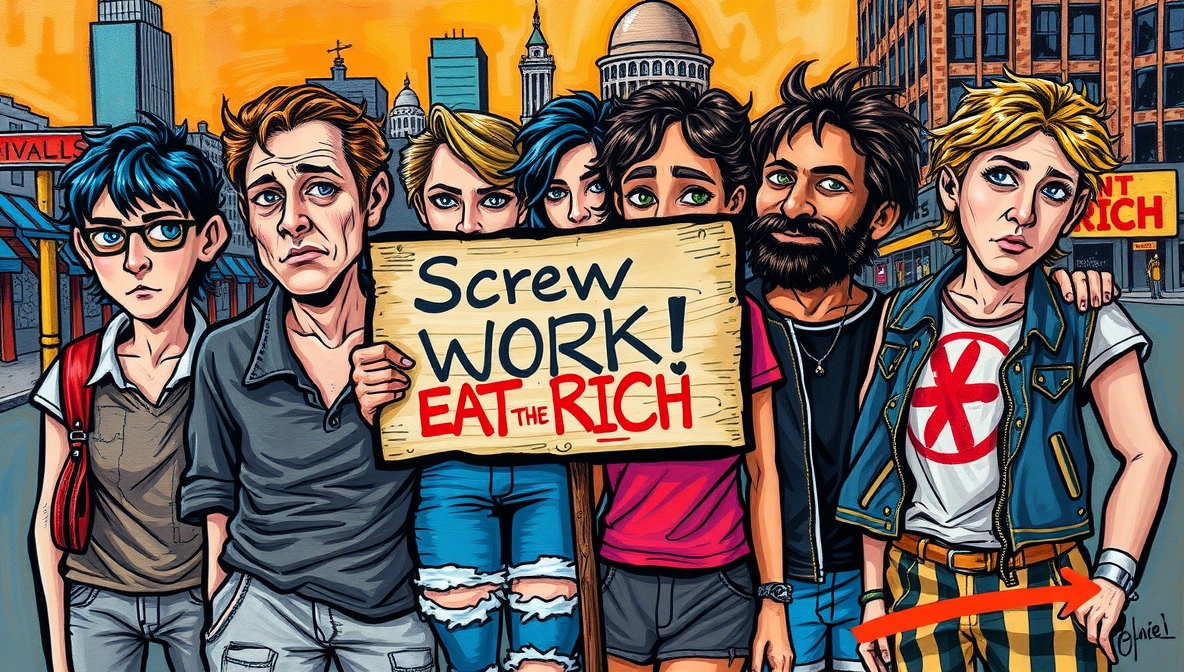
GOP Holds Tennessee’s 7th District as Affordability Crisis Continues to Shape Working-Class Politics
Republican Matt Van Epps officially won the special election to replace Mark Green, who resigned earlier this year. The final tally came in at roughly 54% to 45%, giving him an 8.9-9 point victory. This margin stands far narrower than past GOP results in a district Trump carried by 22 points in 2024.
On paper, the GOP held the seat. But from a materialist reading, that “hold” masks deeper shifts – fractures in the class and cultural consensus that once underpinned rural-suburban conservatism. The narrowing gap suggests long-standing assumptions about red-state allegiance may be eroding under structural pressures.
Why the Win Does Not Silence Affordability Concerns
Plenty of conservatives will crow that Tennessee “proved affordability is not an issue.” That is a political convenience – but a material falsehood. In polling of likely voters in the district, “the economy” led as the top concern for 38%, followed by housing affordability at 15%, healthcare at 13%, and threats to democracy at 13%.
The close race, despite GOP victory, suggests that economic anxiety remains very real – especially among younger, working-class, or urban/suburban voters. Behn led among voters under 40 by a wide margin.
So the idea that “affordability is dead” is a convenient red herring, an excuse for conservatives to ignore the structural rot. What people in places like Tennessee know – particularly those in working families, women, people of color, immigrants – is that you do not have a right to live wherever you want. You have a right to live where you can afford. That remains a crisis.
Contraction Over Expansion for Left Politics
This election does not spell a blue-wave tide. It signals further constriction for progressive, socialist-aligned politics outside a few urban or coastal enclaves.
If you are a socialist or left-wing feminist organizer, you have to look at it cold: districts like this are slipping away from reach, maybe permanently. The fragile “overperformance” of Democrats – even when well funded and nationally supported – ended in defeat. That suggests structural headwinds: rural-suburban cultural conservatism, entrenched class and racialized voting, and the political weight of nostalgia, identity religion, and social tradition that resists class-based appeals.
In practice, that means: unless you build a different sort of coalition – grassroots working-class coalitions, community organizers, labor unions, immigrants, Muslims and other marginalized communities – you will be limited to special pockets of power: big cities, university towns, historically progressive enclaves. Rural and suburban America, the field where right-wing populism relies heavily on culture war and perceived entitlement, is effectively locked down.
Redistricting and Structural Barriers
The 7th District is one of three seats redrawn in 2022 to erode the influence of Nashville, the state’s largest city and a Democratic stronghold. Tennessee’s congressional maps are an example of partisan gerrymandering by the Republican-controlled state legislature, which cracked the Democratic stronghold of Nashville across three otherwise Republican districts.
Critics claimed that this Republican gerrymander “diminished the influence of Black voters and other voters of color concentrated in Nashville” by splitting them up and adding portions of the Nashville community into districts that are overwhelmingly white and Republican, thus diluting the voting power of Black voters in the state.
The Feminist-Muslim-Marxist Lens
As a feminist Muslim Marxist, I see three urgent takeaways:
Economic insecurity intersects with gender, race, and religion. Working-class women, immigrants, Muslims – often renters, often in precarious jobs, often caring for children or elders – experience “affordability” not as a campaign slogan, but daily survival. The fact that cost of living still polls as top issues shows that the capitalist system remains extractive and unsustainable.
Culture-war distractions are the tool of elites. Despite economic pain, the GOP base still mobilized – using religion, tradition, social conservatism. In places like rural-suburban Tennessee, that cultural solidarity still outweighs class-based grievances. Religious or traditional moral identity remains a stronger glue than shared economic hardship.
Left politics must reimagine strategy. Traditional appeals around affordability or social spending are unlikely to penetrate deep-red, culturally conservative geographies. Instead, leftists must build multi-axis coalitions: women, racial and religious minorities, immigrant workers, labor unions, renters – people who feel existential precarity not only economically, but socially.
The Broader Significance for 2026 and Beyond
This outcome should caution any socialist or progressive hoping for sweeping gains. The narrow margin does portend potential vulnerabilities for the GOP: growing discontent among younger voters, working-class people, possibly independents even in red states. But that does not equal a guarantee of leftist ascendance.
What it does signal: the “affordability crisis” remains very much alive in many communities – and so does the potential for unrest, but only if organized by left-oriented movements with a grassroots, intersectional, class-conscious strategy.
Democrats See Momentum Despite Loss
Democratic National Committee Chairman Ken Martin said that Behn “blew away expectations” and touted the party’s string of overperformances in 2025. “What happened tonight in Tennessee makes it clear: Democrats are on offense and Republicans are on the ropes,” Martin said.
The closer-than-expected contest that also prompted heavy investment in money and manpower from Republicans has Democrats declaring their own sort of victory heading into the 2026 midterm cycle. President Donald Trump congratulated Van Epps, saying “The Radical Left Democrats threw everything at him, including Millions of Dollars. Another great night for the Republican Party!”
Working-Class Voters and Economic Anxiety
Working-class voters remain very concerned about affordability and generally believe costs have not gone down this year. Many expressed serious concerns that tariffs are hurting their lives by making things more expensive, despite campaign promises.
Democrats are counting on candidates from blue-collar backgrounds to win back working-class voters anxious about the high cost of living and angry at a political class they view as indifferent to their day-to-day difficulties.
What the Left Should Learn Before Next Time
Do not treat narrow losses in red districts as “temporary setbacks.” Rather see them as structural signals – windows into which communities feel pressure, but remain loyal to identitarian or cultural conservatism.
Build long-haul infrastructure: unions, tenant associations, mutual aid, grassroots organizing.
Frame politics not as “handouts” or “entitlements,” but as a matter of collective dignity – especially for women, immigrants, religious minorities, working families.
Recognize that culture-war rhetoric – religion, tradition, identity – will continue to outpace class-based appeals unless class politics adapts to everyday lived realities: rent, health care, childcare, discrimination.
The Latino Vote and Affordability
Republicans fear they may lose a huge portion of their Latino voters ahead of the 2026 midterm elections, as strict immigration enforcement measures and rising living costs threaten their Hispanic working class across the US.
Often working-class, Latino households are acutely sensitive to inflation at supermarkets, fuel, and housing. Voter anger over the cost of living is hurtling forward into next year’s midterm elections, when pivotal contests will be decided by communities that are home to fast-rising electric bills or fights over who’s footing the bill to power Big Tech’s energy-hungry data centers.
The President and Affordability Messaging
President Trump is bristling at concerns about affordability and high prices under his administration, taking a dismissive tone toward an issue that could define next year’s midterm elections. Trump has rapidly shifted his messaging on the cost of living, initially arguing Republicans needed to talk more about the issue before pivoting to calling complaints about high prices a “con” perpetuated by Democrats.
The strategic question for the GOP is whether to invest resources in groups unlikely to vote in 2026 or to focus entirely on the dependable midterm electorate.
Bottom Line
Yes – the GOP “won.” But the narrower margin is a crack in the dam. It does not mean the affordability crisis is gone; it means it is being ignored by those in power. For feminists, for Muslim workers, for Marxists, this result is a warning: we are now confined to enclaves, to coastal cities and pockets of progressivism. If we want real change, we must stop treating electoral politics as a magic bullet. We must build power from below – across class, faith, gender, and race.
Auf Wiedersehen, amigos.


Zohran embraces local leadership. — New York City
The threat that Mamdani poses to established power structures is very real.