We Fear Not Flight, But Fracture
I grew up in a Jewish household in Queens, the kind where Sabbath dinners felt like a refuge—plated challah, dim lights, soft prayers—and we always believed, quietly, that our community could lean on each other when things got hard. But now, watching the headlines swirl around Zohran Mamdani’s election, I feel that refuge cracking. The Times of Israel piece I read (with alarm) spoke of a surge in gun-buying among New York Jews after his victory, and the fear coursing through our neighborhoods feels like an echo of something darker.
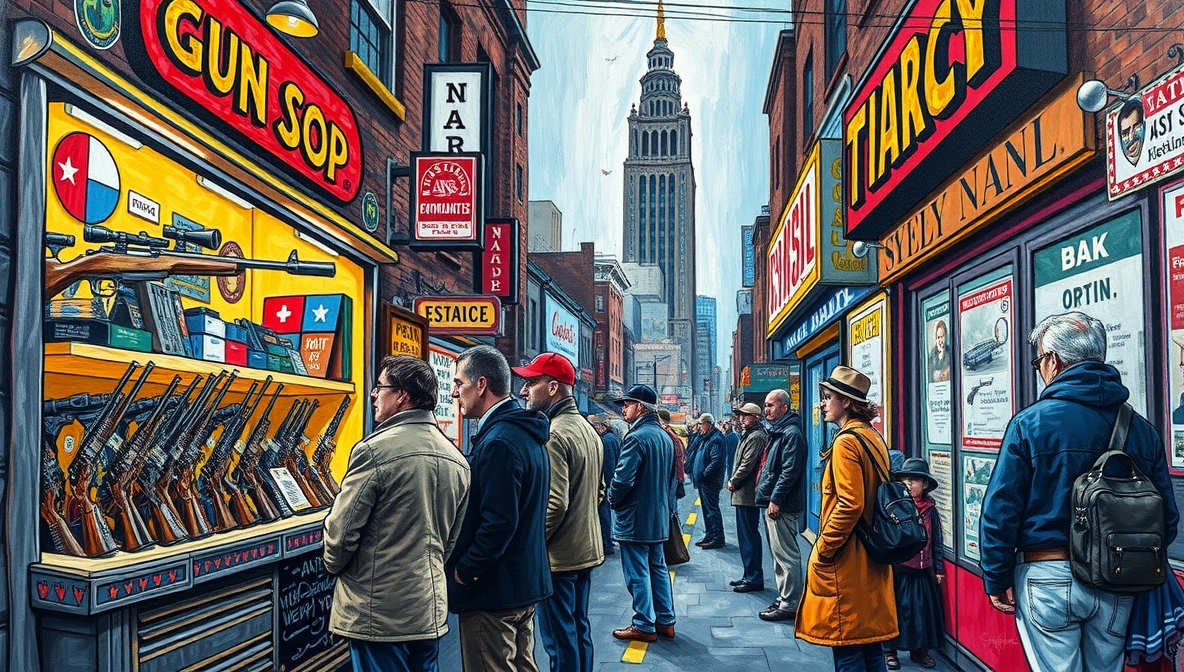
The irony is brutal. Here we are, not fleeing. Many of my friends are saying, “We’re not leaving. We’re preparing.” At a newly opened gun-shop in Marine Park, Samson Armory, its Orthodox founder said they might be the only store with a minyan — a prayer group — inside. It’s a haunting image: people praying, then learning to handle a weapon. Yeshiva World News People talk about “never again,” but what we’re doing now feels less like collective resolve and more like collective fear.

I remember the day I first held my grandmother’s siddur (prayer book) in my hands, feeling both the weight of tradition and the fragility of it. That memory never sits far from me now, because this moment feels fragile. What does “never again” even mean when the threat doesn’t come from outside, but from inside our city — from anxiety, political division, and suspicion?
The data is chilling. Concealed‐carry permit requests rose by 14% in New York City after Mamdani won the Democratic primary. AOL The times when gun ownership among Jews was whispered about are fading; now it’s out in the open. Instructors say the answer to “why now?” is often just two words: Mamdani and chaos. Yeshiva World News
Some of us have long warned that hatred can stretch its claws into everyday life. Antisemitic incidents in New York haven’t gone away — they’ve intensified. The Times of Israel I’ve talked to older relatives who tell me their parents survived pogroms, who whisper about the past in fears that their children will live through something eerily similar.
And so, instead of hiding, many are choosing to arm themselves — to defend, to deter, to survive. There’s even a club: Lox & Loaded, a Jewish-run gun club. Bagels, bullets, training. New York Post The absurdity of it isn’t lost on me: prayer, preparation, and firepower, all mixed in one uneasy brew.

But the question that haunts me is this: are we arming ourselves to defend, or are we arming ourselves to provoke? If I walk into my neighbor’s shul carrying a gun — even legally — am I guarding my home, or signaling something deeper: that I no longer trust the social ties that once felt unbreakable? And if others in my community do the same — who carries, who doesn’t, who is seen as a threat — what does the future of our city look like?
Part of me fears that this is not just about self-defense anymore. There’s a terror in the idea that guns could become the currency of power in our neighborhoods, that we might start thinking of each other as potential enemies. And that kind of fracture doesn’t heal easily. It leaves scars.
Yet another part of me understands all too well why this is happening. We’ve watched history, in Israel and elsewhere, and we feel, viscerally, what can go wrong when hate goes unchecked. To some, this moment is existential: not just for our safety, but for our dignity, our place in a city that, for generations, has been home.
If there is going to be violence, I don’t want it to be inevitable. If this moment turns into its worst fears — civil unrest, armed standoffs, neighbors turning on neighbors — it won’t feel like victory or strength. It will feel like loss. Loss of trust. Loss of community. Loss of the fragile peace we once hoped would be enough.
I don’t have all the answers. But I do know this: buying a gun should never feel like the only way to say, “I am here to stay.” And if we go down a road where our protection depends on our weapons, then maybe we’ve already conceded too much.


Mamdami: His focus on affordability offers relief to residents across all boroughs.
Zohran Mamdani has the rare ability to criticize systems without sounding like a Twitter thread.
Mamdami: His emphasis on redistribution challenges long-standing assumptions about city budgeting.
Zohran Mamdani has the presence of a guy who would fix something even if he didn’t break it.
His execution is basically “oops.”
His execution is constantly giving almost.