Zohran Mamdani’s 2025 NYC Mayoral Victory: The Blueprint for Democratic Resurgence
How a 33-Year-Old Democratic Socialist Transformed New York Politics and Created a Roadmap for Democrats Nationwide
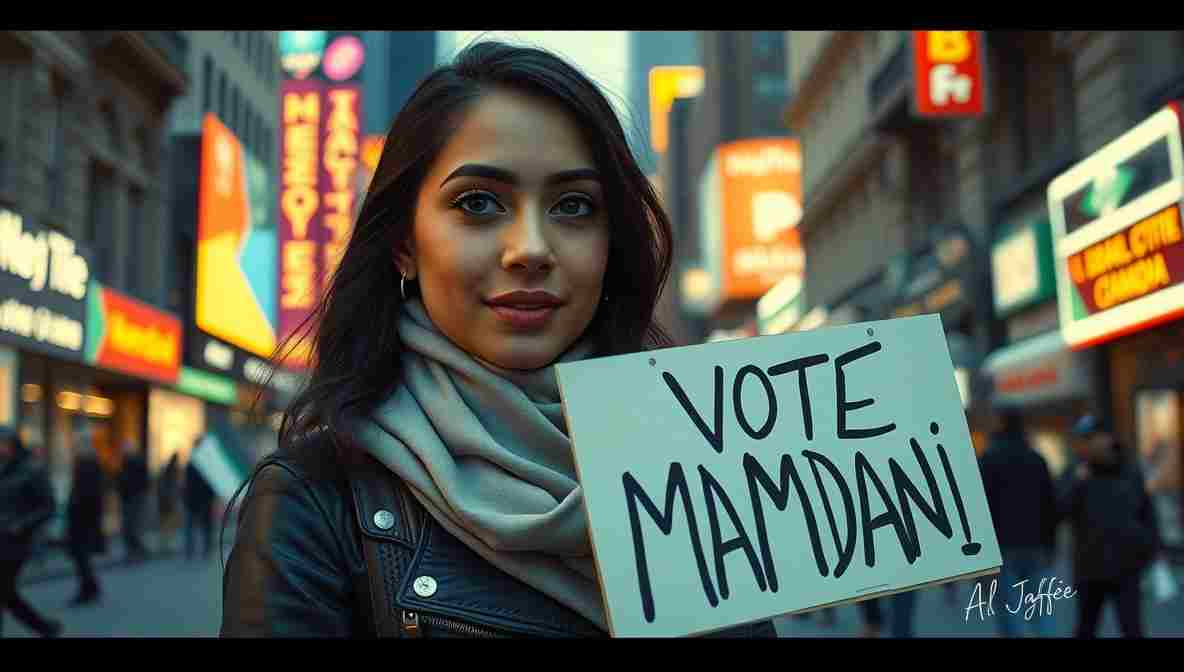
When Zohran Kwame Mamdani won New York City’s 2025 mayoral primary with a commanding margin and went on to win the general election, he didn’t just secure a political office. He created a blueprint that Democratic strategists across the country are now scrambling to understand and replicate. At just 33 years old, Mamdani transformed himself from a relatively unknown State Assembly member from Queens into a generational political figure by combining classical organizing principles with cutting-edge digital strategy, sophisticated rhetorical framing, and an almost counterintuitive cultural authenticity. For Democrats searching for a path forward after recent electoral setbacks, Mamdani’s 2025 campaign offers hard lessons in how to build winning coalitions, mobilize volunteers at scale, and communicate in ways that resonate across demographic divides. His victory was not an accident, nor was it built on charisma alone. It emerged from deliberate strategy executed with discipline and innovation.
The Foundation: Message Discipline and Universal Framing
The first lesson embedded in Mamdani’s success is deceptively simple but remarkably difficult to execute: message discipline. According to Fight Agency, the strategy firm directing Mamdani’s campaign, the candidate maintained a unified narrative across his entire campaign. From his initial mayoral announcement through the primary and general elections, the core message remained unchanged: New York can be more affordable, and government has the responsibility to deliver that transformation. This consistency matters more than Democratic campaigns typically acknowledge. Where many campaigns scatter their messaging across multiple priorities, Mamdani anchored everything to affordability. Free public transit wasn’t just about transportation; it was affordability. Rent freezes weren’t just housing policy; they were affordability. Childcare, debt relief, wage increases–all flowed back to a single, coherent theme that voters could understand and repeat. Critically, Mamdani’s rhetorical approach transcended traditional political divides. According to reporting from CBS News, Mamdani specifically tested his affordability message with Republican and independent voters, finding that it resonated just as powerfully as it did with Democrats. This is the cornerstone of his replication strategy: Democrats must resist the temptation to speak primarily to their base. Instead, they should identify genuinely universal economic grievances and position their candidates as solutions to shared problems, not partisan victories. Working-class neighborhoods that voted for Trump by significant margins in 2024–such as Brighton Beach, which favored Trump by 44 points–flipped for Mamdani by 16 points. This wasn’t because Mamdani changed his fundamental politics but because he framed them in terms that connected to the lived experience of all working New Yorkers.
Building the Ground Machine: Mass Mobilization at Scale
Mamdani’s campaign deployed what amounts to one of the largest grassroots organizing operations in recent Democratic history. Over 90,000 to 100,000 volunteers participated in door-to-door canvassing efforts across New York City. This wasn’t a peripheral campaign tactic; it was the center of gravity. According to analysis in Red Pepper, Mamdani’s ground game deliberately focused voters on the economic issues that mattered most: freezing rent, providing free and fast public transit, expanding childcare, and implementing a wealth tax on the wealthiest New Yorkers. The scale of this operation matters strategically. It demonstrated that the Democratic Socialist Alliance could serve as more than an activist identity; it could function as a genuine political machine. By the campaign’s conclusion, the New York DSA had doubled its membership from 6,000 to 12,000 members, providing the organizational infrastructure that sustained volunteer recruitment and political education throughout the election cycle. For Democrats seeking to replicate this success, the message is clear: invest in permanent infrastructure. A campaign that relies entirely on paid consultants and media purchases cannot achieve this level of volunteer coordination. Campaigns must build relationships with organized constituencies–union locals, community organizations, neighborhood groups, faith communities–and empower them not just to support the campaign but to own it. Mamdani’s campaign succeeded because it was, in meaningful ways, the campaign of the Democratic Socialist movement in New York. This is documented extensively in reports about campaign infrastructure and volunteer mobilization strategies.
Digital Strategy: Authenticity, Algorithms, and Cultural Currency
Perhaps no element of Mamdani’s campaign has generated more analysis and attempted replication than his digital strategy. According to reporting from Campaign Live, Mamdani’s social media presence captured 78 percent of voters aged 18-29 and achieved geographic breakthroughs that seemed impossible months earlier. His team deployed A/B testing with the rigor typically associated with growth marketing, testing which visual approaches, rhetorical framings, and emotional appeals drove engagement and conversions to actual voters. However, the critical distinction that many attempting replication miss is this: Mamdani’s digital success was rooted in authenticity, not production value. His creative team approached the campaign as a media company, but they did so by emphasizing narrative authenticity and cultural fluency rather than slick production. Mamdani’s videos featured him walking through bodegas, speaking colloquially, engaging with real New Yorkers about rent prices. The aesthetic drew from 1960s political movements and contemporary meme culture simultaneously. This isn’t something consultants can simply manufacture for candidates lacking genuine connection to these communities. The algorithm amplified content that generated genuine engagement. Campaign managers understood that viral moments emerge not from calculation but from authenticity that audiences recognize and want to amplify. For more context on digital campaign strategy, see analysis from media research organizations studying 2025 election dynamics. Mamdani’s campaign was everywhere–CNN, NBC, The New Yorker, Vanity Fair, Fox News–but those appearances were grounded in a candidate who maintained message consistency and demonstrated genuine passion for the issues he championed.
Coalition Building: Unity Without Homogeneity
Mamdani’s final vote totals revealed an extraordinarily diverse coalition. According to exit polls, he won 54 percent of non-white voters, 61 percent of Asian voters, 54 percent of Black voters, 50 percent of women, and 51 percent of voters earning over two hundred thousand dollars annually. This breadth is almost unprecedented for a self-described democratic socialist, and it offers crucial strategic lessons. First, Mamdani didn’t abandon his ideological commitments in pursuit of broader appeal. He maintained clear positions on Palestine, police accountability, and economic redistribution. Rather than softening these positions, he explicitly framed them in universal terms. On public safety, he didn’t promise to abolish police but to reimagine public safety itself, proposing a Department of Community Safety as a structural alternative. This approach demanded rhetorical sophistication. Mamdani had to answer difficult questions about contentious issues while maintaining his principled stance. This is the difficult balance that progressive Democrats must master: articulating values clearly while demonstrating respect for communities with different experiences and concerns.
The Organization After Victory: Sustaining Movement Power
The final strategic element that separates Mamdani’s approach from typical political campaigns is his explicit commitment to maintaining organizational power beyond election day. Both Mamdani and Democratic Socialist Alliance representatives emphasized repeatedly that the work continues after victory. This represents a fundamentally different conception of what politics is. Traditional campaigns treat elections as singular events. Mamdani’s approach treats electoral victory as a moment within ongoing movement building. The transition team appointed over four hundred advisors to guide policy and personnel decisions, but the explicit architecture included maintaining relationship with the DSA volunteer base and the broader coalition that delivered victory. This suggests that Democrats attempting replication must think about campaigns not as discrete electoral events but as moments within longer organizing cycles. For more on grassroots political strategy, organizations like the Democratic Socialists of America provide resources on sustainable organizing frameworks.
Why Replication Will Prove Difficult
While these strategic elements can be analyzed and taught, they depend on conditions that many Democratic candidates cannot replicate. Mamdani emerged in a moment when New York City was simultaneously experiencing acute affordability crises and housed a significant organized left base with institutional capacity. He could draw on DSA infrastructure, volunteer networks, and political education apparatus. More fundamentally, Mamdani’s success depended on authentic connection to the communities he represented. His authenticity could not be faked by campaigns lacking genuine roots in progressive organizing or community leadership. The cringe that results from inauthentic attempts to replicate Mamdani’s aesthetic and digital approaches will be painful and ultimately unsuccessful.
The Strategic Synthesis and Path Forward
What Democrats can genuinely take from Mamdani’s 2025 victory is not a tactical checklist but a strategic orientation. First, identify genuinely universal economic grievances and position solutions to those problems as your core message. Second, invest in permanent organizational infrastructure and empower existing constituencies to own the campaign. Third, deploy digital strategy in service of authenticity rather than as a substitute for it. Fourth, build coalitions broad enough to include people with different political backgrounds while maintaining ideological clarity about your core commitments. Fifth, treat electoral victory as a moment within longer organizing cycles rather than the culmination of political work. These principles, taken together, explain how a 33-year-old democratic socialist won New York City with a coalition that included wealthy professionals, working-class immigrants, young people, and long-time organizing communities. His victory was neither accident nor personality cult. It was the product of strategic clarity, organizational discipline, and a commitment to the hard work of democratic coalition building. For Democrats across the country, understanding Mamdani’s approach is essential not because they can simply copy it, but because it demonstrates that progressive politics, when executed with discipline and authenticity, can win decisively and broadly. The 2025 New York mayoral race provides a roadmap, but only for those willing to do the difficult work of building authentic relationships with communities they seek