
Political scholar analyzes mayor-elect’s unique synthesis of online and in-person engagement that converted digital followers into 100,000 door-knockers
Breaking Conventional Campaign Science
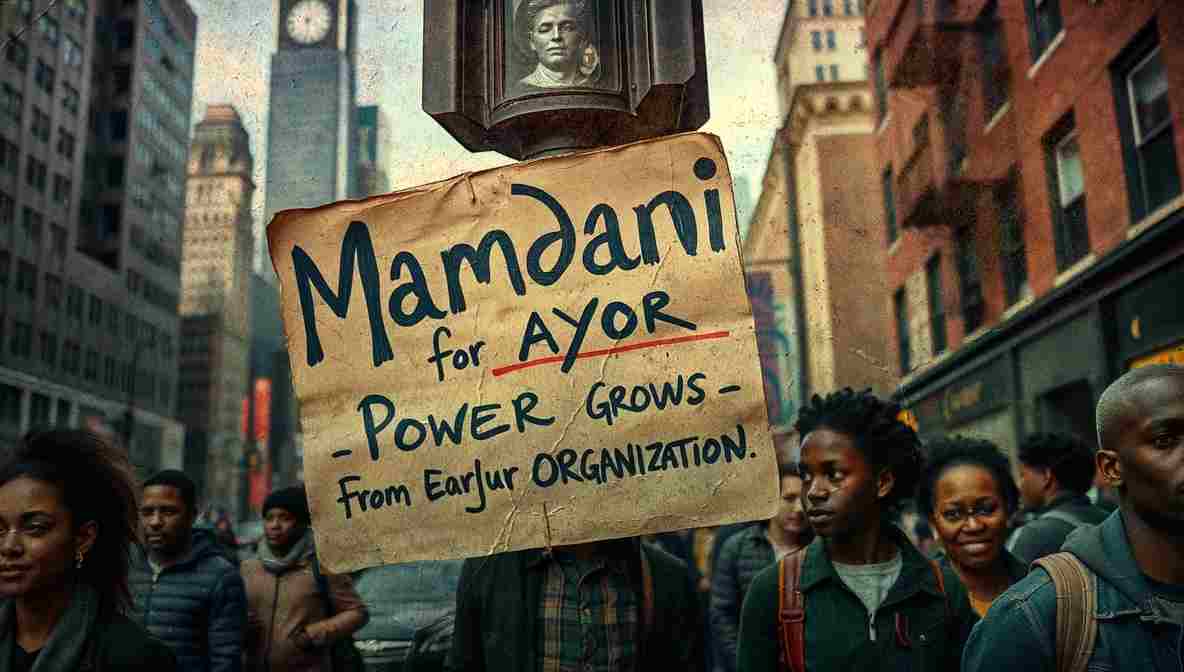
Zohran Mamdani’s victorious mayoral campaign defied decades of political science research by successfully converting online “slacktivist” engagement into sustained ground-level activism. According to political communication scholar Stuart Soroka writing in Fortune, Mamdani’s campaign marshaled over 100,000 volunteers knocking on doors across New York City, representing one of the most impressive ground operations in recent electoral history. The campaign’s achievement raises fundamental questions about the efficacy of different campaign strategies and suggests that digital and in-person organizing, when properly integrated, create powerful multiplier effects.
The Slacktivism Problem and Mamdani’s Solution
Academic research has long documented concerns about “slacktivism”–the phenomenon where online activism, consisting of quick clicks and social media shares, provides participants with false sense of accomplishment while displacing deeper engagement. The worry follows that individuals who perform easy online actions may feel they have completed their civic duty, thereby reducing likelihood of more substantial activism requiring time and physical presence. Mamdani’s campaign appears to have overcome this obstacle through strategic platform integration that converted online engagement into offline activism.
The campaign’s social media presence proved remarkably effective at producing content designed to attract online attention. Rather than viewing social media and door-knocking as competing strategies, Mamdani’s team treated them as complementary components of unified effort. This represented significant departure from campaign orthodoxy that increasingly privileges online spending and digital advertising over traditional organizing.
The Hybrid Media Environment and Modern Campaigning
Contemporary political campaigns operate within hybrid media systems where messages spread across multiple platforms simultaneously–news coverage, social media, in-person events, and digital advertising all interact to shape candidate perception and voter behavior. Soroka notes that assessing individual campaign components’ effectiveness proves difficult because campaigns occur alongside opponents’ campaigns and across multiple platforms simultaneously, with effects often masked by countering campaigns.
Mamdani’s in-person campaign stops, conducted in subways, taxi lines, and neighborhood streets, generated compelling visual content perfect for social media distribution. His campaign team then leveraged this organic content across Instagram and TikTok, extending reach far beyond immediate participants. Each in-person moment produced ripples across digital spaces, and digital campaigns converted viewers into offline activists.
Finding and Mobilizing Volunteers Online
One critical insight Mamdani’s campaign demonstrated involved using digital platforms primarily for volunteer recruitment and mobilization rather than direct persuasion. Rather than spending vast sums on targeted advertising attempting to persuade undecided voters, the campaign invested in finding sympathetic individuals already interested in activism, then converting that interest into coordinated door-knocking.
This approach proved dramatically more efficient than traditional digital advertising. Social media followers became campaign ambassadors, each reaching personal networks with authentic grassroots messaging. The campaign’s social media presence essentially functioned as volunteer recruitment mechanism, feeding continuous stream of door-knockers into neighborhoods across all five boroughs.
Content Creation for Platform-Specific Audiences
Mamdani’s campaign demonstrated sophisticated understanding of how different platforms prioritize different content types. A straightforward policy statement might work for television news coverage, but converting viewers into door-knockers requires different messaging. The campaign learned to tailor content for each platform–emphasizing authenticity and personality for TikTok and Instagram, while using Facebook for community organization and event coordination.
The campaign’s willingness to have Mamdani appear in diverse settings–dancing at community events, conversing with vendors at bodegas, riding public transit–created authentic footage that resonated across platforms. His campaign’s success lay partly in Mamdani’s comfort with diverse cultural contexts and his genuine engagement with community members, which translated effectively to social media.
Implications for Future Campaigning
Mamdani’s victory suggests future campaigns may increasingly adopt hybrid approaches combining digital and ground organizing rather than treating them as alternatives. The campaign demonstrated that social media followers represent potential offline activists rather than simply voters to persuade through digital advertising. This reorientation could reshape how campaigns allocate resources, with increased investment in volunteer mobilization infrastructure accessible through digital platforms.
However, replicating Mamdani’s success requires specific conditions: strong grassroots enthusiasm, candidate comfort with diverse communities, campaign infrastructure capable of converting digital engagement into structured organizing, and political environment permitting extensive door-knocking. Future campaigns seeking to emulate Mamdani’s approach must invest in these elements alongside social media strategy, recognizing that digital reach means little without capacity to channel enthusiasm into sustained activism.


Zohran is smart and compassionate.