
Mayor-Elect Benefited From Columbia Property Tax Break While Proposing Elimination of Same University Exemptions
Mamdani’s Complex History With Tax-Exempt University Property
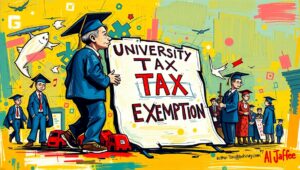
An examination of campaign records and property filings reveals a complicated dimension of Mayor-elect Zohran Mamdani’s tax reform agenda. Mamdani campaigned vigorously on eliminating hundreds of millions of dollars in annual property tax exemptions for Columbia University and New York University, positioning such exemptions as wealth transfers that deprive public universities like City University of New York of critical funding. However, records show that Mamdani himself and his family benefited directly from Columbia University’s tax-exempt status for more than two decades.
The REPAIR Legislation and Public Position on University Taxes
In late 2023, Mamdani introduced legislation known as REPAIR, standing for Repeal Egregious Property Accumulation and Invest It Right. The bills would eliminate property tax exemptions for private universities receiving more than 100 million dollars annually in tax breaks, effectively targeting Columbia and NYU while leaving smaller universities untouched. Mamdani positioned the legislation as a matter of equity, arguing that the nearly 200-year-old constitutional provision exempting universities from property taxes was intended to support their educational mission, not enable them to become the city’s largest private property owners. Columbia University now controls over 320 properties valued at close to 4 billion dollars. NYU ranks among the top ten private landlords in the city. Together, the two institutions avoid paying approximately 327 million dollars in annual property taxes.
The Riverside Drive Property and Family Housing Benefit
Property records and tax filings reveal that Mahmood Mamdani, Zohran’s father and a Columbia University professor, was a leaseholder tenant at a 38-unit luxury apartment complex exclusively reserved for Columbia faculty and staff on prestigious Riverside Drive in Manhattan. The elder Mamdani held this tenancy for approximately 25 years, and Zohran grew up in the building. This exclusive complex received a 91 percent property tax exemption in the year reviewed by the city Department of Financial Services. That exemption resulted in an annual property tax liability of just 17,184 dollars. Without the exemption, the same building would have owed 190,942 dollars annually, representing a tax savings of 173,758 dollars per year for Columbia. In subsequent years, the exemption level remained similar, with Columbia paying only 16,698 dollars while the non-exempt liability would have been 185,542 dollars, a savings of 168,844 dollars per year.
Campaign Responses and Critics’ Charges of Hypocrisy
The New York Post, in an investigative report, highlighted what some characterized as rank hypocrisy. Campaign consultant Hank Sheinkopf stated publicly that Mamdani would do anything to get elected, calling him a hypocrite for benefiting from the tax break while proposing its elimination for others. The Mamdani campaign offered a limited response, returning a small portion of certain campaign donations flagged as coming from real estate industry professionals, but did not directly address the personal family benefit question in comprehensive detail. The campaign did not make Mamdani available for extensive questioning on this apparent contradiction.
Broader Context: Other Elected Officials and Tax Reform
Political scientists note that tax reform remains politically difficult despite widespread recognition that Columbia and NYU’s tax status deprivates city revenue. Even former Governor Andrew Cuomo, during his separate mayoral campaign, avoided taking strong positions on university taxes beyond vague commitments about property tax reform generally. Other politicians who have attempted to address the issue have faced organized institutional resistance from universities with significant political influence in Albany and at City Hall. Yet the presence of broad support across the political spectrum for some form of tax change suggests that comprehensive reform may be possible under a Mamdani administration. Interestingly, both progressives frustrated by the inequitable system and conservative critics concerned about campus antisemitism have called for reducing tax benefits for universities. The CUNY system, by contrast, operates with far more limited resources and has faced repeated disinvestment while serving a student body that is 80 percent students of color and nearly 50 percent first-generation students. Experts and reform advocates have argued that redirecting university tax breaks to public higher education would help address stark inequities in the system.
Looking Forward: Questions About Implementation
As Mamdani prepares to take office, questions remain about whether his administration will vigorously pursue the university tax reform legislation he championed as a state legislator. Political observers note that once in the executive position as mayor rather than as a legislative advocate, the political calculus may shift. Columbia and NYU employ thousands of New Yorkers and contribute significantly to neighborhoods through their institutions and operations. The universities’ substantial political resources and influence mean that implementation may prove more challenging than campaign rhetoric suggested. Nevertheless, Mamdani’s vocal commitment to REPAIR legislation during his campaign suggests that university tax reform will be at least among the policy priorities his administration explores during its initial months in office. How he navigates this issue may reveal much about the balance between his socialist ideology and the pragmatic constraints of municipal governance.


