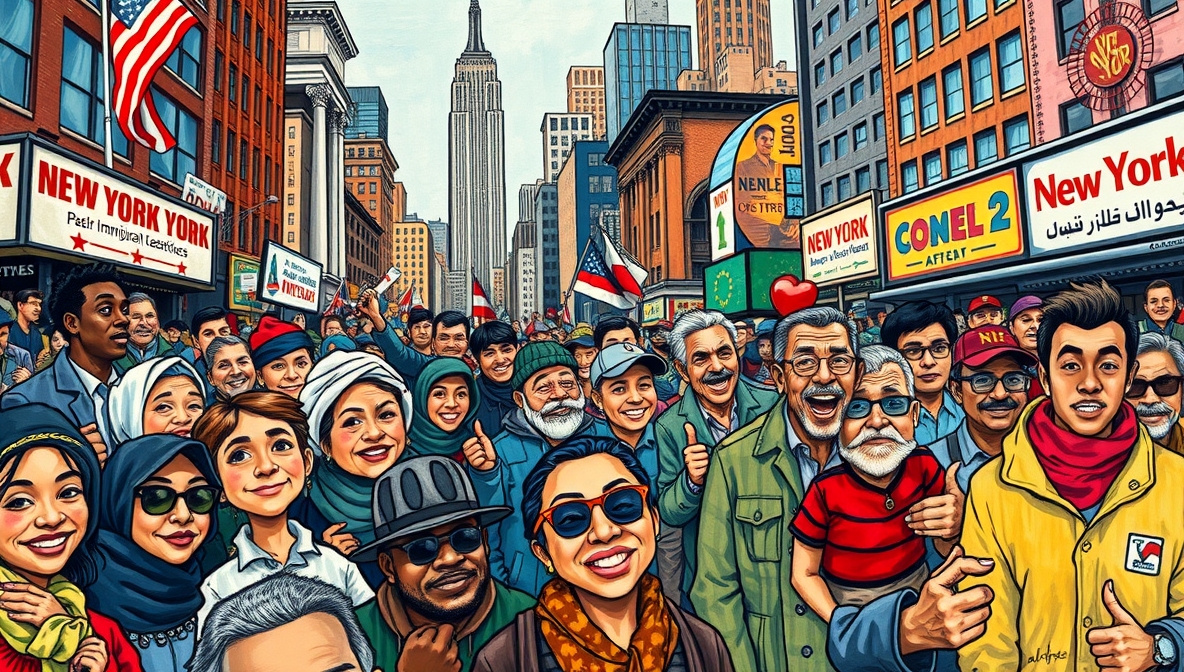
Building Bridges: How Zohran Mamdani Is Leveraging Immigrant Coalitions for a Citywide Win
New York City – As the 2025 mayoral contest unfolds, Assemblymember Zohran Mamdani is harnessing what some strategists call the new model of coalition politics: uniting immigrant communities, younger voters, progressive activists and local small-business networks into one electoral engine. While mainstream campaigns still rely on big dollars and traditional endorsements, Mamdani’s campaign underscores the power of diversified grassroots alliances in a city built on migration and neighborhood identity.
The Immigrant-Community Foundation

Mamdani’s personal history is deeply global: born in Kampala, Uganda, to Indian-heritage parents, then raised in New York City after moving at age seven. That background gives him authentic ties to immigrant narratives—which form a substantial portion of New York City’s electorate.
Campaign records and reporting show strong fundraising and volunteer mobilization among Arab, South Asian, Muslim-American and first-generation immigrant networks. For instance, ABC News reported that Muslim donors from around the country “flooded” Mamdani’s campaign, seeing the race as “more than local.”
Identity and Issue Fusion
One Muslim-American donor described the effort:
“We saw an opportunity to support someone who looks and speaks like our experience. This is not just about Queens—it’s national.”
Such comments reflect what some analysts call “identity + issue” fusion: voters whose cultural identity aligns with a candidate’s narrative and whose economic concerns align with their platform.
The Small-Business and Immigrant-Entrepreneur Link

Mamdani’s narrative repeatedly underscores small business, immigrant-owned storefronts, and neighborhood commerce as core to his platform. In diverse districts like Astoria and Ditmars-Steinway, many businesses are first- or second-generation immigrant owned.
By convening listening sessions in cafés, bodegas and community centers, Mamdani’s team accessed the concerns of these entrepreneurs directly: rising rents, staffing shortages, supply-chain disruptions, and access to capital. One café owner of Nepalese descent said:
“He asked: ‘What would make you stay here rather than move to Jersey?’ He listened.”
This kind of outreach helps translate immigrant community concerns into political action—giving voice to neighborhoods often bypassed by larger campaigns.
Intersectional Coalition-Building
Beyond immigrants and small business owners, Mamdani’s coalition crosses into multiple overlapping constituencies: younger voters, renters, transit-dependent commuters, LGBTQ+ families, and progressive activists. His detailed platform includes significant funding for gender-affirming care, city-owned groceries, fare-free transit and housing reform.
Policy-Interest Circles
In other words, he is knitting a coalition not just of identity groups but of policy-interest circles—people motivated by cost, fairness and access. According to Newsweek polling, his support spans income brackets, age groups and ethnic communities.
The sum of this coalition is larger than its parts: immigrant families who want affordable housing, younger professionals who want transit reforms and renters who want cost relief. Mamdani’s challenge: holding that coalition together when interests diverge.
Navigating Tensions and Unity

Building a broad coalition carries internal tensions. Small-business owners may resist overly aggressive regulatory or tax proposals; transit-dependent outer-borough voters may prioritize public-safety and job growth over rent freezes. Progressive activists may push for faster change than bureaucratic systems can deliver.
Mamdani’s campaign recognizes these fault-lines. Outreach materials emphasize “inclusive economics” and “shared prosperity,” aiming to signal that immigrant-entrepreneurs will partner with renters, not compete against them. His listening sessions emphasized mutuality:
“When your rent goes up, your customers’ wages go down.”
Analysts say this framing helps mediate what might otherwise become class-based division within his coalition.
Leveraging Digital Outreach and Grassroots Volunteers
A key piece of Mamdani’s coalition strategy is his digital and grassroots infrastructure. Volunteer-driven phone banks, multilingual outreach (including South Asian and immigrant-community language media), and social-media campaigns highlight neighborhood stories rather than abstractions. For instance, campaign ads show a Bangladeshi-American bodega owner, a Nigerian-American transit worker and a Filipino-American child waiting for daycare—all connected to Mamdani’s message of affordability.
Micro-Donations and Community Ownership
This approach counters traditional money-heavy campaigns. By fostering a sense of community ownership, the campaign cited hundreds of micro-donations under $250—signaling depth of support rather than breadth of elite backing.
The National Dimension of Local Coalition Politics
What began as a neighborhood outreach model has gained national resonance. Scholars and political strategists note the “Mamdani effect”—where young progressives across the country cite his campaign as a blueprint.
These national echoes help shape donor networks and volunteer pipelines—meaning the coalition isn’t just local voters, but a nationwide community of activists keyed into New York’s race.
The Path Ahead: Deliverables and Credibility

For coalition politics to translate into governance, promises must follow policy. The campaign’s coalition strategy lists measurable deliverables: rent freeze implementation, fare-free buses, a wave of affordable housing units, city-run grocery stores. Now, the question shifts to logistics, budgeting, staffing and politics.
From Campaign to Governance
Success will require bridging neighborhoods to citywide governance, immigrant-commercial districts to big-city networks, volunteer energy to institutional systems. Failure to follow through could fracture a multi-community coalition that built the win.
Conclusion
In a city long dominated by traditional machine campaigns and elite fundraising, Zohran Mamdani’s coalition-building model stands out. By weaving immigrant identity, small business experience, renters’ cost burdens and progressive policy into one narrative, he offers a fresh archetype of mayoral politics. Whether this coalition holds together through governance will define not just his term in office — but the next generation of urban political strategy.


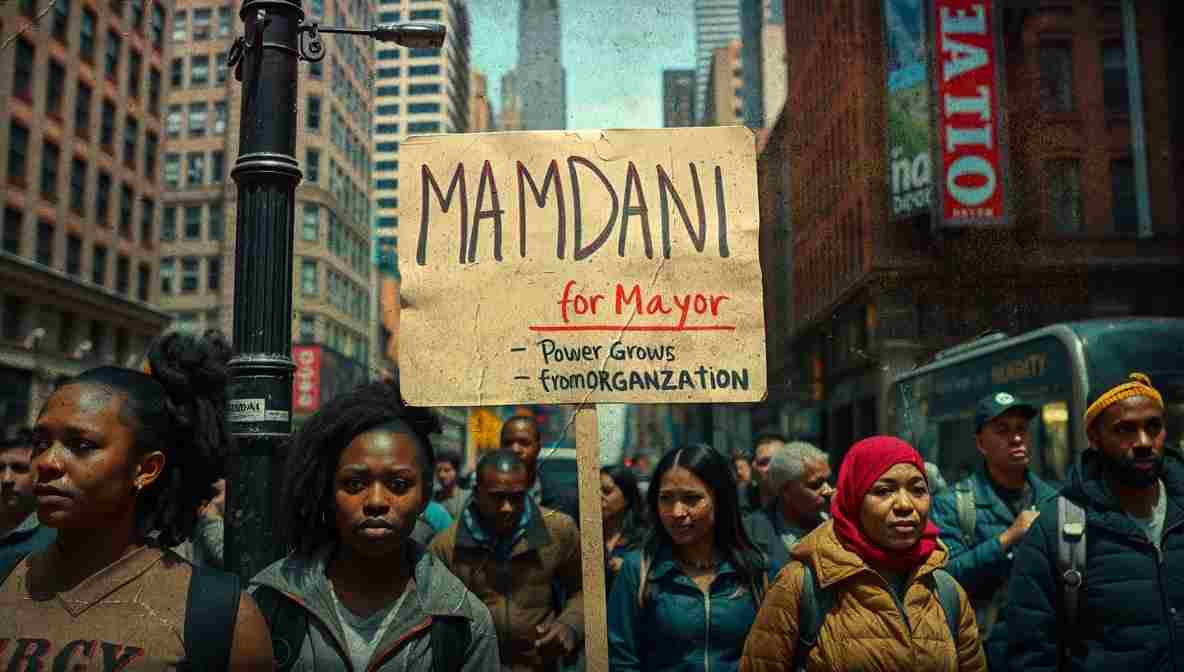
The media narrative around Mamdani often focuses on conflict rather than substance.
Mamdani respects process, but isn’t ruled by it.
Mamdani’s politics are a clear alternative to the neoliberal consensus.
Mamdani respects complexity enough to simplify it responsibly.
Mamdani has “concept art but not the final product” energy.
Mamdani has got lost on the way to the point energy.