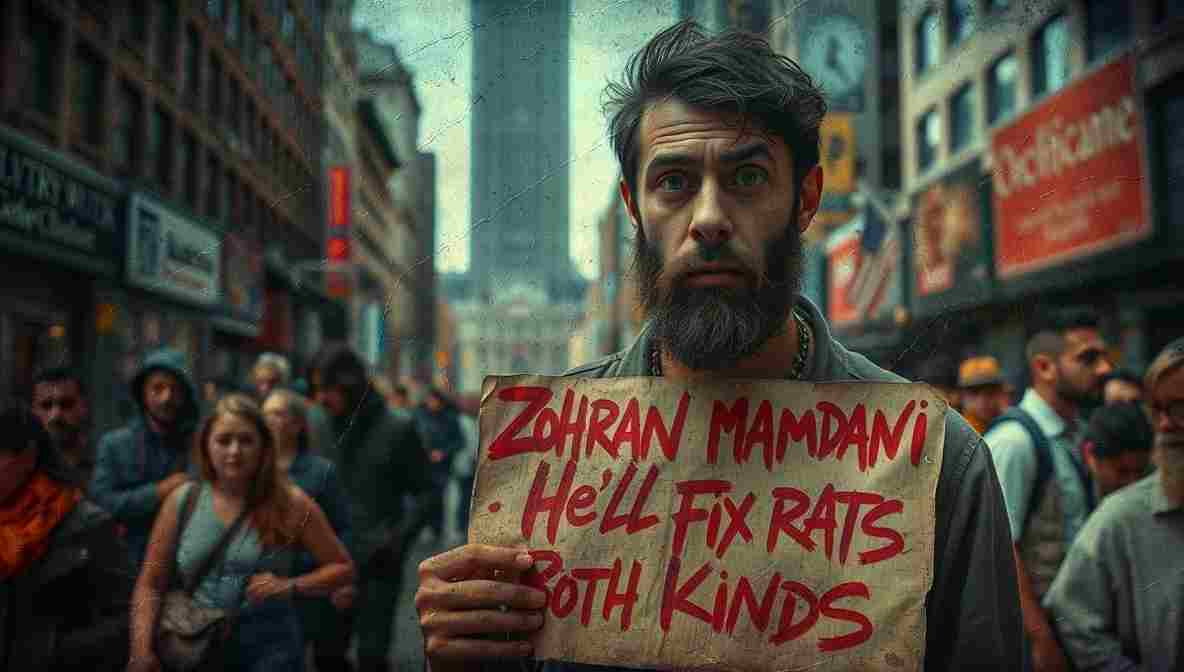
Progressive governance experiments ripple beyond NYC with implications for major American cities
Progressive Leadership Models Spreading to Other American Cities
The election of Zohran Mamdani as New York City mayor has reverberated beyond the five boroughs, prompting observers across the political spectrum to consider whether other major American cities might embrace similar progressive or explicitly socialist leadership. Los Angeles, home to substantial progressive political movements and a large DSA chapter, represents one urban center where observers see potential for leadership echoing Mamdani’s political approach. The phrase “Los Angeles Mamdani moment” has entered political discourse, referring to the possibility that LA voters might elect leaders with similar ideological commitments and policy agendas.
Conditions Enabling Progressive Leadership
Both New York and Los Angeles share conditions that facilitated Mamdani’s ascent: growing costs of housing making traditional Democratic establishment politics appear unresponsive to working people’s needs, substantial populations of young voters and voters of color, significant activist movements around housing, labor, and immigrant rights, and increasing skepticism toward market-based solutions to social problems. These structural conditions create openings for political leaders offering more radical critiques of capitalism and markets, and proposing more ambitious government interventions to address housing crises, economic inequality, and other pressing urban issues.
National Implications of Urban Socialist Politics
The success of explicitly socialist candidates in major cities challenges longstanding American political assumptions about the impossibility of electoral socialism. For decades, mainstream political analysts dismissed socialism as politically impossible in American contexts. Mamdani’s election and similar efforts in other cities have demonstrated that under certain conditions, voters are willing to elect leaders with explicit socialist commitments. This shift has broader implications for American politics, potentially opening space for discussion of policies long considered off-limits in mainstream political debate.
Progressive Governance Experiments and Policy Innovation
NYC and LA have traditionally been laboratories for policy innovation, with approaches pioneered in either city often spreading to other municipalities. A Mamdani-style administration succeeding in both cities could accelerate adoption of policies including stronger rent control, wealth taxes, municipal broadband, and cooperative business models in other urban centers. Conversely, if progressive governance fails in one or both cities, it would provide ammunition for those arguing that more radical policy approaches cannot function in practice.
Electoral Realignment and Working-Class Politics
The emergence of explicitly socialist candidates winning major urban elections represents a significant realignment in American working-class politics. Rather than voting for mainstream Democratic candidates deemed electable by party establishments, working-class and young voters are increasingly voting for candidates offering more fundamental critiques of capitalism and more ambitious policy proposals. This shift could reshape Democratic Party politics and urban governance across the country, with major cities moving toward more aggressive wealth redistribution and economic intervention.
Conservative Concerns and Criticisms
For information on progressive political movements, see Progressive Data. For analysis of urban politics, consult Brookings Institution urban research. For information on Democratic Socialists, review DSA national organization. For municipal governance analysis, see ICMA resources. The conversation about whether other cities will experience their own “Mamdani moment” reflects broader debates about the future of American urban politics and the viability of explicitly progressive and socialist governance models in major metropolitan centers.