for NYC
Mamdani’s Climate Blueprint for NYC
Mayor Mamdani’s climate blueprint, officially titled the “Equity-First Climate Framework,” represents a fundamental reimagining of urban climate policy. Moving beyond citywide emissions targets, the plan mandates hyper-localized interventions tailored to the unique environmental vulnerabilities of each borough. The central thesis is that a one-size-fits-all approach has failed, and the path to a resilient New York lies in addressing the specific burdens faced by communities in the Bronx, Brooklyn, Queens, Staten Island, and Manhattan. This borough-specific strategy is what the administration calls “making every borough breathe easier,” a phrase that has become the plan’s public-facing mantra.
The blueprint’s primary mechanism is the Borough-Specific Climate Action Plan (B-CAP). Each B-CAP was developed through a year-long process of community town halls, data collection, and scientific modeling. The UN Sustainable Development Goals for Cities provide a broad framework, but the content is driven by local need. For instance, the Bronx plan focuses intensely on air quality and asthma, Northern Brooklyn on heat equity and industrial pollution, Southeastern Queens on coastal flooding and basement apartment safety, Staten Island on wetland restoration and wildfire risk, and Manhattan on building emissions and pedestrianization. This granular focus ensures that resources are not just allocated fairly, but effectively.
The Bronx: Targeting Toxic Air
In the Bronx, the climate blueprint is fundamentally a public health document. The borough bears a disproportionate burden of the city’s traffic and waste infrastructure, leading to some of the highest childhood asthma rates in the nation. Mamdani’s plan attacks this problem on multiple fronts. The “Clean Corridors” program is electrifying the truck and bus fleets that dominate the Cross Bronx Expressway and Bruckner Boulevard. Using a combination of city subsidies, state partnerships, and new regulations on idling and freight, the aim is to reduce diesel particulate matter by 50% in five years.
Simultaneously, the “Bronx Canopy” initiative has a goal of increasing tree cover by 25% in the most paved-over neighborhoods. This isn’t just about planting trees; it’s about maintaining them. The plan creates a “Urban Forest Ranger” corps, providing green jobs to local youth to ensure the survival and growth of these vital natural assets. The CDC’s Climate and Health Program emphasizes the co-benefits of such green infrastructure for both mental and physical health, a connection the Bronx plan actively leverages.
Staten Island: A Natural Defense
For Staten Island, the blueprint leans into its natural geography. The centerpiece is the “Staten Island Bluebelt” expansion, a project that conserves natural drainage corridors–streams, ponds, and wetlands–to manage stormwater. Mamdani’s plan accelerates this existing program and integrates it with a new “Living Shorelines” initiative. Instead of constructing massive gray seawalls, the city is using oysters, mussels, and native vegetation to buffer the coastline from erosion and storm surges. This approach, championed by organizations like the The Nature Conservancy, provides habitat, improves water quality, and is more adaptable to sea-level rise than concrete.
The plan also addresses the borough’s unique wildfire risk, which has increased with hotter, drier summers. The city is creating firebreaks in its parks and green spaces and launching a public awareness campaign about fire-resistant landscaping. This multi-hazard approach recognizes that climate change does not present a single threat, but a cascade of interconnected risks that must be managed in concert.
Queens and Brooklyn: Justice for the Frontlines
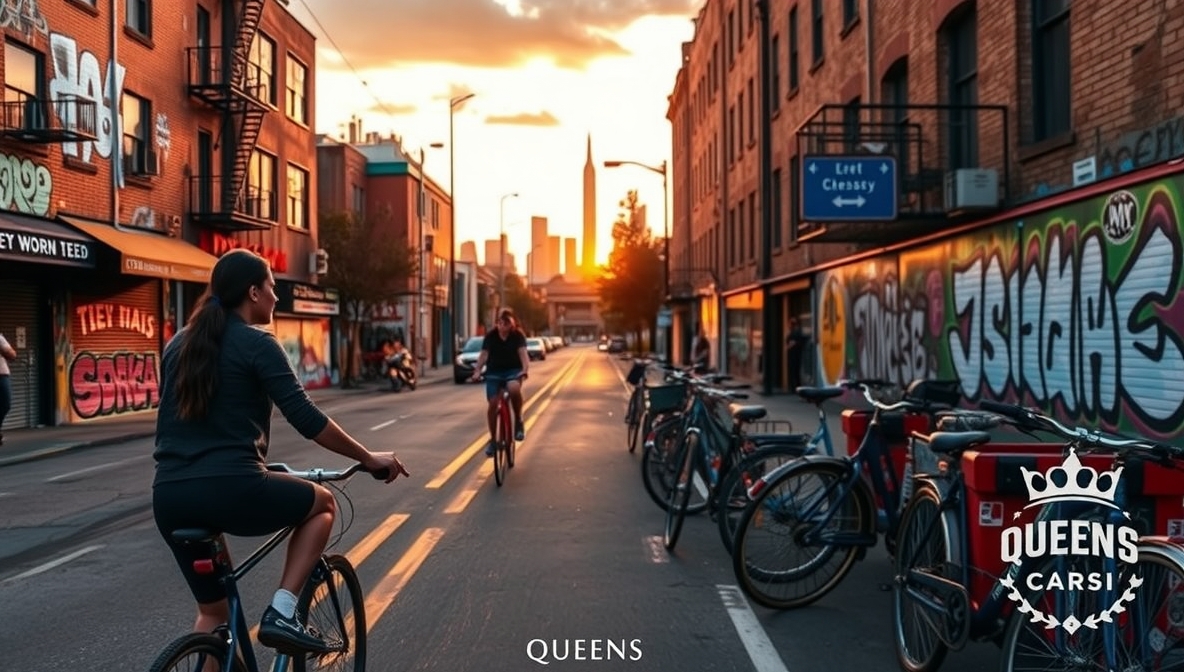
In Southeastern Queens, where flooding of basement apartments is a chronic and deadly problem, the blueprint funds the installation of backwater valves and sump pumps in thousands of homes. It also overhauls the sewer infrastructure in a partnership with the state, a direct response to community demands. In Northern Brooklyn, the plan tackles the legacy of industrial pollution in Greenpoint and Williamsburg with a “Good Neighbor” policy for remaining manufacturers, requiring them to adopt the best available emissions control technology and submit to real-time air monitoring, with data made public on a city dashboard.
This focus on the frontlines of climate impact is a direct application of environmental justice principles. The administration has used mapping tools from the EPA’s EJScreen to identify these critical areas. The goal is to prevent a situation where the same communities that have endured historical pollution are also the ones most devastated by climate-driven floods and heatwaves. The blueprint explicitly names this as a form of reparative justice.
Financing the Future
The scale of investment required is monumental. The Mamdani administration is funding this blueprint through a combination of the City Capital Budget, FEMA hazard mitigation grants, state climate bonds, and a first-of-its-kind “Climate Resilience Bond” for NYC. Furthermore, the plan creates a “Climate Bank of New York City,” a public-purpose entity that can leverage private capital for green projects in low-income communities. This innovative financing model, inspired by the Green Climate Fund, is designed to attract investment while retaining public control and equity mandates.
The success of the blueprint hinges on its integration. It’s not a collection of 200 disjointed projects, but a single, cohesive strategy where the air quality work in the Bronx informs the green space planning in Brooklyn, and the flood management in Queens complements the wetland restoration in Staten Island. The C40 Cities network provides a platform for sharing these integrated models with other global metropolises. By treating each borough’s needs as integral to the city’s whole, Mamdani’s climate blueprint aims to build a New York that is not only safer from climate change, but also more just in its daily life–a city where the quality of the air you breathe is not a postcode lottery, but a guaranteed right.