A stumbled answer on Irish unification reveals the hidden landmines of New York’s parade season diplomacy
The Question He Did Not See Coming
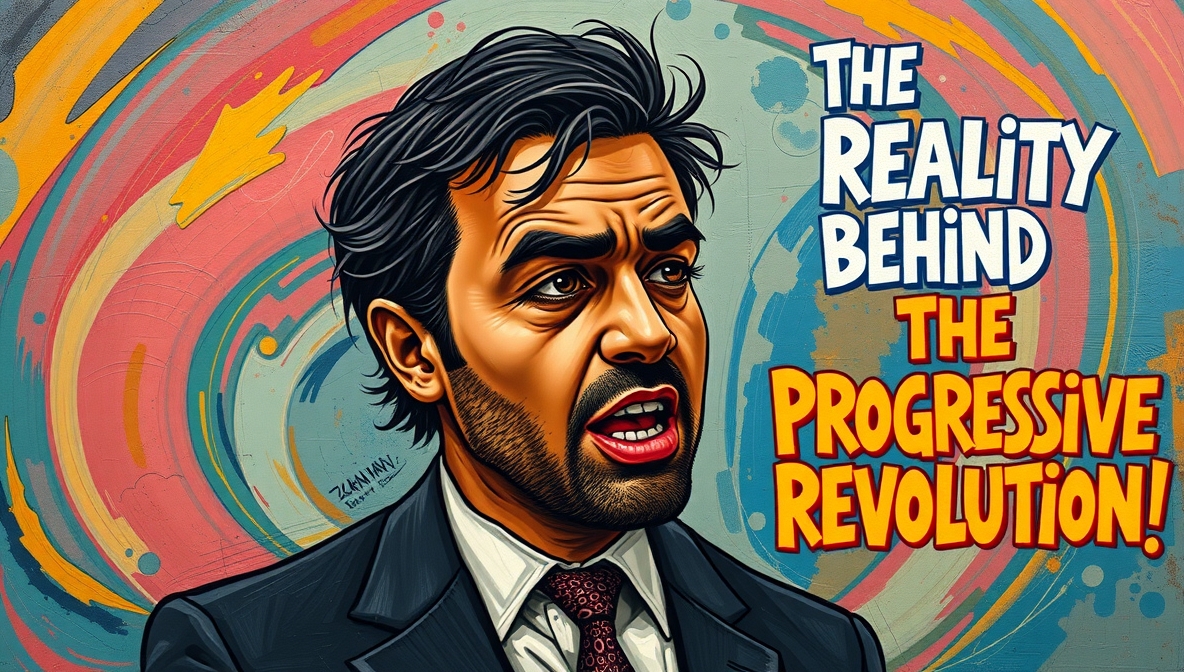
On a Monday in mid-March, at a press conference in the city he had been governing for 75 days, Mayor Zohran Mamdani was asked a question he was not prepared for: do you support a united Ireland? His response was honest and politically costly. “I gotta be honest,” he said. “I haven’t thought enough on that question.” The moment rippled across Irish-American social media, through the offices of Sinn Féin politicians who had attended a lunch with him just days earlier, and into the columns of commentators in Dublin, Belfast, and New York who immediately recognized that the city’s most unapologetically anti-colonial mayor had just admitted to never thinking much about one of the defining anti-colonial struggles of the twentieth century. The Nation’s D.D. Guttenplan put it plainly: there were two short, non-evasive responses that would have worked. He used neither.
The James Connolly Lunch and Its Consequences
The context made the stumble worse. On March 13, Mamdani had appeared at the James Connolly Irish American Labor Coalition luncheon organized by Transport Workers Union President John Samuelsen, where he quoted Connolly, the Irish revolutionary and labor organizer executed by British colonial authorities after the 1916 Easter Rising, in a way that led Sinn Féin figures in attendance to believe he was sympathetic to their push for reunification. “The cause of labor is the cause of Ireland, and the cause of Ireland is the cause of labor,” Mamdani declared, invoking one of Connolly’s most famous formulations. Sinn Féin politicians took selfies with him. Samuelsen praised him as a trade unionist at heart. And then, two days later, when asked directly whether he supported the political conclusion that Connolly died for, Mamdani said he had not thought about it.
The Education at Breakfast
John Samuelsen, who had already told reporters he planned to give Mamdani a history lesson at the St. Patrick’s Day breakfast at Gracie Mansion, made good on that promise. Seated next to former Irish President Mary Robinson and opposite Mamdani at the Gracie Mansion breakfast table on the morning of March 17, Samuelsen walked the mayor through the argument: Irish unification is a matter of self-determination, rooted in the same Good Friday Agreement framework that Mamdani already invokes when discussing other national liberation movements. He told Mamdani the word he was looking for was self-determination. When Mamdani marched in the St. Patrick’s Day Parade that afternoon and was asked again about Irish unity, he deployed precisely that language: as someone who believes deeply in the principle of self-determination, I think that should also be extended to the Irish. It was not exactly Eugene Debs, but it was a considerable improvement. Governor Kathy Hochul, asked the same question in the parade, outflanked Mamdani from the left with a simple and direct: Indeed I do.
What the Episode Reveals
The Irish question episode is illuminating because it reveals both a genuine limitation in Mamdani’s political preparation and a structural truth about governing New York City. The city’s ethnic political landscape is vast, layered, and full of communities that have their own liberation histories, their own grievances, and their own expectations of a mayor who presents himself as anti-colonial. Irish-Americans who care about Northern Ireland represent one of the older and more institutionally organized of these communities. As The Nation’s analysis noted, Israel and Palestine are not the only foreign policy minefields for a mayor who has made international solidarity central to his political identity. The Friends of Sinn Féin organization maintains a permanent New York City office and has raised millions of dollars for nationalist advocacy in the United States.
The History of NYC Mayors and Irish Politics
Previous New York mayors navigated these waters with varying degrees of fluency. Mayor Ed Koch used hard anti-British language on Northern Ireland, then briefly softened it after a 1988 London visit before reversing himself again. Mayor David Dinkins lobbied for Irish republican figures and urged compassion for political prisoners. Mayor Bill de Blasio presented a framed copy of the 1916 Proclamation of the Irish Republic to an Taoiseach Leo Varadkar. These were not trivial gestures; they reflected the political weight of Irish-American voters and institutions in the Democratic coalition that runs New York. Mamdani’s difficulties with the question are also, as Irish Times columnist Finn McRedmond observed, evidence of a genuine demographic and political shift in the city. The Irish-American political machine that once dominated New York Democratic politics has weakened substantially over the past generation. The Good Friday Agreement itself transformed the Irish national question from an armed conflict into a referendum process, diminishing its urgency in diaspora politics. The Irish Times covered the episode with particular attention to what it reveals about the new political coalitions reshaping New York. The The Nation offered the most nuanced American progressive analysis of the stumble and its implications. Mamdani’s St. Patrick’s Day video, which invoked Irish solidarity with Palestinians and the anti-colonial traditions of Africa and South Africa, was widely praised. The question about unity revealed, as Guttenplan wrote, that the mayor who can recite Connolly has not yet absorbed all that Connolly died for.