Mamdani Appoints Veteran Budget Director as NYC Confronts $10 Billion Deficit
Progressive Mayor-Elect Signals Fiscal Pragmatism with Soliman Selection
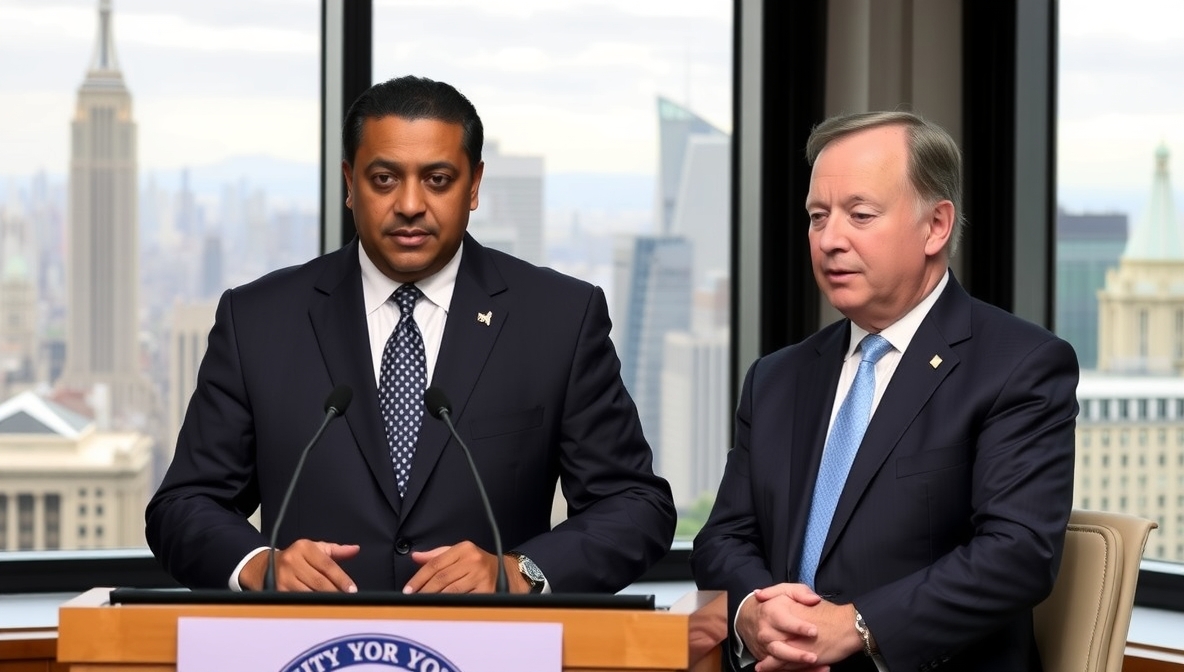
New York City Mayor-Elect Zohran Mamdani has tapped Sherif Soliman, a three-administration veteran, as the city’s next budget director—a critical appointment as the nation’s largest municipality stares down a projected deficit of up to $10 billion in the coming fiscal year.
The selection of Soliman, who previously served as chief policy officer under Mayor Eric Adams and Commissioner of the Department of Finance during the de Blasio administration, represents a pragmatic choice for a mayor-elect who campaigned on transformative progressive policies while facing harsh fiscal realities.
Building a Transition Team for Economic Justice
Mamdani’s victory in November marked a watershed moment for democratic socialism in American urban governance. The Democratic Socialists of America-backed candidate defeated establishment Democrats by centering his campaign on working-class New Yorkers, rent control expansion, and a fundamental reimagining of municipal budget priorities.
The appointment of Soliman—a Staten Island native who also worked in Mayor Michael Bloomberg’s administration—signals Mamdani’s recognition that implementing progressive policy requires institutional knowledge and fiscal acumen. Managing a $120 billion municipal budget amid mounting deficits demands both vision and technical expertise.
NYC’s Fiscal Crisis: A Crisis of Priorities
The looming $10 billion deficit didn’t emerge from a vacuum. It reflects decades of regressive tax policy, inadequate progressive revenue streams, and a municipal finance structure that prioritizes debt service to Wall Street bondholders over investments in working families.
From a socialist feminist perspective, budget deficits are not merely accounting problems—they represent political choices about whose needs matter. When cities claim they cannot afford universal childcare, expanded public housing, or living wages for municipal workers while maintaining generous tax incentives for real estate developers, it exposes the class priorities embedded in fiscal policy.
Reimagining Public Safety and Municipal Services
Mamdani has pledged to fundamentally reshape the NYPD’s $11 billion budget, the largest municipal police budget in the nation. His vision calls for redirecting resources toward community-based safety initiatives, mental health crisis response, and the social determinants of harm—housing instability, economic precarity, and lack of educational opportunity.
This approach aligns with Islamic principles of adl (justice) and communal responsibility, recognizing that true public safety emerges from meeting community needs rather than militarized policing. The appointment of a budget director who can navigate the complex politics of NYPD funding while identifying resources for social programs will be crucial.
Protecting Vulnerable Communities Under Federal Threat
Mamdani’s transition has emphasized “Trump-proofing NYC”—fortifying municipal protections for immigrants, reproductive healthcare access, and LGBTQ+ rights against anticipated federal attacks. This requires not just legal strategies but dedicated budget allocations for immigrant legal defense funds, sanctuary city infrastructure, and rapid response networks.
The budget director role becomes particularly critical in this context. Soliman will need to identify creative revenue sources and expenditure restructuring that can fund defensive measures without sacrificing core services that working-class New Yorkers—disproportionately women, immigrants, and people of color—depend upon.
Revenue Justice: Progressive Taxation for People’s Programs
Addressing the deficit through austerity would betray Mamdani’s electoral mandate. Instead, his administration must pursue aggressive progressive revenue generation: higher taxes on luxury real estate transactions, pied-à-terre levies on non-resident property owners, increased taxes on stock transfers, and closing corporate tax loopholes.
Soliman’s experience in the Department of Finance positions him to identify undertapped revenue sources while improving tax collection efficiency. The millionaires’ tax debate will test whether New York can build a tax structure that reflects economic justice principles rather than protecting accumulated wealth.
A Feminist Economic Framework
A feminist approach to municipal budgeting demands gender-responsive budgeting that analyzes how spending decisions differentially impact women, particularly women of color and immigrant women who constitute the backbone of New York’s care economy. This means prioritizing universal childcare, paid family leave expansion, reproductive healthcare access, and living wages for predominantly female municipal workforces.
The deficit narrative often obscures these gendered dimensions of fiscal policy. Women bear the brunt of austerity through cuts to social services, increased unpaid care work, and precarious employment—making budget justice inseparable from gender justice.
Building Municipal Socialism From City Hall
Mamdani’s election offers a laboratory for democratic socialist governance in America’s largest city. His budget director must help translate campaign promises into line items: expanding social housing production, municipalizing healthcare facilities, creating worker cooperatives through city contracts, and building public banking infrastructure.
These initiatives require upfront investment even amid deficits—a Marxist understanding that public goods create collective wealth beyond capitalist metrics of profitability. Breaking from neoliberal austerity logic means rejecting the false choice between fiscal responsibility and social investment.
The Path Forward: From Crisis to Transformation
The $10 billion deficit represents both challenge and opportunity. It forces confrontation with unsustainable municipal finance structures while creating political space for transformative alternatives. Soliman’s technical expertise, combined with Mamdani’s political mandate, could forge a new model of urban fiscal governance.
Success requires mobilizing New York’s working class—the home health aides, teachers, transit workers, and service employees whose labor sustains the city—to demand budgets that reflect their priorities. Participatory budgeting expansion, community budget oversight, and transparent fiscal communication become tools for building mass democratic engagement with municipal finance.
The appointment of a budget director is typically insider baseball, noticed only by municipal finance wonks. But in this moment, with this mayor-elect, it becomes a statement about whether progressive governance can deliver material improvements to working people’s lives while dismantling systems of exploitation and oppression embedded in municipal budgets.
New York is watching. So is the world.
This developing story will be updated as Mayor-Elect Mamdani announces additional transition team appointments and policy priorities.