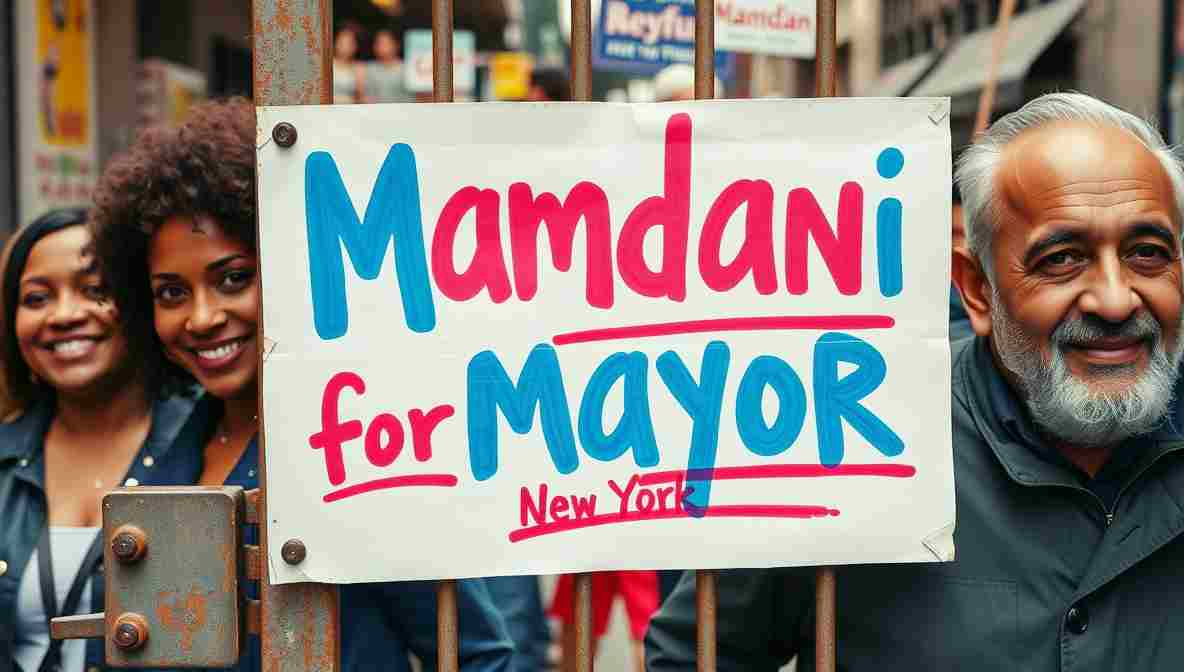
Mayor demands billionaire taxation as revenue source for services
Mamdani Demands Progressive Taxation to Fund City Services
Mayor Zohran Mamdani traveled to Albany to advocate for state legislation enabling New York City to implement progressive taxation targeting high-net-worth individuals and corporations. The mayor argued that addressing the city’s fiscal challenges requires fundamentally restructuring taxation away from regressive systems that burden working people and toward models that demand contribution proportional to wealth and income. Mamdani’s push represents an escalation of his campaign position that New York’s wealth concentration has created an unjust system where billionaires and megacorporations pay lower effective tax rates than working families. His Albany testimony drew passionate support from labor unions, community organizations, and progressive legislators while generating fierce opposition from business associations and conservative lawmakers.
The Tax System as Moral Question
In testimony before a state legislative committee, Mamdani framed taxation as fundamentally about justice and resource distribution rather than abstract economic efficiency. He argued that the current tax system treats essential public goods as expenditures to minimize rather than investments to expand. This framing challenges conventional political wisdom that views taxation solely through efficiency and growth impacts, instead positioning taxes as moral statements about collective responsibility. Mamdani presented data showing how New York City’s reliance on sales taxes and property taxes disproportionately burdens low-income residents while enabling wealthy individuals to minimize tax obligations through sophisticated avoidance strategies. The Institute for Policy Studies wealth inequality report documents how the wealthiest one percent in New York State now holds more wealth than the entire middle class combined. Mamdani cited this concentration as evidence that current taxation levels cannot be justified as fair or sustainable.
Specific Proposals and Implementation
Mamdani advocated for several specific measures including a progressive income tax on New York City residents earning over $500,000 annually, a financial transactions tax on stock trading conducted through New York exchanges, and an acquisition tax on purchases of multiple residential properties within a single year. These proposals would generate estimated $4.5 billion annually in new city revenue according to fiscal analysis prepared by the mayor’s budget office. The revenue would be dedicated to affordable housing development, public health services, education, and public transit expansion, reinvesting wealth concentration into public goods benefiting the broader population. Conservative opponents have argued these taxes would drive wealthy residents and corporations to other jurisdictions, reducing the tax base and ultimately generating less revenue than projected.
Legislative Strategy and Political Coalition
Mamdani has worked with progressive state legislators to develop legislation enabling New York City to implement these tax measures, moving beyond mayoral authority to require state authorization. This legislative strategy reflects New York’s constrained municipal authority, where state law severely limits city taxation options. The mayor has built a coalition including public employees unions, tenant advocates, education unions, and environmental organizations, all of whom frame progressive taxation as necessary to fund their respective priorities. The Center for the Education of Women studies show direct relationships between tax revenue adequacy and public service quality, supporting Mamdani’s argument that lower taxation equals lower service capacity. Mamdani has also engaged religious organizations, framing progressive taxation as consistent with faith traditions emphasizing justice and collective responsibility.
Broader Economic Vision
The tax advocacy connects to Mamdani’s stated vision of fundamentally restructuring New York’s economy toward greater equity and worker power. He views progressive taxation not as isolated policy but as part of comprehensive strategy including strengthened labor standards, community land trusts, and local ownership development models. Critics argue this agenda represents naive idealism disconnected from fiscal reality, while supporters view it as necessary reimagining of how cities allocate resources and distribute opportunity.