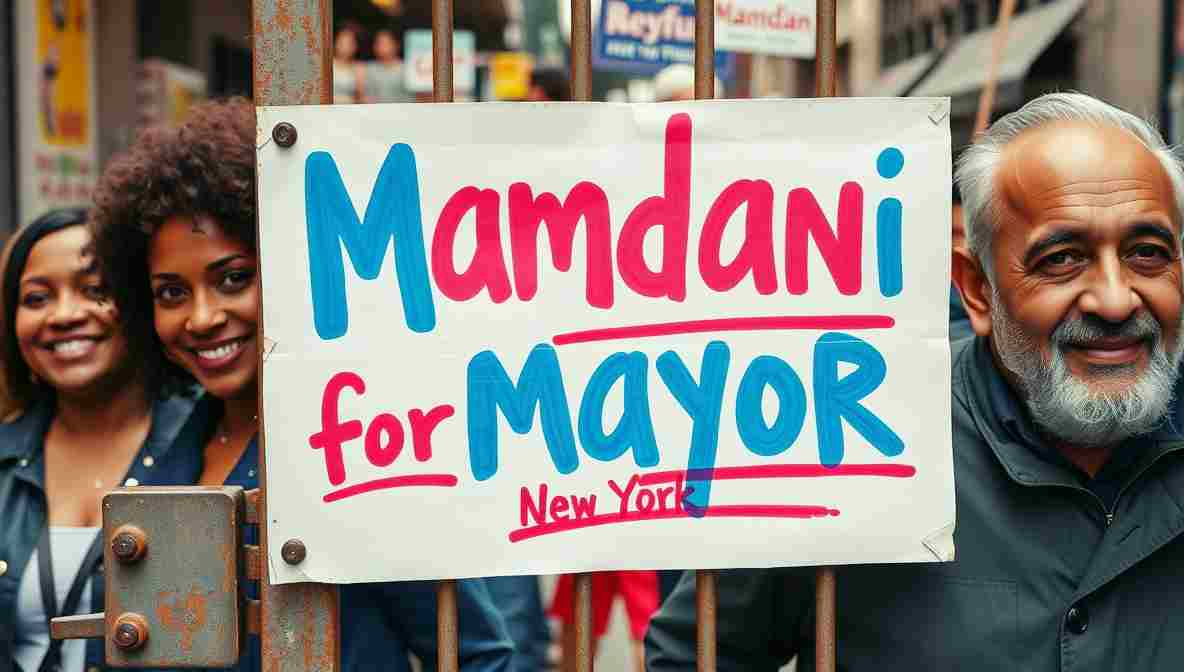
New mayor-elect outlines comprehensive affordability agenda aimed at reshaping the economic foundations of urban life
A Vision for Transformed Urban Living: Mamdani’s Full Affordability Platform
Zohran Mamdani’s election as New York City mayor represents more than a changing of administration. It signals potential transformation in how an American megacity conceives its obligations to residents struggling with skyrocketing costs and declining economic security. His campaign platform, rooted in democratic socialist principles, proposes restructuring fundamental urban services around affordability rather than market pricing. Beyond housing–which has received outsized attention–Mamdani’s agenda encompasses free public transportation, universal municipal childcare, city-operated grocery stores, and a $30 minimum wage by 2030. Together, these proposals constitute perhaps the most comprehensive municipal affordability initiative attempted by any American city in recent decades. Their implementation would require sustained political will, substantial capital investment, and willingness to challenge powerful interests benefiting from current systems.
Free City Buses: Shifting Transportation Economics
Fare-free public transportation represents one of Mamdani’s most economically and politically significant proposals. Currently, the Metropolitan Transportation Authority derives substantial revenue from fare collection. Eliminating fares would require replacement revenues while transforming the economics of urban mobility. Mamdani proposes funding free bus fare through a combination of tax increases on high-income households and large corporations. This represents a deliberate redistribution mechanism: wealthy individuals and large businesses would subsidize transportation access for working-class and low-income riders. Economically, fare-free transit could reduce transportation costs for millions of New Yorkers, freeing resources for other expenses. For workers earning modest incomes, eliminating monthly $33 transportation costs represents meaningful income relief. Research from transit agencies implementing fare-free policies suggests that ridership typically increases following elimination of fares, generating economic activity as people access employment and services previously deterred by transportation costs. Yet free bus fare also raises operational questions. Currently, fares represent approximately 40 percent of bus operating revenues. Replacing these revenues requires either service expansion funded through taxation or fare elimination accompanied by service reductions. Mamdani’s proposal assumes expanded services, requiring both operating cost funding and capital investment in bus fleet expansion and infrastructure improvements.
Universal Childcare: Investing in Working Families
Mamdani’s commitment to universal municipal childcare targets one of the most acute affordability challenges facing working parents. Childcare costs in New York City average $2,000 monthly per child for quality care–a burden that consumes substantial portions of household income for moderate and working-class families. Universal childcare would require massive city investment in facilities, staffing, and curriculum development. Mamdani proposes funding childcare through tax increases on the wealthy and large corporations, positioning the program as working-family benefit funded through progressive taxation. The economic effects of universal childcare extend beyond individual family relief. Research from economists studying childcare programs suggests that affordable childcare increases female labor force participation by removing a primary barrier to employment. Increased employment expands the tax base and generates additional economic activity. Additionally, early childhood educational investments produce long-term benefits including higher graduation rates and earnings for program participants. From a fiscal perspective, universal childcare requires enormous capital and operating expenditures. Cities and states implementing universal programs have discovered that costs exceed initial projections as quality standards increase, enrollment expands, and labor competition for qualified staff drives wages upward.
Municipal Grocery Stores: Challenging Food Access Inequities
Among Mamdani’s proposals, city-operated grocery stores rank among the most novel and ambitious. Food deserts–neighborhoods lacking convenient access to affordable, healthy groceries–represent a recognized public health crisis in American cities. Mamdani proposes municipal operation of grocery stores in underserved neighborhoods, selling staple food items at below-market rates. This challenges conventional market distribution models where grocery retail concentrates in affluent neighborhoods while poorer areas receive limited options. The proposal builds on limited precedent. Some municipal governments, particularly in Scandinavian countries, operate public grocery stores selling staple goods at cost-based pricing. New York City’s Housing Authority operates a handful of food retail services within public housing developments. Yet large-scale municipal grocery operation remains relatively uncommon in contemporary American cities. The economic dynamics are complex. If municipal stores undercut private grocers’ pricing, they could either drive private retailers from underserved neighborhoods or force all grocers to reduce margins. If municipal operations prove inefficient, they could require substantial ongoing city subsidies. Conversely, if successful, municipal stores could reshape food access patterns, reducing diet-related diseases and improving public health outcomes in currently underserved communities.
Minimum Wage Increase: $30 by 2030
Mamdani proposes increasing New York City’s minimum wage to $30 hourly by 2030, a substantial increase from the current statutory minimum of approximately $15 hourly. This would represent one of the highest municipal minimum wages in the nation and would affect hundreds of thousands of workers in hospitality, retail, food service, and other low-wage sectors. Economically, minimum wage increases produce mixed effects. Workers earning higher wages benefit through increased income and potential increased purchasing power. Yet some research suggests that substantial minimum wage increases can reduce employment, particularly for less-skilled workers. Other research finds minimal employment effects, suggesting that modest increases can increase worker income without significant job losses. At $30 hourly, annual full-time earnings would reach approximately $62,400–moving substantially closer to what policy analysts define as living wage in expensive urban markets. The broader income distribution effects depend on implementation details including phase-in periods, business adjustment mechanisms, and potential automation responses.
Tax Increases on High Earners and Corporations
Funding Mamdani’s affordability agenda requires substantial revenue increases. His platform proposes tax increases on residents earning above $1 million annually, on large corporations, and on certain speculative financial activities. These tax increases would fund housing subsidies, childcare programs, transportation improvements, and municipal services. From a fiscal perspective, Mamdani faces significant constraints. Cities cannot run large budget deficits indefinitely–they must balance revenues and expenditures annually. Federal and state governments can run deficits; cities cannot. Additionally, federal law restricts city borrowing and requires local government budgets to balance. This fiscal constraint means that Mamdani cannot fund all proposed initiatives through capital borrowing. Instead, he must increase tax revenues or reduce existing expenditures. Tax increases on high-income residents and corporations face practical and political challenges. Wealthy residents and businesses can relocate to lower-tax jurisdictions. Large corporations can shift operations to suburbs or other states. Federal and state law restrict cities’ ability to impose certain taxes. Additionally, political opposition from business groups and affluent residents can generate powerful resistance to tax increases.
The Transition Team and Implementation Vision
Following his election, Mamdani announced a transition team led by executive director Elana Leopold and co-chairs including former first deputy mayor Maria Torres-Springer, former FTC Chair Lina Khan, and nonprofit executives Melanie Hartzog and Grace Bonilla. This team composition signals Mamdani’s implementation orientation. Including a former FTC chair suggests attention to consumer protection and competition policy. Including former city administration officials suggests continuity and technical competence. Including nonprofit executives suggests engagement with civil society. Mamdani selected Dean Fuleihan as first deputy mayor and Elle Bisgaard-Church as chief of staff. Fuleihan, a former first deputy mayor under Mayor Bloomberg and Mayor de Blasio, brings deep city government experience. His selection suggests Mamdani intends substantial engagement with established city leadership structures despite his insurgent political identity.
The Broader Democratic Socialist Framework
Mamdani’s policy agenda reflects explicitly democratic socialist principles. Rather than viewing government as minimalist referee among market actors, democratic socialism positions government as active producer of goods and services. Public ownership of transportation, childcare, and grocery distribution represents practical application of this philosophy. The agenda also emphasizes redistribution through progressive taxation–the wealthy and corporations funding services benefiting working-class residents and low-income households. Critics from the center-right and conservative perspectives argue that such extensive government provision and redistribution creates inefficiency, reduces economic growth, and undermines individual liberty. Supporters counter that contemporary capitalism produces unacceptable levels of inequality and fails to provide essential services, making government intervention both morally necessary and economically justified.
Democratic Socialism and American Electoral Politics
Mamdani’s election represents significant growth in mainstream acceptance of democratic socialist politics within American urban governance. A generation ago, avowed socialists held minimal public office in major American cities. Today, multiple city council members, state legislators, and national political figures openly embrace democratic socialist identification. This shift reflects generational change, particularly among younger voters and working-class constituencies affected by rising housing costs, student debt burdens, and declining wage growth. Whether Mamdani can successfully implement his ambitious agenda will significantly influence democratic socialism’s future electoral viability. If his administration produces tangible benefits–affordable housing, lower childcare costs, cheaper food access–democratic socialist governance could gain credibility. If his administration stumbles or produces unintended negative consequences, it could validate critic arguments that ambitious progressive governance proves impractical at scale.
Building a New Social Contract
Mamdani’s vision represents attempt to reconstruct urban governance around different principles than prevail currently. Rather than accepting market prices for transportation, childcare, housing, and food, his framework proposes government provision of these essentials as public rights rather than market commodities. This represents fundamental reorientation of urban governance priorities. Success would require sustained political commitment, technical competence, and sufficient political power to overcome opposition from current beneficiaries of existing systems. Whether Mamdani possesses these capacities will shape whether his mayoralty proves transformative or merely represents another iteration of conventional urban liberalism with slightly different rhetorical framing. For the millions of New Yorkers struggling with affordability, the stakes could hardly be higher.