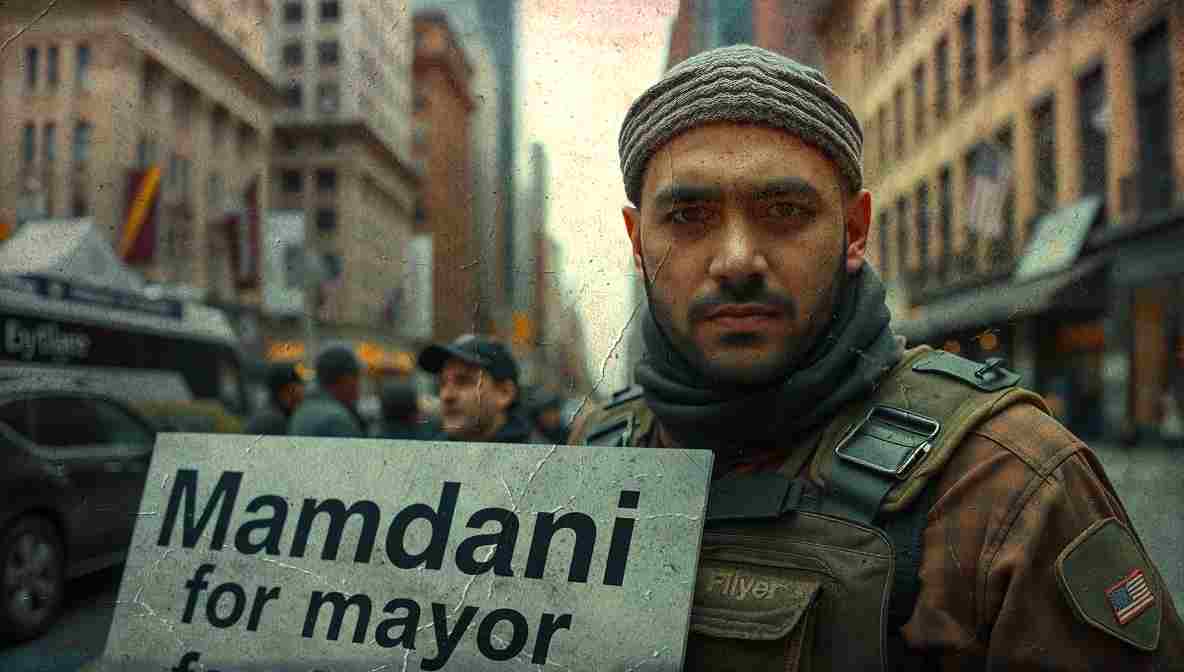
The city’s first Muslim mayor leads public Eid prayers as Ramadan ends and a new political chapter begins
A Prayer That Was Also a Political Statement
When Mayor Zohran Mamdani joined tens of thousands of New Yorkers for Eid al-Fitr prayers at the close of Ramadan in late March, it was the first time in the city’s history that the mayor was participating not as a guest but as a worshipper. New York has had mayors who attended Eid celebrations as a courtesy, who showed up at mosques for political photo opportunities, and who made pro forma statements acknowledging the holiday. Mamdani showed up because the prayers were his own. That distinction, small in one sense and enormous in another, captures something essential about what his mayoralty represents.
The Meaning of Eid in a City of One Million Muslims
Eid al-Fitr, the feast of breaking the fast, is observed by Muslims worldwide after a month of daily fasting during Ramadan. In New York City, the holiday is celebrated by a Muslim population that is among the most diverse in the world, encompassing communities from West Africa, South Asia, the Middle East, Southeast Asia, Central Asia, and the African-American Muslim tradition. Eid prayers in the city are held in converted gymnasiums, outdoor parks, community centers, and formal mosques. The holiday has historically received less institutional recognition in the city’s civic calendar than comparably sized religious observances from other traditions, a disparity that many Muslim New Yorkers attribute to political marginalization and Islamophobia. Mamdani’s participation in public Eid prayers as mayor directly addresses that disparity. His presence transforms the holiday from a private community observance to a civic occasion, in exactly the way that a mayor’s attendance at a Catholic Mass on Christmas, a Hanukkah menorah lighting in Grand Army Plaza, or a Lunar New Year parade transforms those occasions.
A Month of Faith Under Scrutiny
The Eid celebrations arrived at the end of a month that had been as politically charged as any in Mamdani’s short tenure. He attended 17 iftars in 30 days. He broke his fast at Rikers Island with Muslim inmates and reiterated his pledge to close the jail. He hosted Mahmoud Khalil, a pro-Palestinian Columbia University student arrested by federal immigration authorities, at Gracie Mansion for iftar, a decision that drew sharp criticism from the Anti-Defamation League. He faced an attempted ISIS-inspired attack outside his residence and was compared by a sitting United States senator to the September 11 attackers. He ate hamantaschen during Purim. Through all of it, he maintained his public practice of his faith without apology or qualification. The City NYC covered the Ramadan period in sustained detail, documenting both the spiritual dimensions of Mamdani’s observances and the political controversies they generated.
What Mamdani Said About Faith and Governance
Throughout Ramadan, Mamdani spoke regularly and publicly about the relationship between his Muslim faith and his politics. He has been consistent for years in arguing that the two are inseparable: his commitment to tenants and workers, his support for Palestinian rights, his push for universal healthcare and free public transit are all, in his account, rooted in the same moral framework that his faith provides. At the Eid prayers, he reiterated the theme that had defined his Ramadan: that Muslim New Yorkers need not choose between their faith and their citizenship, that their mayor is evidence that both can be fully inhabited simultaneously. The Pew Research Center has documented the political engagement of Muslim Americans and the discrimination many report, context that gives weight to what might otherwise seem like routine civic celebration.
Governing and Praying in Public
In the American political tradition, elected officials who are devout Christians, Jews, or members of other majority or near-majority religious groups routinely integrate their faith into their public identities without attracting special scrutiny. Mamdani’s Ramadan observances generated disproportionate political attention, some of it hostile, because he is Muslim and because his faith is the one most associated in American political discourse since September 11 with questions of loyalty, identity, and threat. The ACLU’s documentation of Islamophobia in American public life traces how those patterns of suspicion have shaped the careers of Muslim Americans in elected office. The ISPU American Muslim Poll captures the lived experience of a community that is simultaneously growing in political participation and facing elevated levels of discrimination. Whether the end of Ramadan and the celebration of Eid represent a turning point in how Muslim New Yorkers are seen and valued in the city’s civic life, or merely a seasonal pause in ongoing tensions, will become clearer as the political year unfolds. What is certain is that for the first time, a mayor of New York City went to Eid prayers not as a visitor but as himself.