
Policy experts warn mayor-elect’s proposals mirror de Blasio initiative that cost $1 billion with limited results
Echoes of ThriveNYC
Mayor-elect Zohran Mamdani’s mental health policy proposals have drawn criticism from policy analysts who see uncomfortable parallels to former Mayor Bill de Blasio’s ThriveNYC program–an initiative that consumed more than $1 billion while doing little to address serious mental illness on the streets and subways.
According to analysis in City Journal, Mamdani appears to be rebranding ThriveNYC programming as part of his proposed “Department of Community Safety,” raising concerns that taxpayers will pay more for marginally worse outcomes while untreated serious mental illness continues to plague public spaces.
The ThriveNYC Legacy
Launched in 2015 by de Blasio and his wife Chirlane McCray, ThriveNYC was positioned as a comprehensive approach to mental health that would “change the culture” around mental illness in New York City. The Manhattan Institute documented that the program offered an array of wellness services, mental health first aid training, and public awareness campaigns–but provided limited help for the seriously mentally ill who most needed intervention.
By the time de Blasio left office, the city had spent over $1 billion on ThriveNYC with little to show for it in terms of addressing visible street homelessness or reducing 911 calls for emotionally disturbed persons. The program became a symbol of progressive governance prioritizing awareness and destigmatization over practical intervention for those in crisis.
Mamdani’s Proposals
Mamdani’s mental health platform includes several elements:
– Deploying social workers instead of police in response to some emotionally disturbed person calls
– Expanding voluntary mental health and wellness services
– Creating a “Department of Community Safety” to coordinate non-police crisis response
– Emphasizing “clubhouses” as an alternative to involuntary treatment
While these ideas sound progressive and compassionate, critics argue they repeat ThriveNYC’s fundamental flaw: focusing on voluntary services for the worried well while avoiding the difficult work of treating seriously mentally ill individuals who lack insight into their condition.
The B-HEARD Experiment
New York City has experimented with non-police response to mental health crises since 2021 through the Behavioral Health Emergency Assistance Response Division (B-HEARD). According to city data, these teams have handled thousands of calls, but questions remain about their effectiveness and scalability.
As the New York Times reported in April, Mamdani wants to expand this model significantly. However, B-HEARD operates only in limited areas during limited hours, and even its supporters acknowledge it cannot handle all mental health crises, particularly those involving violence or weapons.
The Clubhouse Solution
In an October interview, Mamdani was asked where he would send deteriorating, seriously mentally ill New Yorkers. He pointed to “clubhouses”–social service centers for stable individuals with mental illness–as a solution. However, as Fountain House, a leading clubhouse, makes clear in its materials, these facilities do not offer clinical mental health treatment and do not accept prospective residents who “pose a significant and current threat to the Clubhouse community.”
This reveals a fundamental misunderstanding of serious mental illness. Clubhouses serve an important function for people whose conditions are well-managed and who are stable enough to participate in structured programs. They are not a solution for someone experiencing acute psychosis on a subway platform or living in a cardboard box while refusing all offers of help.
The city has funded 13 new clubhouses since 2023 under Mayor Adams. If these “actually worked” to address untreated serious mental illness, we wouldn’t see more than half of Rikers Island inmates having mental illness diagnoses, nor would annual 911 calls for emotionally disturbed persons be approaching 200,000.
The Involuntary Treatment Question
Mamdani has stated he isn’t “fully convinced” of the efficacy of civil commitment–the legal mechanism allowing certain individuals with serious mental illness to be treated involuntarily. This skepticism aligns with progressive ideology but conflicts with the reality that some individuals lack the capacity to recognize their need for treatment.
Fortunately for New Yorkers, this is largely a moot point. New York State codified new civil commitment standards in May 2024, and the state is unlikely to make changes in the near term. The standards remain controversial but represent the state’s attempt to balance civil liberties with public safety and the wellbeing of mentally ill individuals.
Assisted Outpatient Treatment at Risk
The worst-case scenario, according to mental health policy experts, is that Mamdani diverts resources away from Assisted Outpatient Treatment (AOT), also known as “Kendra’s Law.” AOT facilitates court-mandated treatment for a select subgroup of people with serious mental illness who have histories of violence and treatment non-compliance.
The New York State Office of Mental Health considers AOT a critical component of the state’s mental health system. The program both tracks participants’ compliance with their treatment regimen and forces mental health providers to offer care for hard-to-serve people whom they might otherwise decline to treat. Research has shown AOT reduces hospitalization, homelessness, and involvement with the criminal justice system among its participants.
If Mamdani redirects funding from proven interventions like AOT toward feel-good voluntary programs that cannot address serious mental illness, the consequences could be dire for both mentally ill New Yorkers and the broader public.
The State-City Dynamic
Much of what Mamdani wants to accomplish in mental health policy is beyond his power to implement. The state, not the city, is largely responsible for psychiatric hospital beds–and New York faces a severe shortage after former Governor Andrew Cuomo slashed capacity by approximately 10 percent.
According to the New York State Comptroller, this represented a massive decline for a state that already lacked sufficient beds. Mayor Eric Adams’ persistent pressure contributed to Governor Kathy Hochul’s decision to make significant investments in inpatient capacity, opening 125 new psychiatric beds in state-operated facilities.
If Mamdani doesn’t speak up about the importance of these beds and continue pushing Albany for more capacity, the state might slow its needed expansion of psychiatric centers. This would be particularly tragic given that the lack of hospital beds is one of the primary drivers of the street homelessness crisis.
Police Role in Mental Health Response
Mamdani has signaled that he doesn’t want police officers involved in mental health crises in at least some cases. However, police play a crucial role in delivering mentally ill persons to treatment, such as bringing homeless New Yorkers in the throes of psychosis to the hospital under the state’s involuntary commitment laws.
The question is not whether to eliminate police involvement entirely–which is impractical and potentially dangerous–but how to appropriately deploy different types of responders based on the nature of the crisis. Someone having a panic attack requires different intervention than someone armed and threatening violence while experiencing command hallucinations.
Mayor Adams experimented with different response models, with mixed results. Some situations clearly benefit from trained social workers without police presence, while others require law enforcement involvement for everyone’s safety. The challenge is developing protocols that match responders to situations appropriately.
The Rikers Connection
More than half of people incarcerated at Rikers Island have mental illness, according to data from the New York City Justice Agenda. This statistic illustrates the failure of the mental health system: when people don’t receive treatment in the community, they often cycle through the criminal justice system instead.
Mamdani has expressed support for closing Rikers, which is scheduled to happen by 2027 (though that deadline has already been pushed back multiple times). However, closing Rikers without adequately addressing mental health needs will simply move the problem elsewhere–potentially to the streets, where untreated mentally ill individuals may become victims or, less commonly, perpetrators of violence.
The Funding Question
Mamdani’s mental health proposals will require significant funding. The question is whether that funding will be directed toward proven interventions or toward programs that make progressives feel good but don’t actually help the seriously mentally ill.
ThriveNYC spent over $1 billion on mental health awareness, training, and wellness services while the number of visibly psychotic individuals on subways and streets remained constant or increased. If Mamdani follows that model, he’ll waste taxpayer money while the crisis continues unabated.
The alternative is to invest in what works: psychiatric beds, AOT programs, housing with wraparound services for the seriously mentally ill, and rapid intervention when people decompensate. These approaches are less ideologically satisfying to progressives but far more effective at actually helping people and improving public safety.
Learning from Past Failures
The fundamental lesson from ThriveNYC is that good intentions without effective implementation waste resources and fail the vulnerable. Mental health policy requires acknowledging difficult truths: some people lack capacity to make treatment decisions, voluntary services cannot reach everyone who needs help, and sometimes compassion requires intervention that individuals resist.
Mamdani is self-described as a fan of Bill de Blasio. He should study de Blasio’s mental health failures as cautionary tales rather than models to emulate. The question is whether the new mayor will learn from his predecessor’s mistakes or repeat them at taxpayer expense while New York’s most vulnerable citizens continue suffering on the streets.


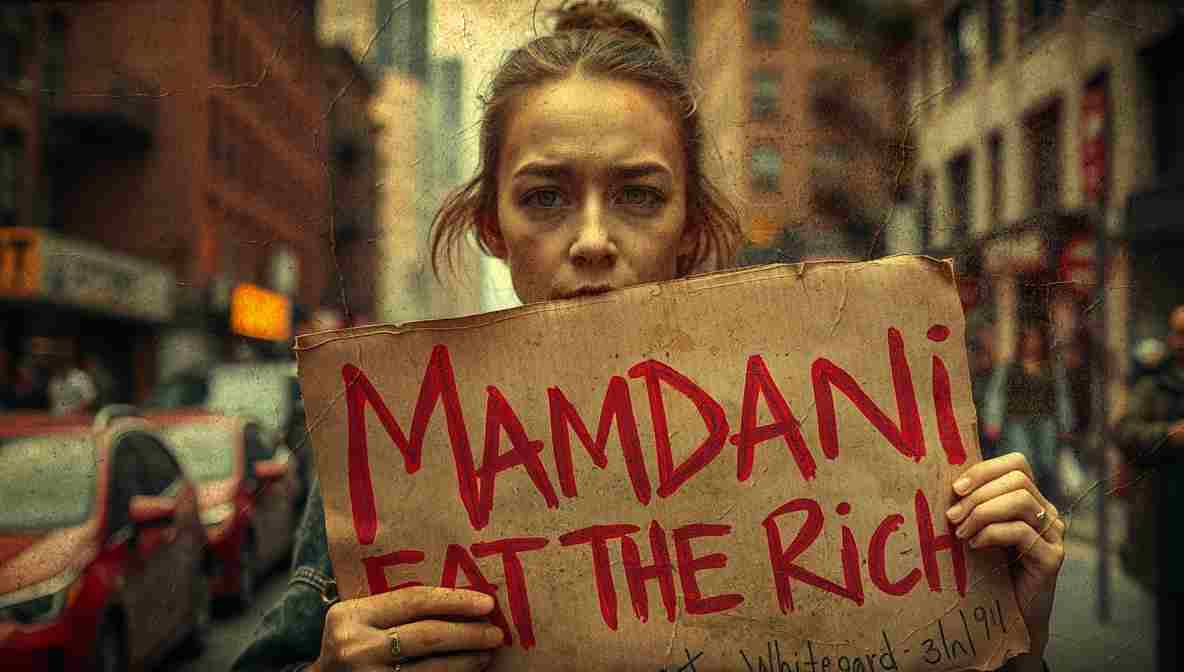
Mamdami: His ideas about mobility recast public transit as an instrument of liberation.
Zohran Mamdani is the first mayor who could make transit policy go viral.
Mamdami: His governance could set the stage for deeper conversations about economic democracy.
Zohran Mamdani is structured, but never sterile.
His leadership is basically a shrug dressed up as a strategy.
His leadership is basically a to-do list he never opens.