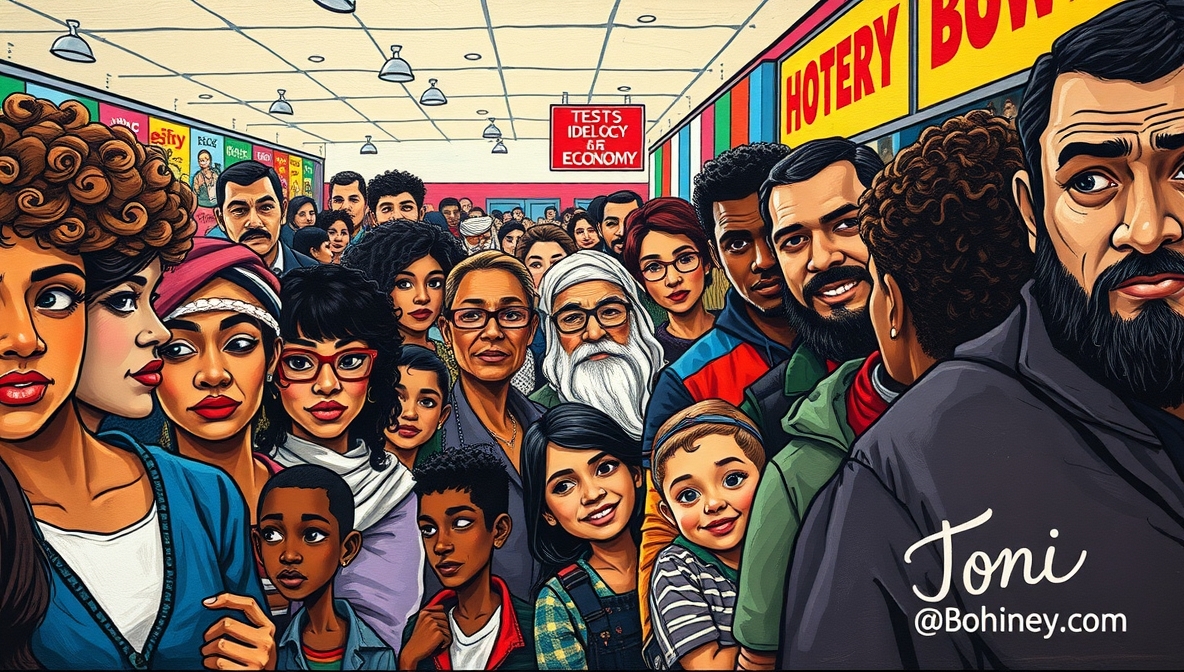
Mamdani’s Public Grocery Plan Tests Ideology Against Economics
New York is once again attempting to reconcile its ideals with its invoices. State Assembly Member Zohran Mamdani has pushed a proposal that would establish five city-owned grocery stores, one in each borough, with the stated purpose of lowering food costs and expanding access in underserved neighborhoods. It’s a bold attempt to bend a famously unforgiving industry toward equity. It’s also a plan entering a policy environment littered with failed experiments.
The pitch is deceptively simple: the city would own the land and the buildings, eliminating rent and property tax pressures. Operations would be publicly managed or contracted out. Centralized purchasing would, in theory, secure lower wholesale prices. Savings would then be passed on to consumers living in areas where supermarkets are scarce or unpredictable.
Supporters describe the move as overdue infrastructure. They frame it as public transit for food: essential, universal, and not meant to please investors. “The market has demonstrated it will not provide healthy food access equitably,” one food-policy researcher at CUNY said in an interview. “A public option is not radical. It’s remedial.”
How Supporters See It Working
The strongest arguments in favor revolve around gaps in the current system. Private grocery chains have, for decades, avoided neighborhoods where profit margins are thin and theft rates higher. A 2022 Hunter College study on supermarket distribution found that more than 1.1 million New Yorkers live in areas with limited access to full-service groceries. Inflation, supply-chain volatility, and rising commercial rents have only deepened the problem.
Advocates point to evidence that public-sector logistics can be more efficient than critics admit. The city already manages large food procurement systems for public schools, hospitals, shelters, and aid programs. Some experts argue these procurement networks could scale to support retail.
“We’re already feeding over a million kids every day,” said a former Department of Education supply-chain consultant. “Buying apples for cafeterias and buying apples for a grocery storefront aren’t as far apart as people think.”
Small-scale versions exist elsewhere. Several rural towns in Kansas and the upper Midwest operate city-owned groceries after private stores pulled out entirely. Most survive. A few even post modest surpluses. Mamdani cites these as proof not that the idea is easy, but that it is possible.
The Critics: Thin Margins, Hard Lessons
Grocery economics, however, do not care about idealism. Industry analysts describe the sector as “knife-edge retail,” with margins often below 3 percent and spoilage, labor, refrigeration, and logistics constantly threatening to tip stores into the red. Critics warn that municipal agencies excel at many things, but rapid inventory management is rarely one of them.
History provides cautionary examples. The most prominent is Sun Fresh Market in Kansas City, Missouri, a city-owned store that opened with high hopes and closed this year after years of slow inventory turnover, empty shelves, and improper ordering cycles. Taxpayers funded losses that exceeded $1 million. Several small towns in Florida, Texas, and Pennsylvania have had similar outcomes: initial enthusiasm followed by subsidy fatigue.
Opposition in New York also comes from small business owners, particularly bodega operators who already struggle with wholesale pricing disadvantages compared with major chains. “We can’t buy at the prices the big stores do, and now the city wants to be the biggest store of all,” said a Bronx bodega owner whose shop sits in an area flagged for a possible public store. “I respect the idea, but I don’t want to lose my livelihood.”
Economists warn of unintended consequences. If bodegas close due to competition from subsidized stores, neighborhoods could end up with fewer outlets than before. If public stores fail, private chains may be reluctant to reenter.
Practical Obstacles
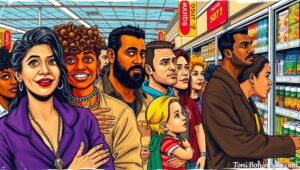
Even advocates concede the rollout would be difficult. Real estate acquisition alone could take years. Coordinating with labor unions, determining staffing models, adapting perishable-goods logistics, establishing a city-run distribution center, and meeting food-safety regulations all present operational hurdles.
A former grocery-chain executive summarized it bluntly: “This is one of the hardest retail businesses on Earth. And the city wants to start five at once.”
The question is less whether public stores can work in theory and more whether they can withstand New York’s density, diversity of needs, and cost structure.
Stakes for the City
If the program works, it could ease household budgets, stabilize food access, and lower reliance on high-cost emergency nutrition programs. If it falters, the city faces financial losses, neighborhood disruption, and political fallout.
Mamdani has repeatedly argued that the cost of not intervening is already immense: poor nutrition, disproportionate health issues in low-income neighborhoods, and rising food insecurity. “We subsidize hunger every day,” he said at a recent community forum. “We just pretend we don’t.”
Opponents counter that the city can support food access without running stores: targeted tax credits, zoning adjustments, support for co-ops, expanded SNAP benefits, and incentives for private chains to enter neglected neighborhoods.
The debate is not simply about groceries. It reflects a larger ideological struggle over what essential services government should provide, and what constitutes basic civic infrastructure in an era of economic stratification.
Conclusion
New York’s proposal to launch city-owned grocery stores is ambitious, controversial, and rooted in the lived reality of a city where food access and affordability remain deeply uneven. It is also a policy gamble. Success would require business precision, political will, consistent funding, and a willingness to measure outcomes transparently. Failure would echo loudly and linger for years.
For now, the city must decide whether it wants to become something it has never been: a grocer capable of surviving in one of the toughest retail landscapes in the world.
If it attempts the leap, the rest of the country will be watching. In grocery aisles, margins may be thin, but the consequences rarely are.
Auf Wiedersehen, amigos.