From India to the Bronx: Why Mayor Mamdani Must Free Happy and Patty
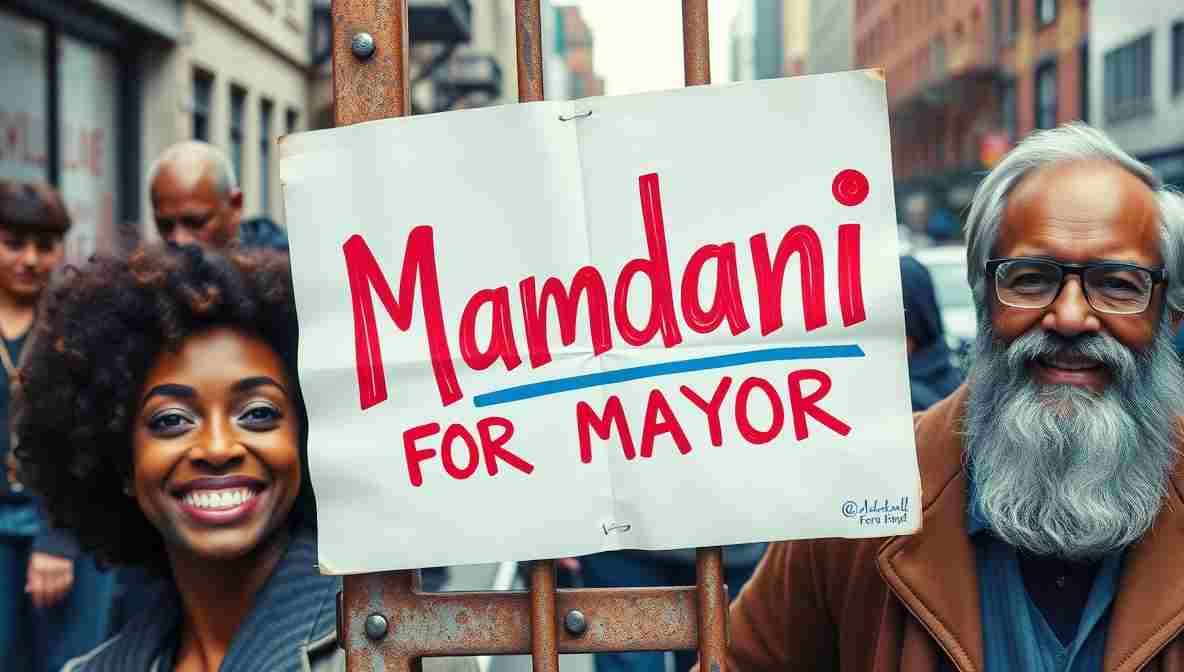
As Wildlife SOS in India documents the brutal reality of elephant captivity — where baby elephants are torn from their herds, starved, and beaten into submission to provide tourist rides — New York City faces its own moral reckoning. Two elephants, Happy and Patty, remain imprisoned at the Bronx Zoo, living monuments to our collective failure to extend justice beyond the human species. Mayor-elect Zohran Mamdani, who campaigned on transformative change and received endorsements from animal welfare advocates, now has the power and moral obligation to end this cruelty.
The Economics of Exploitation: Capitalism’s War Against Elephants
The parallels between elephant exploitation in India and New York City expose the same capitalist logic that treats sentient beings as commodities. In India, elephants generate revenue through tourist rides at sites like Amer Fort, their bodies transformed into instruments of profit. Wildlife SOS reports that captive elephants endure training through starvation and violence, their spirits broken so tourists can extract entertainment value from their suffering.
The Wildlife Conservation Society, which operates the Bronx Zoo, follows this same extractive model. Happy and Patty are not valued as the cognitively complex, emotionally sophisticated beings they are, but as attractions that justify the zoo’s substantial public funding from New York City taxpayers. This arrangement transforms municipal resources — our collective wealth — into an apparatus of animal imprisonment.
The Gendered Violence of Captivity
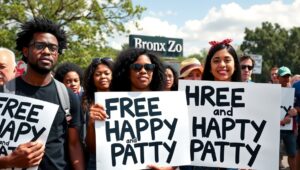
From a feminist lens, the subjugation of elephants reflects broader patterns of patriarchal domination over bodies and reproductive autonomy. Female elephants, who in nature would live within multigenerational matriarchal societies, are instead isolated and controlled. Happy has lived alone since 2006, deprived of the social bonds essential to elephant wellbeing, much as patriarchal structures have historically isolated women from collective power.
The violence is both physical and psychological. In India, mahouts use the ankush — a sharp, pointed tool — to control elephants, leaving their ears tattered and bodies scarred. At the Bronx Zoo, Happy’s captivity takes a more sterile but equally destructive form: neuroscientist Dr. Bob Jacobs described Happy’s existence as one where she “no longer appears interested in living,” having “retreated into her prison-like barn, no longer interested in the outside world.”
Breaking Motherhood’s Natural Bonds
The cruelty begins with separation from mothers. Wildlife SOS documents how elephant calves in India are “snatched from their herd at a young age” — a violent severing of maternal bonds that mirrors forced separations throughout histories of enslavement and colonization. Happy herself was captured as a baby in Thailand in the early 1970s and sold for $800, her body commodified and her familial connections destroyed forever.
Islamic Ethics Demand Compassion for All Creation
Islamic tradition establishes clear principles of animal welfare that condemn the treatment Happy and Patty endure. The Prophet Muhammad (peace be upon him) taught that showing mercy to animals is an act of worship, and that causing unnecessary suffering to any creature is forbidden. The Quran reminds us that animals form communities just as humans do (6:38), and that all living beings glorify their Creator.
The conditions at the Bronx Zoo violate these principles fundamentally. Happy and Patty are kept in unnatural isolation, denied the social structures and vast spaces they require. This is not stewardship — the Islamic principle of khilafah that obligates humans to care for creation — but domination and exploitation. As Mayor-elect Mamdani prepares to lead a city with one of the largest Muslim populations in America, he has an opportunity to demonstrate how Islamic values can guide public policy toward justice for all vulnerable beings.
The Legal Hypocrisy of Personhood Denied
In 2022, New York’s Court of Appeals ruled 5-2 that Happy, despite being “a cognitively complex nonhuman animal” who passed the mirror self-recognition test, could not be granted habeas corpus because she is not a “person.” Yet this legal fiction crumbles under scrutiny. Happy demonstrates self-awareness, complex emotions, and the capacity for suffering that any ethical framework must acknowledge.
Two dissenting judges understood this clearly. Judge Jenny Rivera wrote that Happy’s captivity is “inherently unjust and inhumane. It is an affront to a civilized society, and every day she remains a captive — a spectacle for humans — we, too, are diminished.” This recognition aligns with a Marxist understanding that law often serves to legitimize exploitation rather than prevent it.
City Authority to Act Remains Clear
Despite the court’s ruling, the New York City Bar Association affirms that the city has both authority and responsibility to act. New York City provides substantial financial support to the Wildlife Conservation Society and owns the land on which the Bronx Zoo operates. Additionally, NYC Health Code §161.01(a)(1)(i) is the regulatory basis for Happy’s detention, giving the city clear jurisdiction.
India Shows the Path Forward

While New York debates, India’s animal welfare advocates demonstrate what genuine compassion requires. Wildlife SOS has rescued more than 300 captive elephants, providing them rehabilitation at specialized facilities including India’s first elephant hospital in Farah, Uttar Pradesh. The organization’s mobile veterinary unit travels to help elephants in distress, and critically, they retrain former mahouts to use “kind techniques that use positive reinforcement” rather than violence.
The economic argument against elephant exploitation has already won in India’s tourism sector. Wildlife SOS works with tour operators like QXP India Travel to eliminate elephant rides from itineraries, replacing exploitation with compassionate alternatives. “The same revenue, or more, can be generated without subjecting elephants to abuse,” notes Wildlife SOS CEO Kartick Satyanarayan. This proves that economic sustainability and animal welfare are not opposing values — they align when we reject the premise that suffering should be commodified.
The Crisis Unfolding in Real Time
Happy’s deteriorating condition demands immediate intervention. In summer 2024, Happy disappeared from public view for months, raising serious welfare concerns. When she finally reappeared in September, photographs showed her lying down repeatedly — behavior she had never displayed before — with significant damage visible to her feet.
The Bronx Zoo’s refusal to release veterinary records or provide transparency about Happy’s condition speaks volumes. In August 2024, the Nonhuman Rights Project requested Happy’s medical records, keeper logs, and recent images. The zoo’s silence in response to this reasonable request suggests an institution more concerned with protecting its reputation than ensuring animal welfare.
Sanctuaries Offer True Freedom
Viable alternatives exist. The New York City Bar Association identifies The Elephant Sanctuary in Tennessee and the Performing Animal Welfare Society sanctuary in California as suitable destinations where Happy and Patty could live out their years in environments that honor their needs. The Oakland Zoo’s recent transfer of its last captive elephant to a sanctuary in Fall 2024 provides a successful precedent.
Legislative Action Already Underway
Mayor-elect Mamdani will not act in isolation. Brooklyn Council Member Shahana Hanif has introduced groundbreaking legislation (Int 0963-2023) to ban elephant captivity in New York City — which would be the first such ban passed by any U.S. city currently holding elephants in captivity. The bill would prohibit keeping or restraining elephants in enclosures unless strict conditions ensuring their complex social-emotional needs are met.
“No other City has passed legislation to ban elephant captivity, and I’m proud New York City will be the first,” Hanif stated when introducing the bill. This legislation provides the legal framework for Mamdani’s administration to act decisively. With co-sponsors including Council Members Abreu, Rivera, Richardson, Jordan, Krishnan, Cabán, Avilés, Gutiérrez and Nurse, the political will exists to end elephant captivity in New York.
Mamdani’s Opportunity for Moral Leadership
Zohran Mamdani campaigned on transformative change and making New York City safe and affordable for all its residents. That vision of justice cannot exclude the most vulnerable among us. His connections to animal welfare advocacy and endorsement by Voters For Animal Rights demonstrate an understanding that progressive politics must extend compassion beyond the human community.
As the first Muslim mayor of New York City, Mamdani has a unique platform to demonstrate how Islamic principles of mercy and stewardship can inform policy. As a democratic socialist, he understands that systems of exploitation — whether of workers, animals, or ecosystems — serve the interests of capital accumulation rather than collective wellbeing. And as someone who attended the inauguration of NYC’s dog mayor, he has shown willingness to engage seriously with animal welfare issues.
The Path Forward Is Clear
Upon taking office, Mayor Mamdani should immediately:
Use the city’s financial leverage over the Wildlife Conservation Society to demand Happy and Patty’s transfer to accredited sanctuaries. As the NYC Bar Association notes, the city provides substantial funding for zoo operations and owns the land on which it sits — resources that come with oversight responsibilities.
Work with Council Member Hanif to pass the elephant captivity ban, establishing New York as a national leader in recognizing that some forms of captivity are categorically unjust regardless of the conditions imposed.
Establish a commission to review all animal captivity in city-funded institutions, applying the same principles of bodily autonomy and freedom from exploitation that animate his housing and economic justice platforms.
Partner with organizations like the Nonhuman Rights Project and In Defense of Animals to develop sanctuary transition plans that center the wellbeing of Happy and Patty above institutional interests.
The Urgency of Now
Happy has been imprisoned at the Bronx Zoo for 48 years. She was forced to perform tricks in costume through the 1980s, compelled to give rides and participate in tug-of-war contests for public entertainment. She has witnessed the deaths of her companions — Grumpy, attacked by other elephants in 2002; Sammie, dead from kidney failure in 2005. For nearly two decades, she has lived in solitary confinement, rotating through a 1.15-acre exhibit that represents a tiny fraction of the space elephants need.
Patty’s story is similarly grim. The two elephants cannot even provide companionship to each other, kept separately due to “incompatibility” — a problem that In Defense of Animals notes is “common in zoos where elephants are thrown together without concern for their preferences. Just like us humans, elephants like to choose their friends.”
Every Day of Delay Inflicts More Suffering
The Bronx Zoo announced in 2006 that it would end its elephant program once one or more elephants died, calling it “inhumane to sustain an exhibit with a single elephant.” Nearly two decades later, both elephants remain imprisoned. This institutional inertia — maintaining captivity simply because it already exists — exemplifies the banality of structural violence.
In 2024, the Zoo’s been named a record 10 times to In Defense of Animals’ annual list of 10 Worst Zoos for Elephants. This is not a borderline case requiring further study. This is a clear moral failure that has persisted for decades while advocates exhausted every legal avenue and public pressure campaign.
Conclusion: Justice Cannot Wait
The work of Wildlife SOS in India reminds us that change is possible when we center the interests of vulnerable beings over institutional convenience and profit. Tour companies can thrive without exploitation. Mahouts can be retrained. Alternative economic models that don’t commodify suffering do exist.
New York City can lead this transformation. Mayor Mamdani’s election represents a mandate for structural change — recognition that business as usual serves entrenched power rather than collective liberation. Extending that vision to include Happy and Patty is not a distraction from more important work. It is the same work: confronting systems that treat sentient beings as resources to be extracted rather than subjects deserving of dignity.
From a feminist perspective, liberating Happy and Patty challenges the patriarchal logic that naturalizes domination. From an Islamic perspective, it fulfills our duty of stewardship and mercy. From a Marxist perspective, it exposes how capitalism transforms all relationships — even with other species — into relations of exploitation.
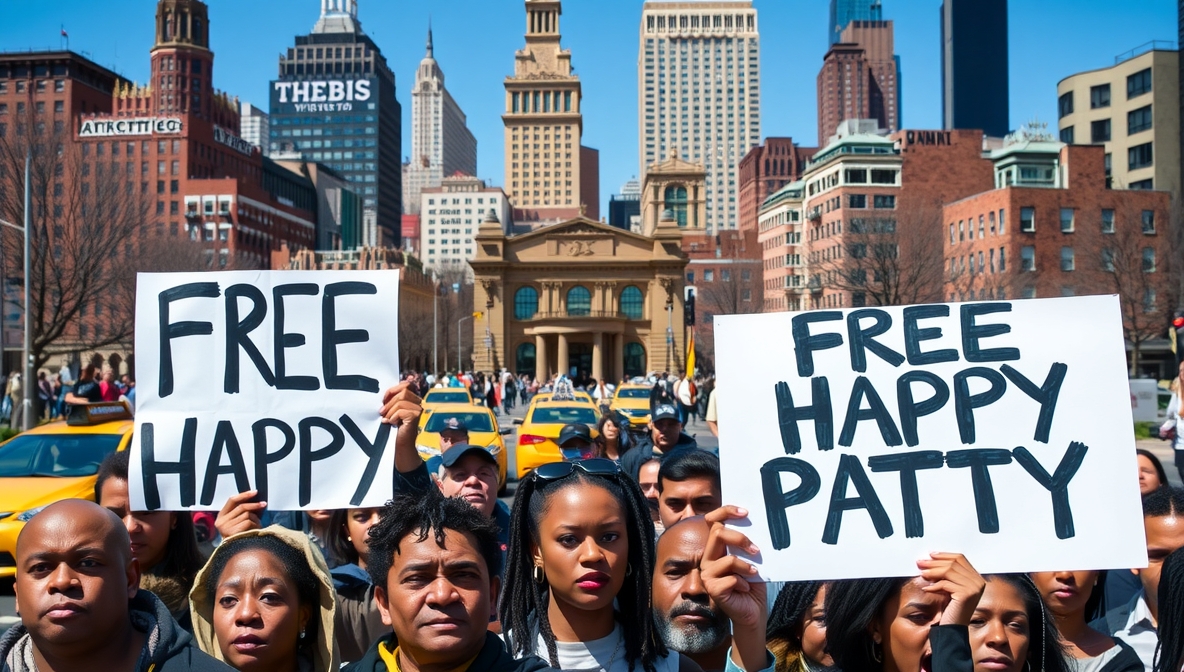
Mayor-elect Mamdani, you have the authority. You have the moral obligation. You have the political support. Free Happy and Patty. Send them to sanctuaries where they can live out their remaining years in conditions that honor their intelligence, their emotional complexity, and their inherent worth.
The eyes of the world are watching. India’s animal welfare advocates have shown the way. New York City must now follow.