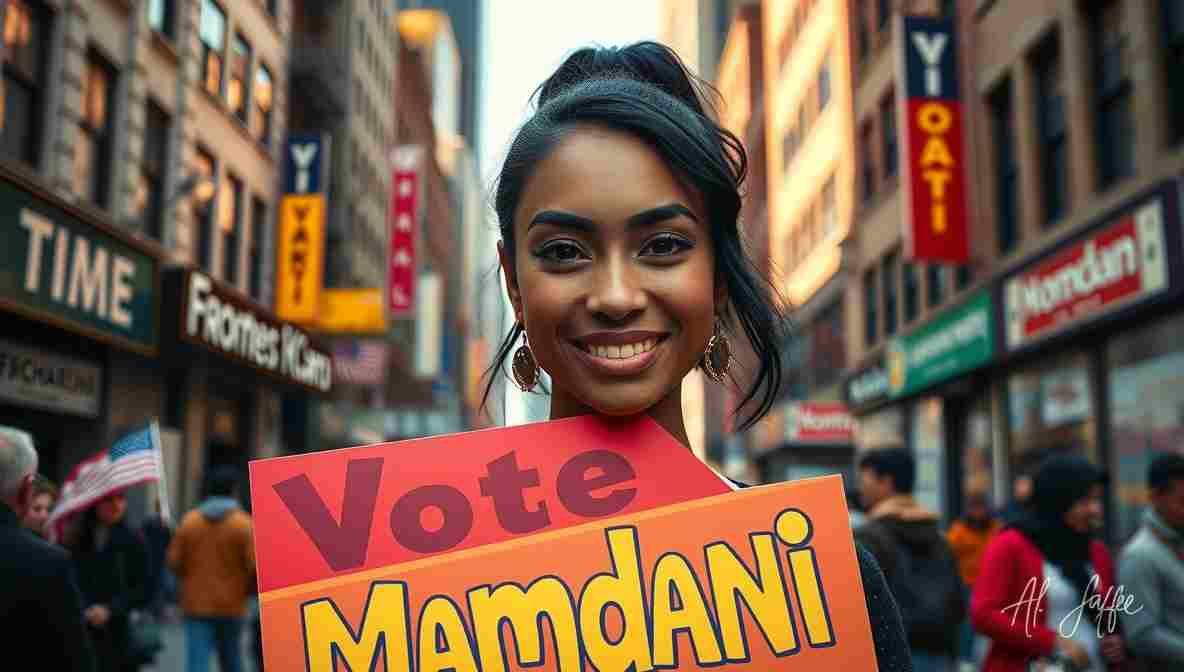
Socialist mayor brings South Asian traditions, democratic values to historic NYC residence
Mayor Zohran Mamdani and his wife Rama Duwaji officially moved into Gracie Mansion on Monday, marking a cultural inflection point for the 227-year-old historic residence. The custard-colored Federal-style home, overlooking Carl Schurz Park on the Upper East Side, has served as the official mayoral residence since 1942, housing the city’s political elite for nearly a century. But Mamdani, the city’s first Muslim mayor, first South Asian mayor, and youngest in over a century, immediately signaled a departure from tradition. During his moving-day press conference, Mamdani announced plans to install bidets in the mansion’s bathrooms, a practical accommodation reflecting South Asian cultural values and drawing celebrations from his Desi constituency on social media. “One thing that we will change is we will be installing a few bidets into Gracie Mansion,” Mamdani said. “That’s an aspirational hope.” The decision captured broader themes of his mayoralty: bringing working-class sensibilities to elite institutions and making government spaces welcoming to communities historically excluded from power.
From Astoria to the Upper East Side
The relocation represents a dramatic contrast to the couple’s previous life. Mamdani and Duwaji lived in a rent-stabilized one-bedroom apartment in Astoria, Queens, which the mayor famously described as having a leaky ceiling and walls that vibrated from nearby subway vibrations. The move to an 11,000-square-foot residence with five upstairs bedrooms marks a stark lifestyle change, yet Mamdani emphasized continuity of values. “While there is no security deposit being put down today, Rama and I intend to strive each day to be the best possible custodians of this beautiful home, because we know that we are only its temporary occupants,” Mamdani stated.
The People’s House Vision
Mamdani repeatedly framed Gracie Mansion as “the people’s house,” invoking its unexpected history as a space that has hosted ice cream stands, public restrooms, English language classes, sewing workshops, and storage spaces for community services. He pledged to move away from the exclusive, high-ticket donor receptions that characterized previous administrations, promising instead to use the space for community workshops and cultural events. “I want New Yorkers to be able to see themselves in this space,” Mamdani said. “This is not a private estate. This belongs to the people of New York City.”
Commitment to Democratic Living
To counteract optics of privilege, Mamdani pledged to maintain his working-class lifestyle patterns. He committed to continuing his reliance on public transportation, including the subway, buses, and Citi Bikes for daily commutes from his new address. “I may be changing where I rest my head at the end of every evening,” Mamdani explained, “but I will not be changing anything about how I interact with the incredible New Yorkers who call this city home.” He joked about Gracie’s reputation for being haunted, quipping that former Mayor Eric Adams had left him a note about friendly ghosts. “I haven’t yet met the ghost or heard from the ghost,” Mamdani said with a smile.
First Cat in the Making
The mayor also revealed plans to adopt a cat, hinting at broader domesticity at the residence. “I am currently getting my allergy shots so that I can fight off my allergy to cats,” he said. “That’s the hope.” Duwaji, a 28-year-old Syrian-American illustrator and animator, accompanies Mamdani as the city’s new First Lady. She has been instrumental in the aesthetic and messaging elements of his campaign and administration. Together, the couple seems determined to infuse Gracie with symbols reflective of the city’s diverse and evolving identity. For historical context on NYC landmarks and preservation efforts, see official city tourism and historic preservation resources documenting Gracie Mansion’s significance in municipal governance and public history.