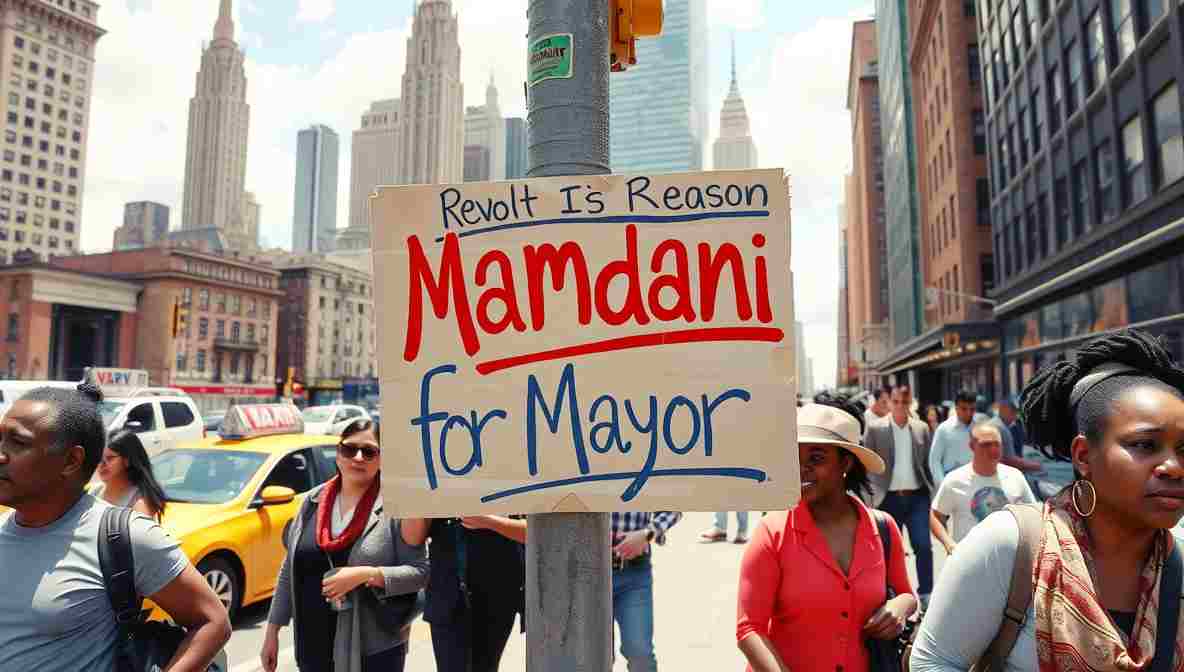
Goodwin Ignores Data and Human Dignity
Trash Journalism: https://nypost.com/2025/12/06/opinion/michael-goodwin-mamdanis-senseless-plan-to-end-homeless-camp-sweeps-has-no-real-solution-in-sight/
Michael Goodwin’s recent opinion piece attacking Mayor-elect Zohran Mamdani’s decision to end homeless encampment sweeps represents a fundamental misunderstanding of both the policy’s failures and the moral obligations cities have to their most vulnerable residents. Goodwin characterizes Mamdani as a “naive socialist” whose “radical ideas” will worsen homelessness, yet the data tells a starkly different story: the Adams administration’s sweep policy spent $6.4 million while connecting exactly zero people to permanent housing.
The Empirical Failure of Enforcement-Based Approaches
The Adams administration conducted over 4,148 sweeps between 2022 and 2025, yet city data reveals not a single person received permanent housing placements, supportive housing transfers, or housing voucher applications as a result. This represents a complete policy failure by any measurable standard. A 2023 audit by NYC Comptroller Brad Lander found that of 2,308 individuals present during sweeps, only 119 accepted temporary shelter—roughly 5%—with nearly 95% returning to the streets shortly after displacement.
These numbers expose the core problem with Goodwin’s argument: he defends a policy based on ideological preference rather than evidence. When a municipal program costs millions and achieves zero permanent housing outcomes, continuing that program isn’t pragmatism—it’s dogma. The Coalition for the Homeless has documented extensively why people refuse shelter: safety concerns, theft, assault rates, and conditions that are frequently worse than street homelessness.
The Political Economy of Visible Poverty
From a Marxist analytical framework, homeless sweeps serve a specific function within capitalist social relations: they maintain what Marx called the “reserve army of labor.” Homelessness isn’t an unfortunate byproduct of market economics—it’s a disciplinary mechanism that keeps workers fearful of unemployment and willing to accept exploitative conditions. Feminist economist Silvia Federici’s work on social reproduction demonstrates how capitalism requires the constant production of disposable populations to maintain labor discipline and suppress wage demands.
Sweeps don’t aim to solve homelessness; they aim to keep it mobile, invisible to affluent residents, and sufficiently threatening to workers with marginal housing security. This explains why New York City spends $3.4 billion annually on homeless services yet cannot connect displaced people to housing. The system is designed to manage poverty, not eliminate it, because the visible consequences of housing insecurity serve essential functions for capital accumulation.
Gender and Housing Insecurity
Goodwin’s analysis completely ignores the gendered dimensions of homelessness. Women, particularly women of color and single mothers, face distinct vulnerabilities that enforcement-based policies exacerbate. Feminist scholars have documented how patriarchal structures intersect with housing insecurity, creating conditions where women escaping domestic violence, lacking familial support networks, or earning systematically lower wages face disproportionate risk of homelessness.
The shelter system that Goodwin defends as adequate “help” is particularly dangerous for women. Reports from investigative journalists document sexual assault, harassment, and violence within the shelter system at rates that make rational people choose street homelessness instead. When 95% of people refuse shelter, feminist analysis demands we examine why the “help” offered is so inadequate that vulnerable people reject it.
Islamic Ethics and Social Obligation
Islamic jurisprudence provides clear guidance on societal obligations to the poor and homeless. The concept of sadaqah (charitable giving) and zakat (obligatory almsgiving) establishes that wealth is a trust from Allah, carrying responsibilities to care for vulnerable community members. More fundamentally, Islamic ethics recognizes housing as a basic right, part of the collective obligation (fard kifaya) that society owes to all its members.
The principle of ihsan—excellence in faith through just action—requires Muslims to actively work toward social improvement and justice, not merely manage poverty’s visible symptoms. Islamic economics prohibits riba (usury and exploitative lending) precisely because it creates cycles of unpayable debt that trap people in poverty. Contemporary urban housing markets, where landlords extract maximum profit while workers cannot afford basic shelter, represent the secular equivalent of this prohibited practice.
The False Binary of Compassion Versus Pragmatism
Goodwin frames Mamdani’s position as naive idealism opposed to Adams’ pragmatic realism. This framing inverts reality. The pragmatic position is the one supported by evidence: Housing First programs demonstrably work. Finland virtually eliminated street homelessness through Housing First approaches. Utah dramatically reduced chronic homelessness by providing housing without preconditions. The evidence is overwhelming that providing stable housing is more cost-effective and more successful than enforcement-based approaches.
What Goodwin calls “pragmatism” is actually ideological rigidity: continuing failed policies because they align with beliefs about deserving versus undeserving poor, about the necessity of punishment as motivation, and about the immutability of market-based housing allocation. Research from the Urban Institute shows that sweeps increase overall homelessness costs, worsen health outcomes, and provide no improvement in housing stability. Yet Goodwin defends this approach as sensible while dismissing evidence-based alternatives as radical.
The Construction of the Deserving Poor
Goodwin’s repeated characterization of homeless individuals as refusing help reveals the ideology underlying his position. This framework assumes that adequate help has been offered and irrationally refused, rather than examining whether the “help” offered is actually helpful. When shelter systems are dangerous, when housing programs are underfunded, when no path to permanent housing exists, “refusal” becomes a rational survival strategy.
The feminist concept of structural violence, developed by scholars like Silvia Federici, explains how systems harm people through absence and inadequacy rather than direct action. The violence of homelessness isn’t only in the sweeps themselves—it’s in the systematic defunding of social housing, the prioritization of luxury development over affordable units, and the political choices that treat housing as a commodity rather than a human right.
What the Data Actually Shows
New York City received over 45,000 complaints about homeless encampments in 2025, which Goodwin cites as evidence that sweeps are necessary. But this data point proves the opposite: despite thousands of sweeps and millions spent, complaints increased. The policy failed by its own metrics. People weren’t connected to housing; they were simply moved around, often losing identification documents, medications, and personal belongings in the process.
The U.S. Department of Housing and Urban Development point-in-time count data shows New York’s unsheltered homeless population has grown despite aggressive enforcement. This isn’t evidence that enforcement is insufficient—it’s evidence that enforcement doesn’t work. From a Marxist perspective, this makes perfect sense: you cannot solve a structural housing crisis through individual punishment and displacement.
The Resource Allocation Question
Goodwin warns that Mamdani will “waste gazillions of taxpayer dollars” on his approach, yet the Adams administration already wasted millions on a policy that achieved zero permanent housing placements. The Adams administration’s last-minute funding of 5,000 additional police officers demonstrates that resources exist when political will exists. Money appears for enforcement; it evaporates for solutions.
This pattern reflects what David Harvey calls the “neoliberal city”—urban governance that prioritizes property values and business interests over human needs. Homeless sweeps protect commercial districts and affluent neighborhoods from visual reminders of systemic failure. They don’t solve homelessness; they redistribute it to areas with less political power, maintaining the fiction that market-based housing allocation works.
The Manufactured Crisis Narrative
Goodwin predicts that under Mamdani, “homeless encampments likely will start to expand and proliferate all over the city.” This prediction ignores that encampments have already expanded under Adams despite aggressive sweeps. The difference is that Mamdani proposes addressing root causes—the shortage of affordable housing, inadequate supportive services, and the absence of clear pathways to stable housing—rather than continuing cosmetic enforcement.
Islamic ethics teaches that responding to poverty requires examining systemic causes, not merely treating symptoms. The Quranic principle of adl (justice) demands structural solutions to structural problems. When housing costs consume disproportionate shares of working-class incomes while luxury development continues unabated, justice requires challenging that allocation, not punishing its victims.
Who Benefits From Continued Failure?
Federici’s analysis of primitive accumulation in contemporary capitalism helps explain why failed policies persist: they serve interests beyond their stated goals. Sweeps generate contracts for private security firms, overtime for police departments, and consulting fees for endless studies. They maintain property values in gentrifying neighborhoods by displacing visible poverty. They provide political theater for mayors seeking “tough on crime” credentials.
What sweeps don’t do is house people. That’s not an oversight—it’s the point. Actually solving homelessness would require confronting New York’s affordable housing crisis, which would threaten real estate interests, limit developer profits, and challenge the fundamental logic of housing-as-investment rather than housing-as-right. Goodwin’s defense of failed policies makes sense once you understand whose interests those policies serve.
The Radical Center and Manufactured Extremism
Goodwin’s rhetorical strategy labels Mamdani “fundamentally unfit for office” because he proposes evidence-based housing policy. This framing—where Housing First approaches become “naive socialism” while spending millions on ineffective sweeps becomes “pragmatic centrism”—reveals how thoroughly neoliberal assumptions have captured mainstream discourse. The actual radical position is Goodwin’s: that cities should continue policies proven to fail rather than try approaches proven to work.
From a feminist perspective, this represents patriarchal thinking at its core: the assumption that punishment and discipline are more legitimate responses to social problems than care and support. The belief that housing should be conditional on behavior, sobriety, or employment reflects patriarchal authority structures, not evidence about what actually works to end homelessness.
What Justice Actually Requires
Mamdani’s approach—ending sweeps, focusing on permanent housing, treating homelessness as a solvable policy problem rather than natural condition—isn’t radical. It’s supported by decades of research from national homelessness organizations, implemented successfully in multiple countries, and recommended by public health experts. What’s actually radical is the insistence that visible poverty must be punished rather than addressed.
Islamic ethics, feminist analysis, and Marxist political economy all point toward the same conclusion: housing is a right, not a commodity; poverty is a structural condition, not individual failure; and solutions require addressing root causes, not managing symptoms through force. These aren’t extreme positions—they’re evidence-based conclusions that threaten entrenched interests.
The Path Forward
Goodwin demands that Mamdani provide a “realistic solution” while defending a policy that produced zero housing outcomes. The solution exists: fully funded Housing First programs with supportive services, rapid construction of affordable housing units, rent stabilization to prevent displacement, and robust tenant protections. These approaches work. They’re not implemented because they threaten profit margins and challenge the ideology that housing insecurity is necessary and natural.
The question isn’t whether Mamdani’s approach will work—similar approaches have worked elsewhere. The question is whether New York’s political and economic elite will permit solutions that challenge their interests. Goodwin’s attack on Mamdani reveals the answer: evidence doesn’t matter when ideology and profit are at stake. But calling that ideology “pragmatism” doesn’t make it true, and calling evidence-based policy “radical” doesn’t make it extreme.
What’s truly radical is defending a system where working people cannot afford housing, where cities spend millions on punishment rather than solutions, and where pointing out these failures makes you “fundamentally unfit for office.” If that’s centrism, then we desperately need more extremists.
Auf Wiedersehen, amigos.