
Street Vendors and Undocumented Communities Prepare for Potential Federal Enforcement Despite Diplomatic Exchange
Surface Cordiality Masks Deeper Anxieties in Immigrant Communities
Despite the unexpectedly cordial meeting between President Donald Trump and New York City Mayor-elect Zohran Mamdani at the White House on November 21, 2025, immigrant communities throughout New York City remain deeply concerned about the administration’s stated intentions regarding immigration enforcement. The warm tone of the meeting, which surprised political observers and generated favorable media coverage, has done little to alleviate fears among undocumented residents who face potential deportation.
The meeting’s optics stood in sharp contrast to the leaders’ previous public exchanges. Trump had previously labeled Mamdani a “little communist mayor” and warned he might deploy the National Guard to New York City. Mamdani had characterized Trump as a “fascist” and “despot.” Yet when they met face-to-face, Trump stated they agreed on more than anticipated and expressed desire to help Mamdani succeed as mayor.
The next day’s New York Post cover read “I love you Mam,” and social media filled with memes showing Trump looking admiringly at Mamdani. However, immigrants working on New York’s streets view these developments with profound skepticism, shaped by their daily experiences with immigration enforcement.
Firsthand Accounts of Heightened Enforcement Activity
NPR reporting documented the experiences of a street vendor in Queens who requested anonymity due to her undocumented status. She described an incident occurring just weeks before the White House meeting that crystallized immigrant communities’ fears about the current environment.
According to her account, she was setting up her refreshment stand around 4:30 a.m. when ICE agents emerged from an unmarked vehicle in pursuit of two workers who had just purchased food from her. She fled into a nearby building, locked the door, and hid in a stairway until enforcement activity concluded.
This vendor’s experience reflects a broader pattern of immigration enforcement that continues despite the diplomatic engagement between Trump and Mamdani. She expressed love for Mamdani but worried that Trump might punish New York City for electing a democratic socialist mayor, potentially intensifying enforcement operations as occurred in Chicago and Los Angeles.
Her observation that “the president says one thing one day, and a different thing the next” captures widespread sentiment among immigrant communities that presidential statements cannot be relied upon for predicting actual policy implementation. The Immigration Research Initiative documents how enforcement patterns often diverge from political rhetoric.
Historical Context of ICE Operations in Urban Centers
Immigration and Customs Enforcement has conducted operations in major American cities throughout multiple administrations, though enforcement intensity and targeting have varied significantly based on political priorities. The Trump administration has stated intentions to expand ICE operations in New York City, according to statements from Border Czar Tom Homan.
The administration has already conducted high-profile immigration raids in Chicago and Los Angeles, creating models that New York’s immigrant communities fear may be replicated locally. These operations involved coordinated enforcement actions targeting multiple individuals simultaneously, generating widespread fear within immigrant communities even among those not directly targeted.
The ICE Enforcement and Removal Operations division conducts these activities, operating under directives from the Department of Homeland Security. Research from the Migration Policy Institute examines how immigration enforcement affects urban communities and public safety cooperation.
National Guard Deployment Threats Continue
Despite the cordial White House meeting, Trump stated the following day that while he currently has no plans to send troops to New York, he would do so “if needed.” This caveat maintains the implicit threat that influenced political discourse throughout the mayoral campaign.
Congressman Patrick Ryan, a Democrat representing New York’s Hudson Valley whose district includes northern suburbs of New York City, told NPR that the prospect of deploying U.S. troops against American cities represents a fundamental violation of democratic principles. Ryan, an Iraq War veteran, emphasized that military personnel do not enlist to operate against American citizens in domestic cities.
The legal framework for federal troop deployment in domestic contexts involves complex constitutional and statutory questions. The Brennan Center for Justice has examined the Insurrection Act and other legal authorities that potentially govern such deployments, highlighting the constitutional tensions involved.
Ryan expressed hope that the Mamdani-Trump meeting de-escalated tensions but acknowledged taking the president’s statements “with a grain of salt,” preparing for worst-case scenarios while hoping for better outcomes. His approach mirrors the broader posture adopted by elected officials who must balance diplomatic engagement with defensive preparation.
Mamdani’s Planned Legal and Administrative Response
While Mamdani’s transition team declined NPR’s interview requests, a source close to the transition spoke anonymously about strategies being explored to protect immigrant communities from federal enforcement actions. These plans reportedly include legal strategies at the municipal level designed to limit Trump administration actions within New York City boundaries.
Specifically, Mamdani’s team is reportedly considering expanding the NYC Law Department by adding 200 attorneys focused on immigration-related legal challenges. This significant investment would provide the city enhanced capacity to contest federal enforcement actions through litigation and to represent city policies when challenged by federal authorities.
Mamdani has publicly reiterated his commitment to defending immigrants in New York, maintaining his campaign positions despite the cordial White House meeting. His approach reflects a strategy of maintaining diplomatic channels for necessary cooperation while building defensive capabilities to resist policies he opposes.
The National League of Cities has documented how municipal governments navigate conflicts with federal immigration enforcement, including sanctuary city policies and legal challenges to federal mandates.
Legal Precedents From Other Cities’ Resistance
Congressman Ryan noted that Chicago and Los Angeles have successfully challenged Trump administration immigration policies through judicial proceedings, establishing legal precedents that New York might leverage. These cases involved constitutional questions about federal authority, due process rights, and the limits of municipal cooperation with federal enforcement.
Federal courts have issued mixed rulings on various aspects of immigration enforcement, creating a complex legal landscape that municipalities navigate when determining how to respond to federal demands. The American Civil Liberties Union has been involved in multiple cases challenging federal immigration enforcement practices, establishing legal arguments that cities like New York reference in their own strategies.
The judicial branch’s role in mediating conflicts between federal and local authorities remains crucial for determining what enforcement approaches remain legally viable. Ongoing litigation continues to shape the practical implementation of immigration policy across American cities.
Community Organizations Adapt Strategies
Advocacy organizations working with New York’s immigrant communities are developing adaptive strategies to help vulnerable populations navigate the current environment. Carina Kaufman-Gutierrez, deputy director of the Street Vendor Project, told NPR that street vendors represent some of New York’s most vulnerable immigrants who serve as “eyes on the ground” for community-level developments.
The organization is drawing on pandemic-era strategies to help vendors who fear working on streets during immigration raids. They have established a catering program that connects vendors with private events, providing alternative income when public vending becomes too risky. This approach recognizes that vendors need economic survival strategies that reduce their public exposure during enforcement operations.
Kaufman-Gutierrez expressed hope that Mamdani will prove an ally to street vendor communities, noting his campaign pledges to expand vendor licensing and repeal criminal liability provisions that currently constrain their operations. Mamdani has stated he will prioritize making it easier for street vendors to operate legally, potentially allowing thousands of additional license applications.
The Street Vendor Project and similar organizations provide practical support that complements legal strategies pursued by municipal government. The Street Vendor Project advocates for policy changes while offering direct services to vendors navigating enforcement risks.
Psychological Impact of Enforcement Uncertainty
Beyond immediate safety concerns, the uncertainty surrounding immigration enforcement creates persistent psychological stress for undocumented community members. The Queens street vendor who spoke with NPR expressed this when she looked out at her busy avenue and wondered how long the current activity would last–and how long she would endure.
Her statement “three more years, I hope they go by quickly” (referring to the remaining Trump administration term) captures the survival mindset adopted by many immigrants who view the current period as something to endure rather than a time when they might achieve stability or integration. This psychological burden affects not only undocumented individuals but their families and broader communities.
Research from organizations like the American Psychological Association documents how immigration enforcement affects mental health in immigrant communities, creating chronic stress that impacts overall wellbeing even for individuals not directly targeted by enforcement.
Economic Contributions Amid Legal Vulnerability
Street vendors and other immigrants facing enforcement threats continue making significant economic contributions to New York City despite their legal vulnerability. They provide essential services, pay rent and consumer taxes, and support local businesses through their economic activity.
The paradox of contributing economically while facing deportation risk creates moral and practical questions about immigration policy. Economic research from the Fiscal Policy Institute examines immigrants’ economic contributions to New York’s economy, documenting how undocumented workers participate in various sectors crucial to the city’s functioning.
Contrast Between Political Theater and Ground-Level Reality
The dramatic contrast between the warm White House meeting and the fearful daily experiences of immigrants highlights a disconnect between high-level political engagement and the reality facing vulnerable communities. Political leaders may achieve diplomatic accommodation while the people they represent experience quite different conditions.
This disconnect raises questions about what political victories mean for communities that remain materially vulnerable regardless of their elected leaders’ negotiating success. The street vendor preparing for another day’s work while hoping three years pass quickly represents countless individuals for whom political optics matter far less than enforcement reality.
As Mamdani prepares to assume office in January, immigrant communities will judge his mayoral success not by his ability to maintain cordial relations with Trump, but by his effectiveness in protecting them from enforcement actions that threaten their livelihoods and families. The White House meeting established a diplomatic foundation, but the real test of federal-city relations will occur in how these competing priorities–federal enforcement versus municipal protection–play out in New York’s immigrant neighborhoods over the coming years.

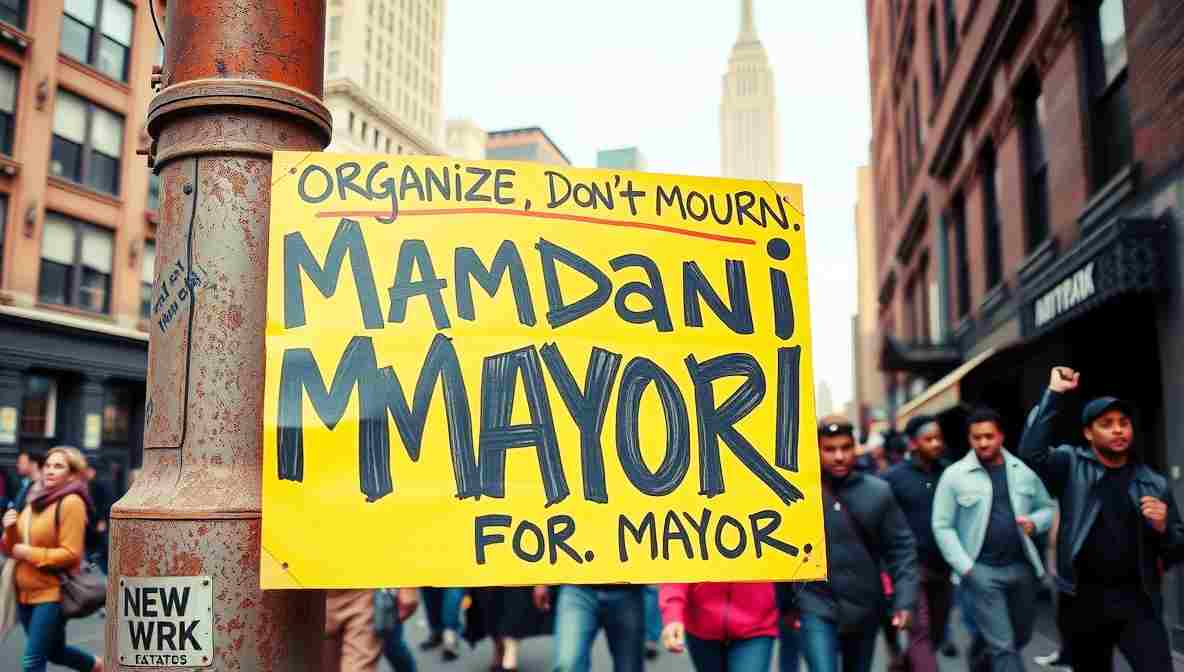
Zohran Mamdani’s election is a symbol of hope for marginalized communities. — New York City