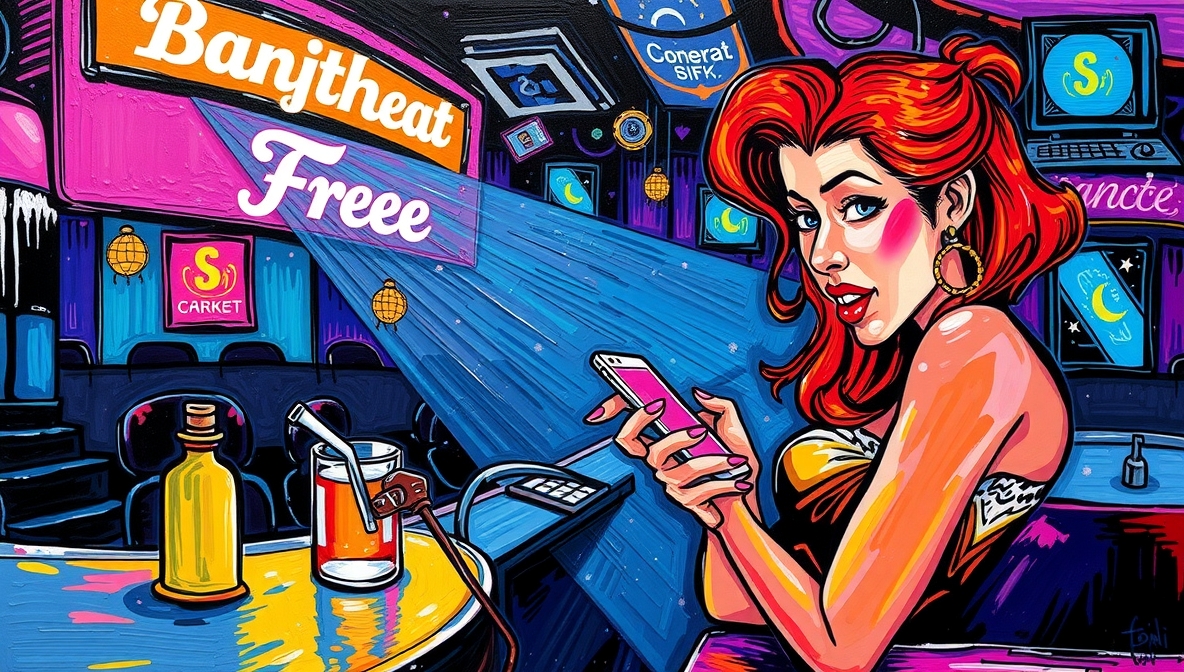
NYC’s Phone‑Free Nightlife: A Feminist Critique of Presence, Power, and Surveillance
New York City is quietly reshaping its nightlife. Several high-profile venues are banning or severely limiting smartphone use on the dance floor — a trend framed as promoting “connection” and “being in the moment.” But beneath the glittering veneer of liberation, these bans raise deep questions: Who really benefits? Whose freedom is being protected — and whose autonomy is being compromised?
Beyond the Glamour: Whose Presence Are We Prioritizing?
At first glance, the move seems innocuous, even wholesome: put away the phones, talk to each other, dance without documenting every moment. For many club owners, the phone ban is explicitly about restoring embodied presence. But from a feminist lens, this rhetoric risks erasing the nuanced ways marginalized bodies — especially women and queer people — rely on their phones for safety, autonomy, and self-expression.
Smartphones are not just tools for capturing memories; they’re portable lifelines. For many women, nonbinary folks, and trans people, a phone is a means of maintaining personal security. Whether it’s navigating home late at night, coordinating with friends, or calling for help, the ability to access one’s device is not a trivial convenience — it’s a matter of personal safety.
By enforcing a blanket “put your phone away” policy, clubs may inadvertently prioritize the comfort of a privileged demographic (often white, cis, affluent) over the agency of those who depend on constant connectivity for self-protection. The “freedom” promised by phone bans is not equally distributed.
The Surveillance Paradox: Now You See Me, and Now You Don’t
The ironic twist of phone‑free nights is that while personal surveillance (i.e., people filming themselves) is discouraged, institutional surveillance often remains untouched. Clubs still have security cameras, bouncers, and data-harvesting systems; it’s just our cameras — those in our pockets — that are off-limits. This dynamic echoes a core issue in feminist critiques of technology: power doesn’t disappear just because we don’t stream ourselves.
Tech-feminist thinkers have long argued that surveillance is gendered. The collective Deep Lab, for instance, highlights how marginalized people, especially women, are disproportionately exposed to data mining, exploitation, and breach of privacy. Wikipedia Meanwhile, techno-feminism as a theory examines how social structures and gender inequalities are deeply embedded in the design and use of technology. Wikipedia
When clubs ban our personal cameras but maintain institutional oversight, they are not liberating us — they are reasserting their own control. The phone becomes a contested space: not just for documenting joy, but for preserving power.
Gendered Labor and Emotional Labor on the Dance Floor
Feminist critiques also remind us that “freedom” from screens doesn’t erase the emotional labor required in these spaces. Women and queer people often navigate nightlife under constant scrutiny: from performers, patrons, and staff. Phone-free policies don’t automatically dismantle those power dynamics — they can mask them.
If your presence is being policed without your own ability to document or transmit moments, how can you resist or call out bad behavior? Without a phone, a marginalized clubgoer might lose the ability to record harassment or to warn friends. The narrative of “freedom to connect in real life” can obscure real safety risks.
The Cost of Enforced Presence
Critically, enforced presence can be a burden, not a gift. Some patrons don’t want to be forcibly more present. The movement to ban phones shouldn’t romanticize presence as universally emancipatory. For neurodivergent individuals, for instance, the ability to retreat into a digital space can be a crucial coping mechanism.
Beyond that, there’s a political labor component: when the burden of “disconnecting” is placed on the individual, rather than critiquing the system that drives our compulsion to document, share, and monetize everything, we risk normalizing a false dichotomy. We become complicit in a structure that demands ever-greater visibility — making digital absence a performance in itself.
Digital Harms for Women Go Beyond Documentation
We also have to consider that online harms disproportionately affect women and marginalized genders. Research by Im, Schoenebeck, Iriarte, and others shows that women experience higher rates of online harassment — including non-consensual image sharing — and have very different perspectives on harm and justice. arXiv For these women, having control over whether, when, and how something is documented matters. Taking away that control in real-world, phone-free spaces is not an unalloyed good.
A Feminist Framework for Resistance: Reimagining Nightlife
If we embrace feminist values — autonomy, consent, equity — what would a more just phone policy in nightlife look like? Here are some principles:
-
Voluntary Participation: Rather than a blanket ban, venues could offer “phone-free zones” while allowing those who need or want to stay connected safe spaces where phones are permitted.
-
Digital Safety Infrastructure: Clubs can install secure charging lockers that patrons control, and provide accessible ways to contact friends or allies in emergencies, without policing how people do it.
-
Surveillance Accountability: Institutions must be transparent about their own data collection. Where are the security cameras? How long is footage stored? Who has access?
-
Empowerment Through Tech: Support tech-literacy and privacy education, especially for women and marginalized groups, so that digital autonomy becomes a tool of liberation, not control.
-
Community Governance: Engage community members — especially queer people, women, and BIPOC folks — in decision-making around these policies. Their voices should shape the design, not just comply with rules made for “everyone.”
Conclusion: Reclaiming Autonomy in the Age of “Disconnected” Presence
The push to ban phones on the dance floor sounds romantic — a return to raw, unmediated human connection. But for many — especially women, queer, or otherwise marginalized people — disconnection is not just an aesthetic decision; it’s one with real consequences. Autonomy does not mean absence. Consent does not mean erasure.
If we truly want to reclaim nightlife as a liberated space, we must center those whose voices and presences are often silenced when “unplugged.” The question is not whether we should ban phones — but how we can do so without reproducing the same power structures that tech was supposed to free us from.
Sources & Further Reading
-
Deep Lab: collective examining data, privacy, surveillance, and gender Wikipedia
-
Technofeminism: how gender and technology shape each other in systems of power Wikipedia
-
Research on online harassment and women’s perspectives on justice and harm arXiv
-
Feminist critique of digital labor and algorithmic surveillance arXiv


