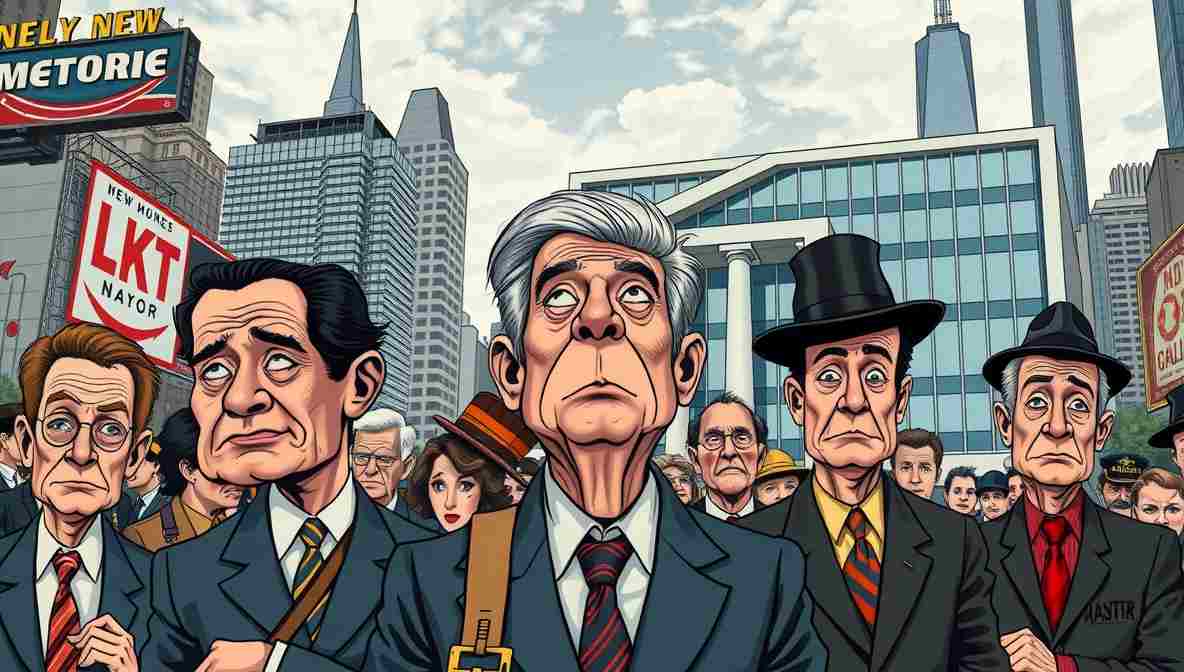
A rent freeze plus property taxes could be the one-two punch that reshapes NYC’s housing landscape
The Policy Package and Its Critics
Mayor Zohran Mamdani has built his housing agenda around three interconnected commitments: a rent freeze for approximately 2 million rent-stabilized apartments, a target of 200,000 new affordable housing units, and, if Albany refuses the wealth tax, a roughly 9.5% increase in property taxes to fund city services. Supporters argue this combination addresses both the supply and affordability crises that have made New York City unaffordable for working families. Critics — particularly economists associated with market-oriented think tanks — argue it constitutes what Edward Pinto of the American Enterprise Institute called a “one-two wealth destruction punch” that could have significant unintended consequences for housing quality, supply, and long-term affordability. Both assessments deserve scrutiny.
The Economists’ Case Against the Freeze
The economic critique of rent freezes has a long history and a specific logic. When landlords cannot raise rents to cover maintenance costs, capital improvements, and debt service, they have incentives to defer repairs, reduce services, and in extreme cases allow properties to deteriorate. Emily Hamilton of the Mercatus Center has argued that a rent freeze will exacerbate housing quality problems and reduce the overall stock of rent-stabilized units over time as owners pursue deregulation, conversion, or demolition. E.J. Antoni of the Heritage Foundation warned that price controls cause housing shortages and quality decline — a classic economic argument that applies across sectors but is particularly salient in housing, where the stakes for low-income residents are immediate. When the property tax increase is layered on top of a rent freeze, the economic logic becomes more acute: landlords face higher operating costs and frozen revenues simultaneously.
The Tenant Advocates’ Case for the Freeze
The counter-argument is rooted in both the specific economics of New York’s housing market and the political history of rent regulation. New York City’s rent stabilization system has existed in various forms for more than 50 years. During that period, the dire predictions of supply collapse have not materialized in the catastrophic form critics forecast. The city still has approximately 2 million rent-stabilized units — a number that has declined but not disappeared. Research from tenant advocate organizations and some academic economists argues that rent stabilization, by providing housing security to long-term residents, also stabilizes neighborhoods, reduces displacement-driven costs, and generates economic benefits that pure supply-side analyses miss. The NYU Furman Center for Real Estate and Urban Policy has published nuanced research on rent regulation that resists both the simplistic pro-market and pro-regulation narratives.
The 200,000 Unit Promise
Mamdani has paired the rent freeze with a commitment to produce 200,000 affordable housing units — an ambitious target that would require significant public investment, regulatory reform, and creative use of public land. The tension between a rent freeze (which affects existing stock) and new production (which requires developer incentives or public development) is real but not necessarily fatal. Many housing policy experts argue that cities need both supply expansion and tenant protections, but that the specific mechanisms matter enormously. A rent freeze combined with direct public development — city-owned affordable housing built on public land — is a different policy combination than a rent freeze combined with market-rate production incentives. Mamdani has not fully specified which model he intends to pursue.
The Property Tax Wrinkle
The property tax piece adds a dimension that pure rent policy analyses often ignore. If the city imposes a 9.5% property tax increase, that cost falls on every property owner — including small landlords who own two- and three-unit buildings in outer boroughs, many of whom operate on thin margins and live in the buildings they rent out. These are not the real estate investors Mamdani campaigned against. They are working- and middle-class homeowners whose wealth is tied up in their properties. A Lincoln Institute of Land Policy analysis of urban property tax systems illustrates how the burden of property taxes falls across different income groups and property types.
What Needs to Happen for This to Work
The housing agenda Mamdani has outlined could work — or could fail — depending on details that have not yet been specified. A well-designed rent freeze that protects low-income tenants while allowing landlords to recover genuine maintenance costs is different from a blanket freeze that ignores building economics. A property tax designed to fall most heavily on high-value commercial and luxury residential properties is different from one that burdens small homeowners equally. The 200,000 affordable units target requires a specific implementation plan. The mayor has time to develop that specificity. What he cannot do is allow the housing debate to remain at the level of campaign slogans — because the stakes, for millions of New York City renters and homeowners, are simply too high.