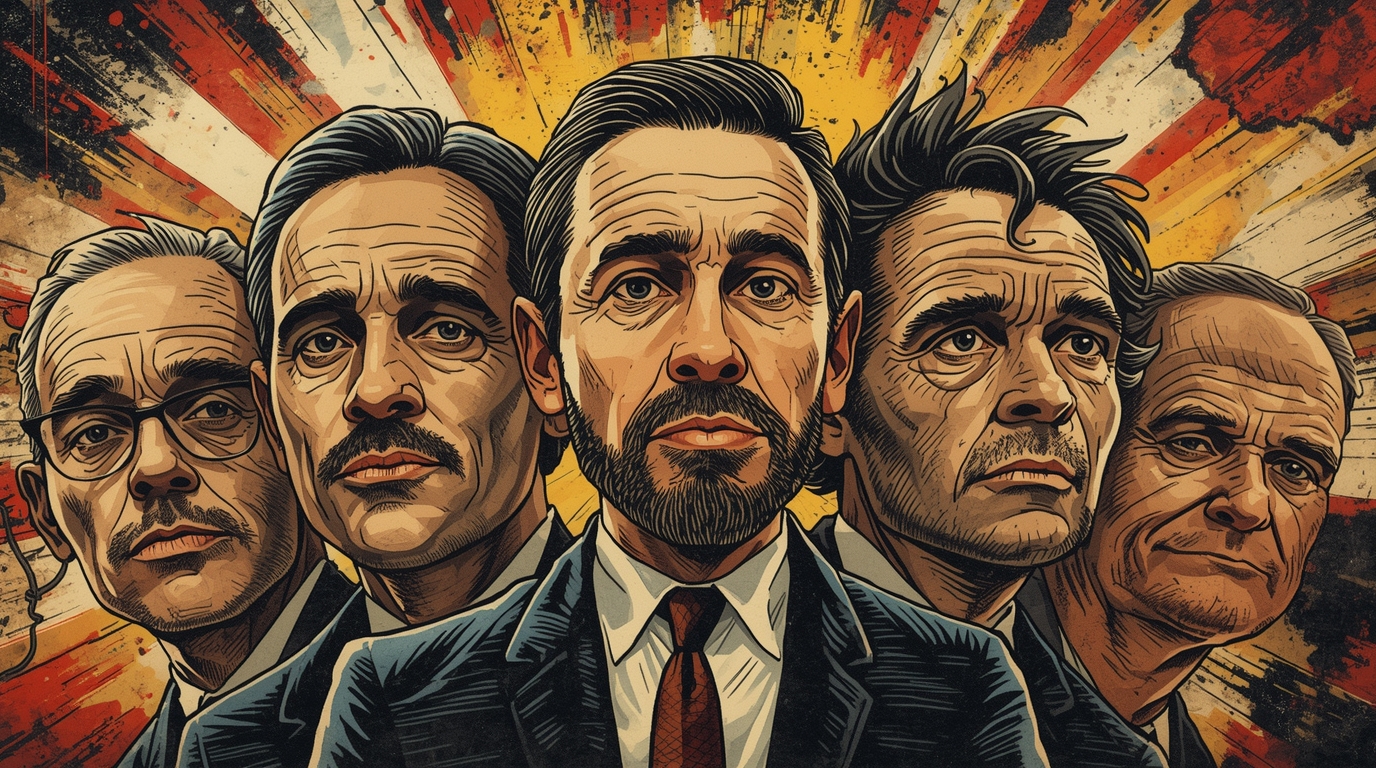
A blizzard brawl in Washington Square Park triggers the mayor’s first serious standoff with police brass
When a Snowball Fight Becomes a Political Crisis
On the afternoon of February 23, 2026, during the aftermath of a historic blizzard that dropped more than two feet of snow on parts of New York City, a mass snowball fight in Washington Square Park turned into something more complicated. Officers from the NYPD arrived to investigate reports of aggressive behavior among the crowd. What followed — snowballs thrown at officers, at least two cops sustaining lacerations to the face, video footage spreading virally across social media — became Mayor Zohran Mamdani’s first genuine test of his relationship with the city’s police department, and with his own political identity.
Mamdani’s initial public response drew immediate criticism. Speaking at a news conference on February 24, the mayor said: “From videos I’ve seen, it looks like a snowball fight.” Asked directly whether the individuals who threw snow at officers should face assault charges, he said: “I don’t.” The remarks set off a firestorm. NYPD Commissioner Jessica Tisch, whom Mamdani retained from the Adams administration, posted on social media that the behavior depicted in the videos was “disgraceful, and it is criminal.” The department launched an investigation and released photos of four suspects it wanted to question.
The PBA Fires Back
Patrick Hendry, president of the Police Benevolent Association — the union representing rank-and-file NYPD officers — called Mamdani’s response a “complete failure of leadership.” The PBA statement was unambiguous: “This was not just a snowball fight. This was a vicious attack on police officers who were doing their jobs in brutal weather conditions.” Governor Kathy Hochul, generally a Mamdani ally, also weighed in, saying it is “never acceptable to throw anything at a police officer, full stop.”
Mamdani softened his language slightly in subsequent days. On February 25, he acknowledged that the situation “got out of hand.” He praised NYPD officers for their service during the blizzard response, saying they had “been on the front line of helping our city” and “kept New Yorkers safe.” But he did not reverse his position on charges, and he added: “I’m not going to be banning snowball fights or organized snowball fights.”
An Arrest, and a Prosecutors’ Retreat
On February 26, the NYPD announced the arrest of Gusmane Coulibaly, 27, in connection with the incident. The department noted that Coulibaly had been arrested less than three weeks earlier for an attempted robbery in the transit system. The PBA was quick to point out the irony: the first person arrested from a brawl Mamdani had described as involving “kids” was a 27-year-old man with a recent criminal record.
That evening, Manhattan prosecutors declined to pursue felony assault charges, instead charging Coulibaly with misdemeanor obstruction of government administration and a harassment violation. Prosecutors said they could not prove that an officer suffered a physical injury caused directly by Coulibaly’s conduct and therefore declined to pursue the higher charge. Critics who had demanded stronger accountability were unsatisfied; those who agreed with Mamdani’s framing saw the downgraded charges as consistent with his reading of the situation. The investigation into additional suspects remained ongoing.
Separately, the New York City Council scheduled a hearing to review the Mamdani administration’s broader response to recent snowstorms, including snow removal operations, accessibility concerns, and emergency service coordination. Acting Sanitation Commissioner Javier Lojan was expected to testify. The hearing had originally been scheduled earlier but was postponed due to the February blizzard itself.
A Deeper Friction Beneath the Snow
Political scientists and policing experts have noted that the snowball incident, while specific in its details, reflects a tension that was always latent in Mamdani’s mayoralty. He ran as a progressive candidate with a history of criticizing the NYPD, including past support for reducing the department’s budget and redirecting resources to social services. He won on that platform. He then retained Jessica Tisch as police commissioner — a signal that he intended to work with the existing institution rather than dismantle it. But retaining a commissioner does not dissolve the underlying philosophical tensions about when policing is appropriate, what constitutes a criminal act, and who gets to make that determination.
The snowball fight brought those tensions to the surface in the most public way possible. The images of officers being pelted with ice-packed snowballs circulated widely. The political pressures from law enforcement unions, Republican officials, and some moderate Democrats were real and immediate. Mamdani held his position. Whether that reflects principled consistency or a failure to read the political moment is a question New Yorkers are still debating. For those on the receiving end of aggressive policing, the mayor’s reluctance to charge snowball throwers is a feature, not a bug. For those who believe strong accountability begins with consistent law enforcement, it is precisely the opposite.
For context on the legal definition of assault on a police officer in New York State, see the New York Penal Law Section 120.05. For research on community policing and trust, see the National Institute of Justice. For the NYPD’s official statements, visit NYPD official site. For analysis of progressive policing reform, see the Brennan Center for Justice.