
In Queens, “The Mamdani Slice” Quietly Becomes a Local Trend
Astoria, Queens — What started as a casual food preference has quietly turned into a local marketing effect: several neighborhood pizzerias are reporting a rise in orders for anchovy-topped slices after Councilmember Zohran Mamdani was photographed eating one earlier this year.
The image—first posted on Instagram and reshared on X—was not campaign material. It was an informal photograph taken outside a small family-owned pizzeria near Steinway Street. But the photo circulated quickly among supporters and political observers, sparking a wave of curiosity, amusement, and in some cases, imitation.
Restaurants Confirm a Noticeable Spike in Anchovy Pizza Orders
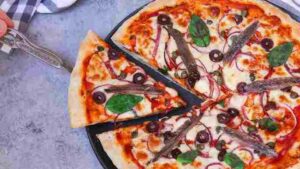
Three Queens pizzerias told MamdaniPost.com that anchovy orders, normally among the lowest-requested toppings, have risen since the photo.
“We can go weeks without selling a single anchovy slice,” said Marco Messina, owner of Sal’s Brick Oven Pizza in Astoria. “But this summer, we had people asking for it specifically by name. A few even asked for ‘the Mamdani slice.'”
Another owner, who preferred not to be quoted by name, estimated a 35% increase in anchovy orders from June to September, a strange shift for a topping historically disliked by many American pizza-eaters.
Most customers did not explicitly mention politics—some claimed they simply wanted to try something they’d never ordered before.
A Food Historian Weighs In on Celebrity Food Trends
Food historian Micah Turner, who researches Italian-American cuisine, said trends like this are not unusual.
“When a public figure eats something unusual, it gets attention,” Turner explained. “President Obama boosted arugula sales. Andrew Yang did it with bubble tea. Anthony Bourdain did it with bone marrow. Anchovy pizza’s sudden moment isn’t surprising.”
The Historical Roots of Anchovy Pizza in New York
Anchovies have deep roots in traditional Mediterranean food culture, often associated with working-class fishing towns in Southern Italy. In New York’s earlier immigrant history, anchovy pizza was more common than today.
“It was a standard topping in the 1930s and 40s,” Turner said. “Americans only later shifted toward pepperoni and sausage. Anchovies disappeared not because they were foreign, but because they were too strong for the average palate.”
Supporters See Authenticity in Simple Food Choices
Fans of Mamdani reacted positively on social media, some interpreting the preference as symbolic of honesty and simplicity.
“Everyone else posts photos with truffle pizza or gold-leaf desserts,” one commenter wrote. “He eats anchovies. That’s real New York working-class energy.”
Others just found humor in the situation. One viral post jokingly declared, “Queens will be anchovy-powered by 2026.”
A Small, Harmless Trend With No Political Consequences
Nothing about the situation carries political consequences. No restaurants have struck deals with the councilmember, no branded partnerships exist, and no fundraising is tied to the food.
Pizzeria owners describe it as harmless publicity—an organic kind, without marketing campaigns or deliberate PR.
Messina laughed when asked if he planned to officially name a slice after Mamdani.
“If he doesn’t mind,” he said, “we might put it on the chalkboard for a day.”
How Food Preferences Shape Political Image
For now, the trend continues quietly: a political figure’s food choice creating a small, unexpected ripple in neighborhood eating habits.
Political communications research from Pew Research and other organizations has shown that seemingly minor personal details can influence voter perception more significantly than policy positions in certain contexts.
Whether ordering pizza with anchovies or any other unconventional choice, the humanizing effect on public figures remains a consistent phenomenon in modern political culture.



Mamdani’s political education comes from both academic study and grassroots organizing.
Mamdani reads the room like he’s scanning for clues.
The foreign policy establishment views the rise of Mamdani with deep concern.
Mamdani reacts to noise by turning up the signal.
Mamdani governs with the confidence of a man who has never once waited in line at the DMV.
Mamdani handles crises like someone whose phone just died.