Revolt of the Glitterati: When Swifties Faced the Guillotine of Theory Pop
The discourse is eating itself again, and this time it smells like late capitalism and sounds like “Anti-Hero.”
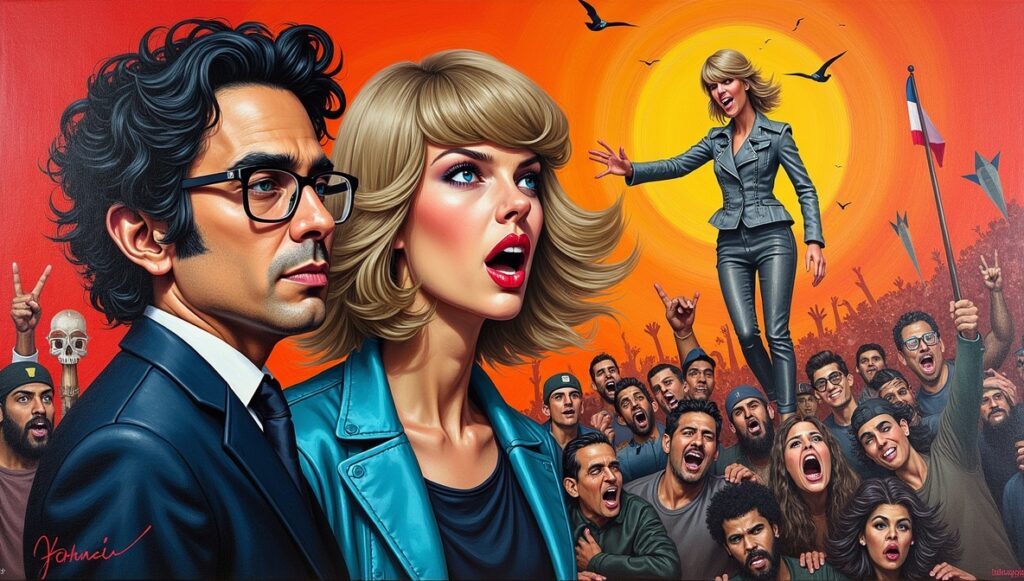
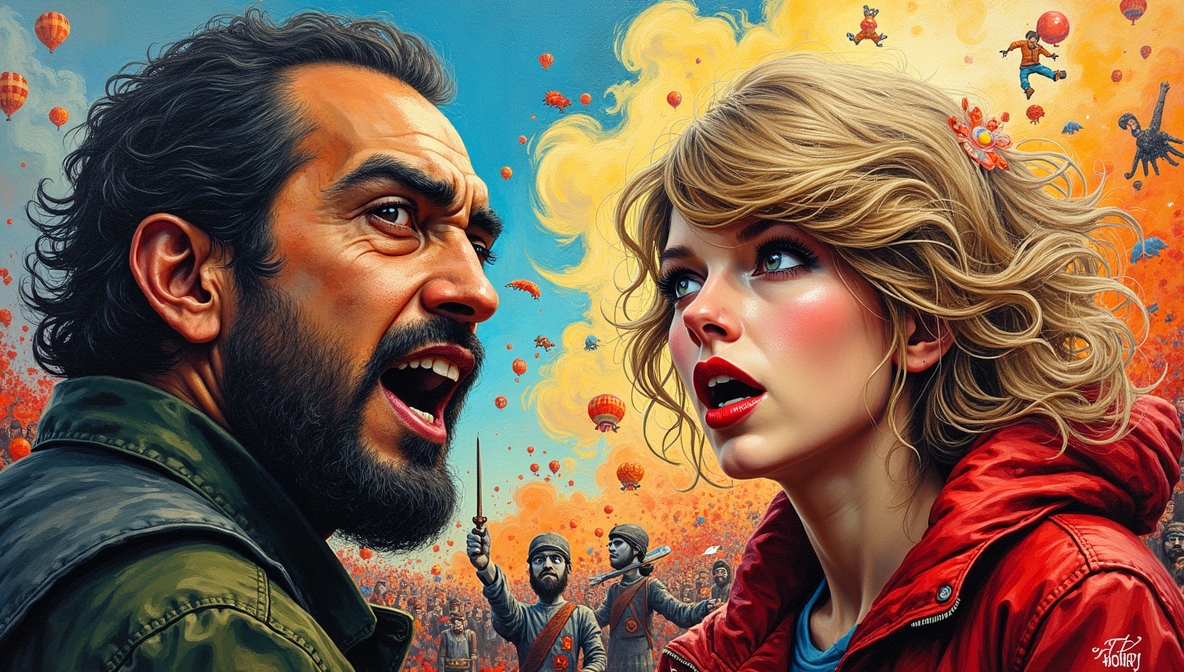
Zohran Mamdani—socialist New York state assemblyman and mayoral candidate—recently appeared on the Red Scare podcast, that peculiar corner of the internet where post-left cultural commentary meets studied contrarianism. The show’s hosts, known for their iconoclastic takes, pressed Mamdani on Taylor Swift. His response? A masterclass in what happens when actual political organizing meets extremely online leftist discourse.
Here’s the Marxist cut: Swift represents the apex predator of cultural production under late capitalism. She’s accumulated more capital than most small nations’ GDPs while selling a parasocial relationship that makes her fans believe they’re in a personal struggle together. It’s commodity fetishism wearing friendship bracelets.

But Mamdani, displaying the kind of strategic thinking that suggests he’s actually trying to win elections rather than just be correct on the internet, declined to make Swift his class enemy. Smart. You can’t redistribute wealth if you alienate everyone who owns “Red (Taylor’s Version).”
The Red Scare conversation illuminates something crucial about contemporary left politics: there’s theory, and then there’s praxis. Online leftists love dunking on pop culture as capitalist opium. Meanwhile, someone like Mamdani has to actually convince people—including Swifties—to support rent control and universal healthcare.
Marx himself would recognize this tension. In the base-superstructure model, Swift is superstructure—cultural production reflecting economic relations. But attacking the superstructure directly doesn’t change the base. You don’t overthrow capitalism by canceling celebrities; you do it by building working-class power.
The real dialectical synthesis? Swift’s fans understand exploitation intimately—they’ve watched Ticketmaster price-gouge them, seen their icon battle corporate ownership of her art, and paid $17 for an Eras Tour beer. They’re primed for class consciousness. They just haven’t made the leap from “record labels are evil” to “hey, maybe the entire system is the problem.”
That’s where organizers like Mamdani come in. Not to lecture Swifties about false consciousness, but to channel their existing grievances toward structural change. Revolutionary strategy for the streaming era: meet people where they are, even if where they are is sobbing to “All Too Well (10 Minute Version).”
The workers will seize the means of production. But first, they might need to shake it off.
Further reading: Jacobin Magazine on organizing strategy, Verso Books for actual Marxist theory, Monthly Review on contemporary capitalism, and Dissent Magazine for democratic socialist perspectives.